
The Art of Reinvention: How to Keep Annual Conferences Vital in an Evolving Landscape

The annual conference is the heartbeat of the association and non-profit world. It is a time for professional gathering, industry advancement, and community building. However, for many event planners, the annual cycle presents a daunting paradox: how to deliver the reliable, expected experience that members crave while simultaneously innovating enough to prevent the event from feeling like a stagnant rerun.
Beth Surmont, the award-winning Head of Strategy and Design at 360 Live Media, has spent two decades “reinventing the wheel” for organizations, often going undercover as a “conference spy” to observe how these events perform in the wild. As the inaugural subject of EventMobi’s new content series, Run Your Best Event, Ever, Surmont offers a roadmap for planners struggling to balance tradition with the necessity of evolution.
The Anatomy of a Successful Conference
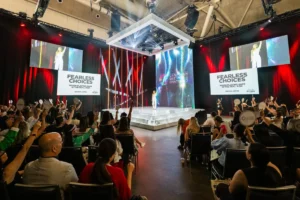
When an event truly works, it transcends the logistical checklist of registration, catering, and AV. It creates a palpable energy that attendees feel the moment they arrive—or even before.

“When an event works, you can feel it,” Surmont explains. “People are buzzing at the airport as they connect with each other. There is a bounciness to how they enter the event space. You see people talking, hugging, and laughing in the common spaces.”
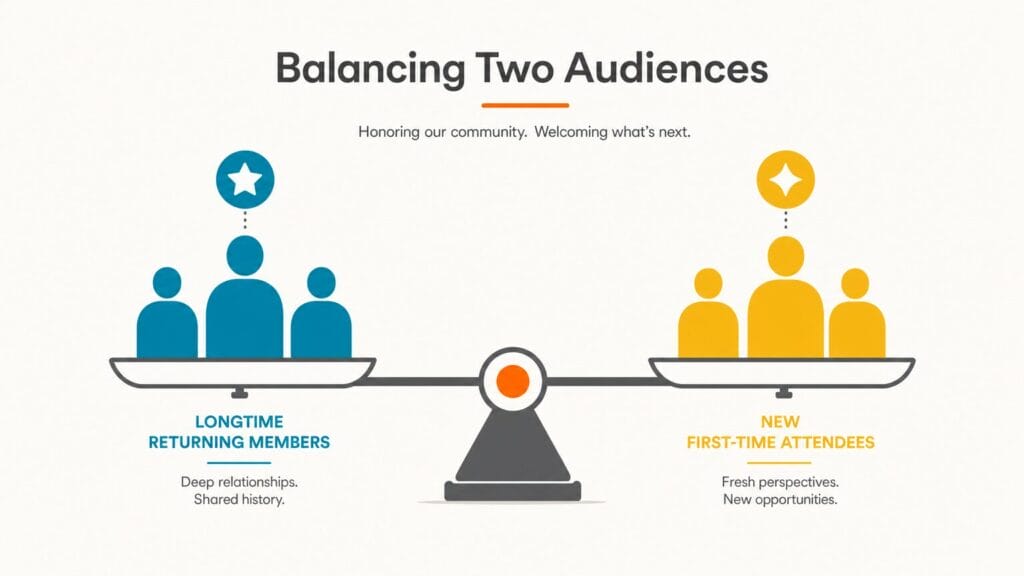
This energy isn’t just anecdotal; it is structural. A truly successful conference is marked by high-engagement markers: active note-taking in sessions, vigorous Q&A, and the hum of business being conducted on the show floor. Crucially, a healthy event demonstrates a balanced demographic, encompassing a mix of first-time attendees, returning veterans, and a diverse array of career stages. When an event hits this equilibrium, it stops being a series of sessions and becomes a living, breathing community ecosystem.
The 80/20 Rule: Balancing Tradition with Innovation
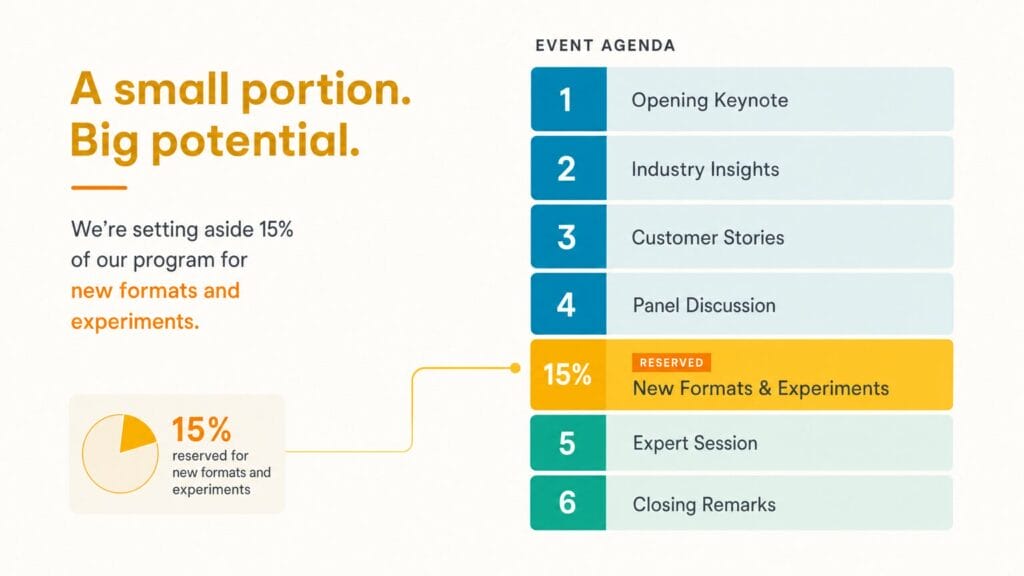
One of the most persistent fears for event planners is the risk of alienating long-term members by changing a format that has worked for years. Surmont proposes a practical solution: the 80/20 rule.

“Depending on the group, I recommend that anywhere from 10% to 20% of the event should be innovation space,” she says. By dedicating this slice of the agenda to experimentation—be it through new session formats, interactive activations, or unconventional networking meetups—planners can signal that the organization is forward-thinking without abandoning the core pillars that draw members back annually.
Surmont highlights the power of tactile experiences, such as creative name-badge designs that require assembly, to set the tone immediately. For larger groups, she advocates for "scenario sessions," where participants work in small groups to solve real-life industry problems. Because the scenarios can be updated to reflect current trends, the format remains consistent while the content feels fresh and urgent.
Bridging the Gap Between Legacy and Gen Z Expectations
A common point of tension in conference design is the conflict between what an organization’s “legacy” members expect and what newer generations demand. However, Surmont argues that this divide is often overstated.

“I kept thinking, ‘This is how you craft content for everyone!’” she notes regarding recent trends in Gen Z engagement. “Relevance first, intentional curation of topics, practical takeaways, and hands-on opportunities. That’s what people are looking for, no matter if it’s their first event or their 500th.”
The real friction occurs when organizations cling to outdated traditions—such as awards ceremonies or plenary sessions—that prioritize hierarchy over audience value. These legacy elements often follow a century-old playbook that fails to resonate with modern learners. Surmont advises that instead of cutting these traditions entirely, planners must interrogate the "why." If the goal is community pride or recognition, there may be more effective, high-impact ways to deliver that experience than a long-winded stage presentation.
The Tech Stack: Where Promises Fall Short
In an era of rapid technological advancement, the promise of AI-driven events has been immense. Yet, Surmont offers a sobering "hot take": current AI applications in the event space have been underwhelming.
“I’m expecting more personalized guides, audience journey mapping, and better 1:1 matchmaking,” she notes. “Reading through an app session by session does not feel like a good use of anyone’s time.”
For Surmont, technology is only valuable when it is invisible or frictionless. If an attendee has to struggle with an app, deal with faulty beacons, or contend with lagging virtual content, the technology has failed. Her recommendation is to focus on using AI for the "behind-the-scenes" heavy lifting—streamlining processes and acting as a "thought buddy" for planners—rather than pushing premature, clunky interfaces onto the attendee.
The Perils of Overprogramming: A Call for White Space
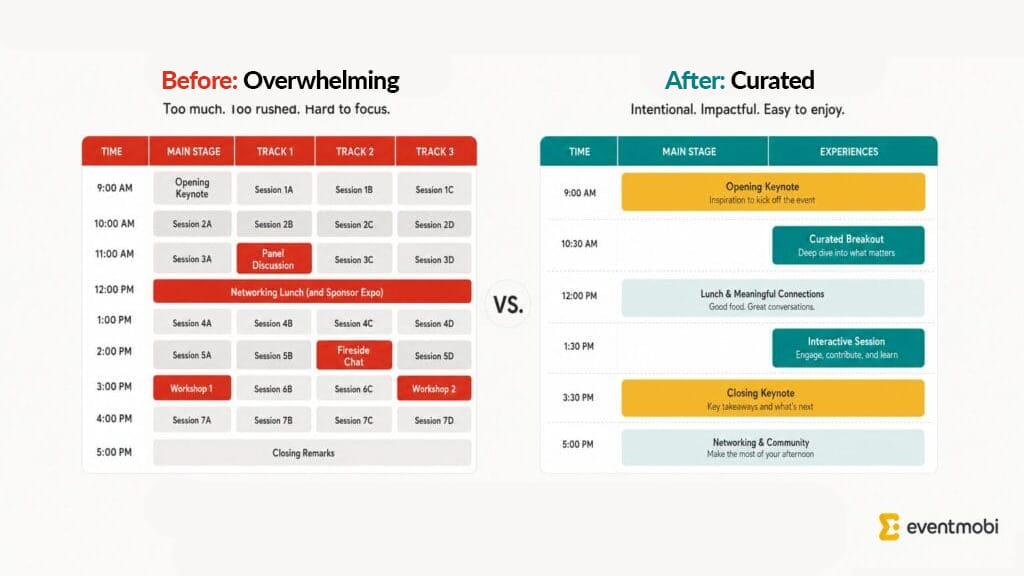
Perhaps the most common, and most detrimental, mistake planners make is over-stuffing the agenda. In an effort to justify ROI to organizational boards, planners often stack back-to-back sessions from dawn until dusk, leaving attendees exhausted and mentally saturated.
“We are at an inflection point,” Surmont observes. “We discount how important it is to have open time. That’s how our brain rests and synthesizes the information.”
The shift toward a "quality over quantity" model is gaining momentum. By eliminating excessive concurrent sessions and introducing "white space" into the schedule, planners allow attendees the mental room to synthesize what they’ve learned and engage in organic, peer-to-peer conversations. When an attendee isn’t running from room to room, they are better equipped to articulate the specific value they gained from the event—a metric that is far more compelling for stakeholders than a high session count.
Measuring Success Beyond the "Good Experience"
To earn its place on the calendar year after year, an event must be more than just "fun." It must be a strategic driver for the organization. Surmont utilizes the "6Rs" construct to ensure that every facet of the conference maps back to the organization’s long-term mission:
- Revenue: Does the event meet financial targets?
- Reach: Is the event attracting the right audience and expanding the brand’s influence?
- Reputation: Does the event enhance the organization’s standing in the industry?
- Relationships: Is the event fostering meaningful, long-term connections between members?
- Retention: Does the event build loyalty among existing members?
- Results: Does the event provide the tangible data and outcomes necessary to prove its ROI?
Beyond these metrics, Surmont stresses the importance of working with organizational leadership to set specific, measurable goals based on where the organization wants to move the needle. When the conference is tied to a strategic plan, it becomes indispensable.
The Importance of the Partner Ecosystem
Finally, Surmont emphasizes that successful event planning is never a solo endeavor. Her career has taught her that the most vital resource is the collaborative relationship between the planner and their partners—the AV technicians, venue staff, and local vendors.
“I’ve learned about what it takes to create good Wi-Fi, how to make menus more affordable, and what to do when things go wrong,” she reflects. “None of those things I could have managed myself. I needed to rely on my partners to help me put the pieces together.”
Ultimately, the secret to a conference that survives and thrives is humility. By leaning on expertise, focusing on the "why" rather than the "what," and giving attendees the breathing room to actually engage, planners can transform their annual event from a repetitive duty into a cornerstone of professional growth. As Surmont suggests, the hardest part of planning isn’t the execution of the first event; it is the courage to keep reinventing the experience, ensuring that the magic is recreated, rather than simply repeated.