Mastering the Feed: How Global Brands and Public Institutions Redefined Instagram Strategy in 2026

By the Editorial Desk
Published: September 2026
Introduction: The Shift from Hard Selling to Cultural Fluency
The social media landscape of 2026 has officially closed the chapter on traditional, transactional advertising. In the latest installment of the Social Futures Report, analysts have compiled a comprehensive examination of Instagram’s standout brand campaigns, breaking down not just the creative execution, but the measurable business impacts behind them.
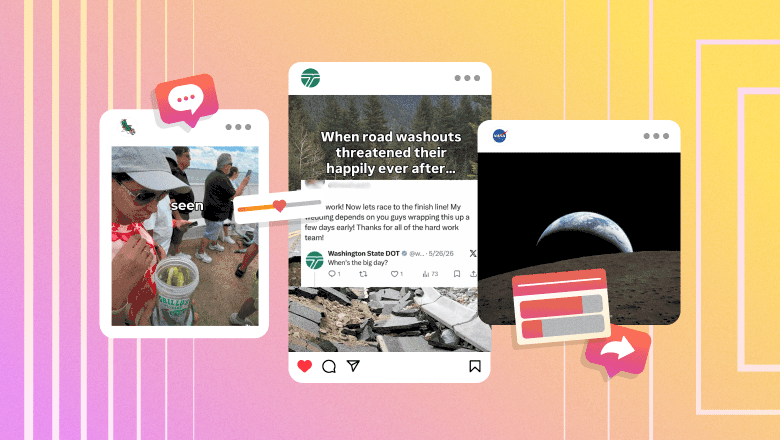
This year’s data points to a singular, undeniable truth: the brands winning on Instagram are no longer talking about what they sell. Instead, they are prioritizing cultural fluency, leveraging community sentiment, and treating their social channels as extensions of global pop culture, sport, science, and absurdity.
From the world’s biggest athletic rivalries playing out across digital spaces to public transportation departments cracking jokes about spilled street corn, 2026 has proven that visual storytelling combined with cultural participation drives unprecedented engagement. This report explores the defining campaigns of the year, tracking their chronological evolution, analyzing the quantitative data, reviewing institutional insights, and unpacking the broader implications for modern marketing teams.
Main Facts: The 2026 Instagram Landscape
To understand what makes a successful Instagram campaign in 2026, one must look at the macro-events that dominated the digital ecosystem. The year was defined by massive cultural tentpoles—chiefly the 2026 World Cup, NASA’s Artemis II lunar mission, and viral internet lore.
Rather than relying on sterile product placements or standard corporate announcements, industry leaders utilized Instagram’s visual-first architecture to embed themselves organically into ongoing conversations.
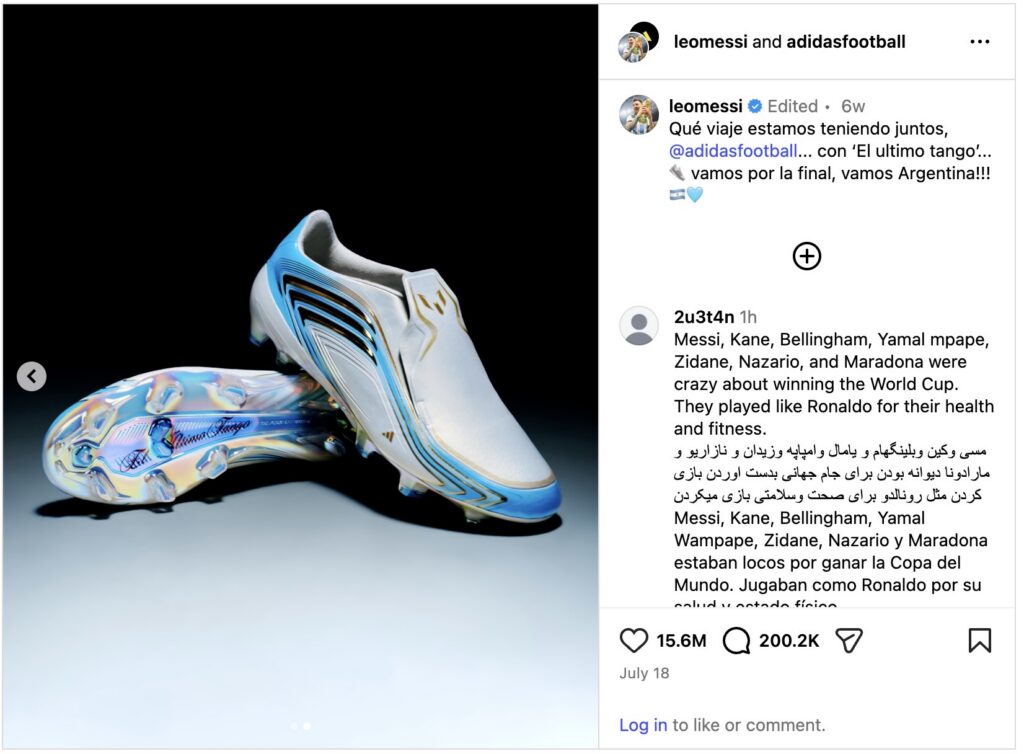
- The World Cup Effect: Adidas Football generated nearly $100 million in estimated earned media value (EMV) on Instagram between May and July alone, supercharged by co-posts featuring Lionel Messi.
- Absurdism and Mascots: Grillo’s Pickles leveraged character-driven marketing to pull in over 14 million engagements and upwards of $40 million in EMV by taking an actual pickle on global adventures.
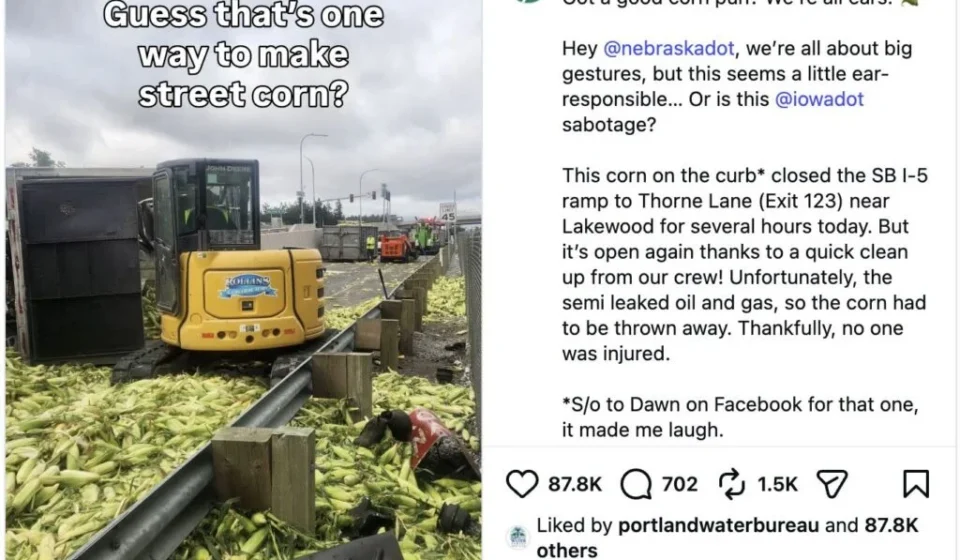
- Institutional Wit: The Washington State Department of Transportation (WSDOT) and NASA proved that public sector accounts can command massive digital audiences through a mix of community-focused service and cosmic wonder, with NASA pulling in over 130 million engagements for the year.
- The Death of the Hard Sell: Across all top-performing accounts, product-centric posts took a backseat to narrative-driven, community-first content that invited audiences to be "in on the joke."
Chronology of a Banner Year: How the Campaigns Rolled Out
The success of these digital initiatives did not happen in a vacuum; they were timed meticulously against real-world calendars and cultural flashpoints.
Q1–Q2: The Lunar Launch and Early Sports Integrations
The digital year kicked off with high-flying ambitions in the spring. NASA’s engagement metrics soared in April, driven by the rollout of the Artemis II mission. By sharing humanizing, behind-the-scenes logs—such as a floating jar of Nutella mixed with breathtaking lunar horizon photography—the space agency captured more than a third of its total yearly engagement within a matter of weeks.
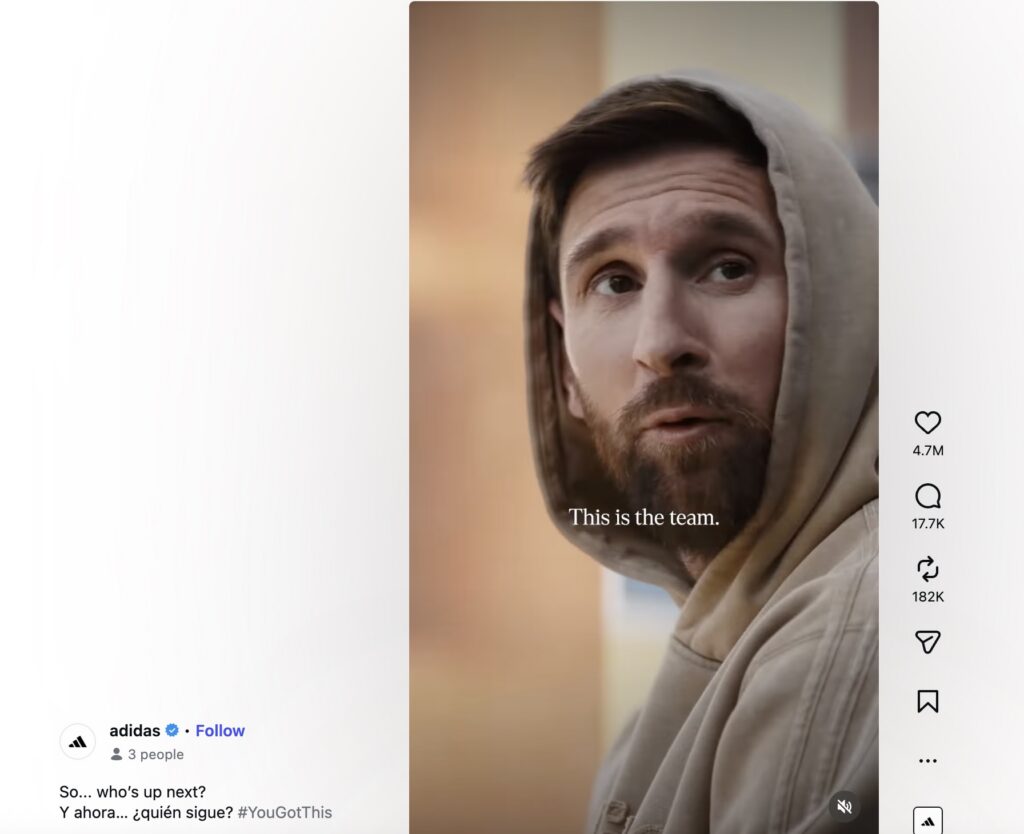
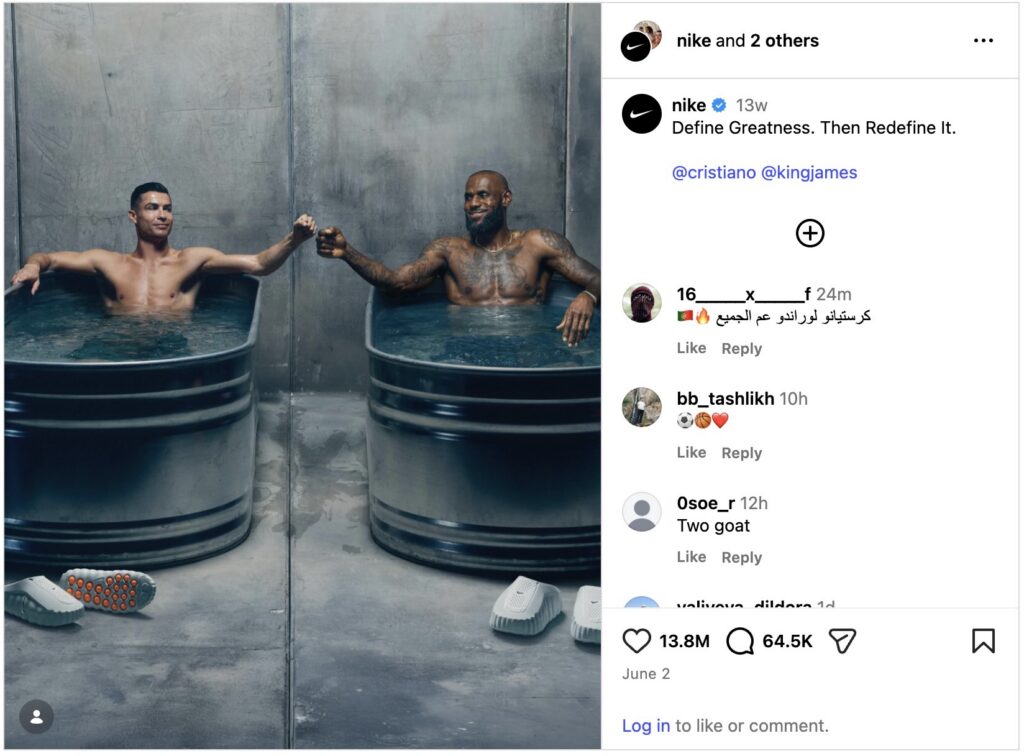
Concurrently, sports marketing giants Nike and Adidas began setting the stage for the summer tournaments. Nike deployed cross-platform heavyweights like Cristiano Ronaldo and LeBron James in high-concept ice bath visuals, while Adidas coordinated early-stage teaser campaigns with Lionel Messi, laying the groundwork for what would become historic digital traction.
Summer 2026: The World Cup and Stadium Stunts
Summer belonged unequivocally to football. As the 2026 World Cup kicked off, brands that were not official sponsors had to get creative.
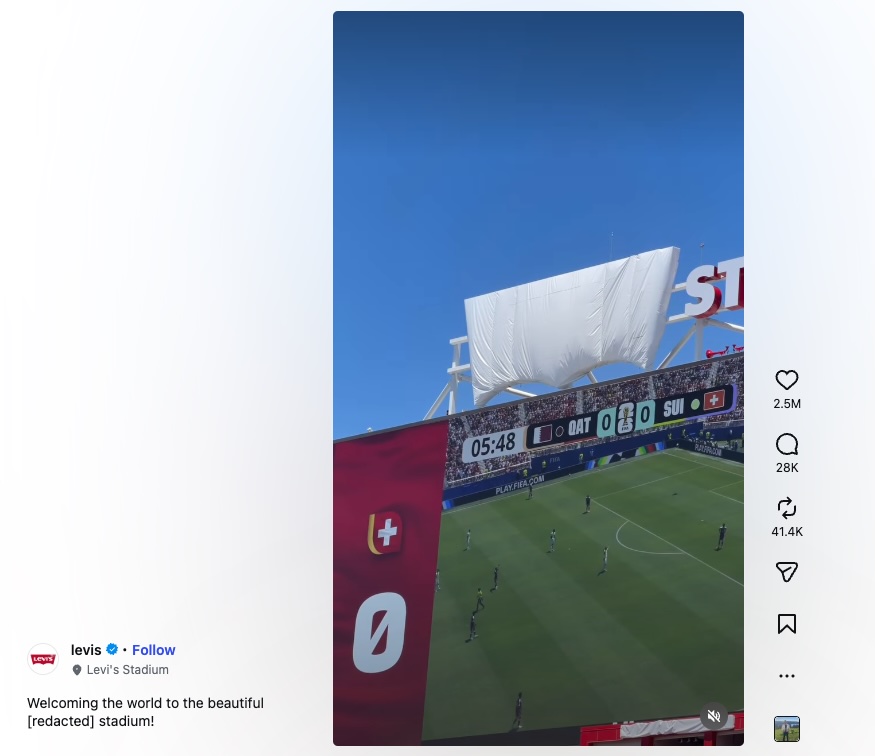
- June: Levi’s faced strict stadium sponsorship rules that forced them to cover up their branding at a major Bay Area arena. Rather than hiding the oversight, Levi’s leaned into the absurdity, posting a Reel welcoming visitors to the "[redacted] stadium" using trending audio. The post generated 2.5 million engagements—their highest of the year—and sparked a limited-edition merch drop.
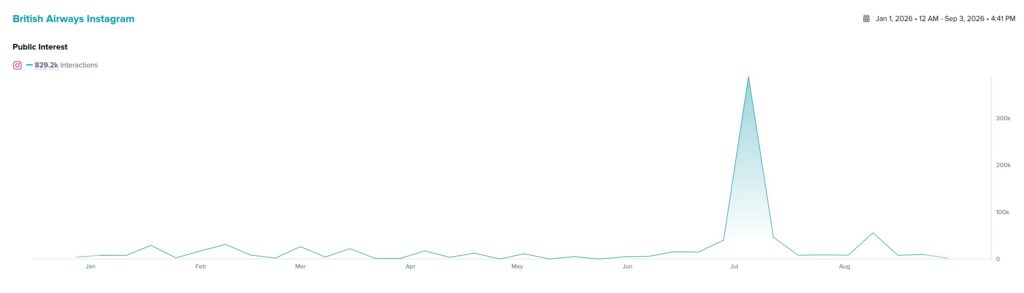
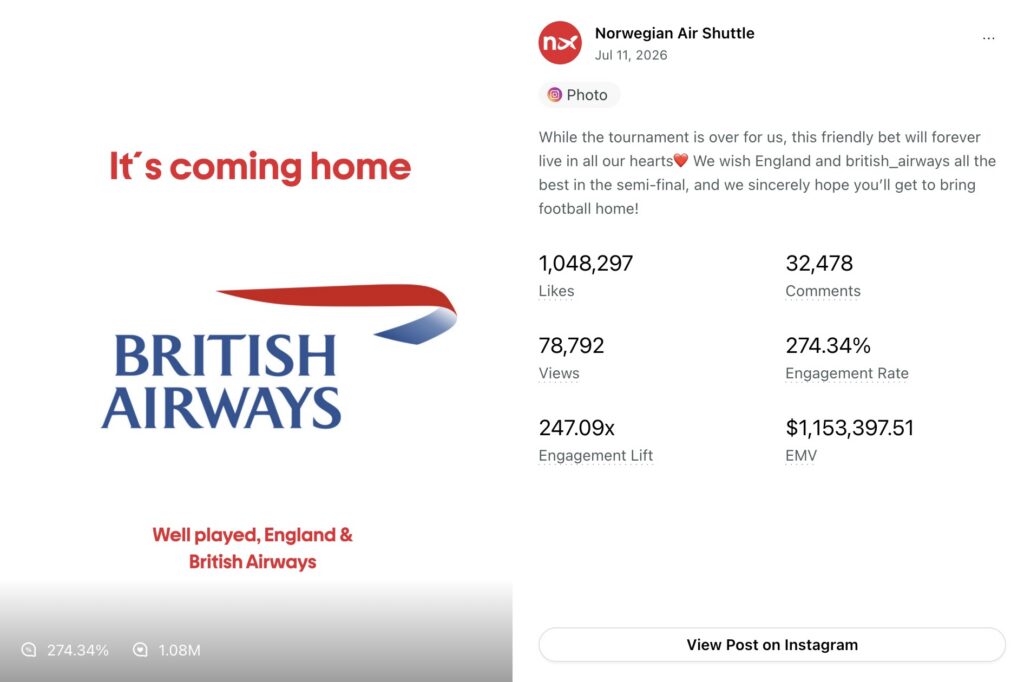
- July: As the tournament reached its quarter-finals, British Airways and Norwegian Airlines launched a high-stakes, friendly Twitter-and-Instagram bet. When England defeated Norway, Norwegian honored the wager by temporarily changing its corporate logo to that of British Airways, netting over a million likes and $1.1 million in EMV.
Mid-to-Late Summer: Public Sector Milestones and Internet Lore
As global sports fatigue gave way to regional updates, public entities and quirky consumer brands stole the spotlight. In July, WSDOT celebrated its 10,000th successful animal crossing over the Snoqualmie Pass via I-90. The Reel pulled in nearly half a million engagements, cementing the department’s reputation for pairing infrastructure success with community-focused storytelling.
Simultaneously, brands like McDonald’s tapped into internet subcultures—such as the viral "Backrooms" cinematic lore—reimagining liminal spaces through a branded lens to secure first-mover advantage in trend forecasting.
Supporting Data and Analytics
Quantitative metrics from platforms like Sprout Social provide a clear picture of why these strategies outperformed traditional digital advertising.
| Brand / Organization | Campaign Focus | Key Metric / Performance Indicator | Estimated Earned Media Value (EMV) |
|---|---|---|---|
| Adidas Football | Messi #YouGotThis / World Cup | 15M+ interactions on single co-posts | ~$100 Million (May–July) |
| Levi’s | "[Redacted] Stadium" Stunt | 2.5 Million engagements (Top post of the year) | Not publicly disclosed (Drove direct merch sales) |
| Norwegian Airlines | England vs. Norway Euro/World Cup Wager | 1 Million+ likes on logo-swap post | $1.1 Million |
| Grillo’s Pickles | Global Pickle Adventures | 14 Million+ total engagements YTD | $40+ Million |
| NASA | Artemis II Moon Mission | 130 Million+ total engagements YTD | Public Sector / Institutional Value |
| McDonald’s | Backrooms / Pop Culture Collabs | 500k+ cross-platform engagements | High organic reach & retention |
The data confirms a distinct correlation between narrative risk-taking and financial return. When brands step outside the comfort zone of standard product carousels, audience retention and earned media value scale exponentially.
Official Responses and Industry Insights
Marketing executives and institutional communications leads have increasingly recognized that modern audiences possess an ultra-refined tolerance for corporate posturing.
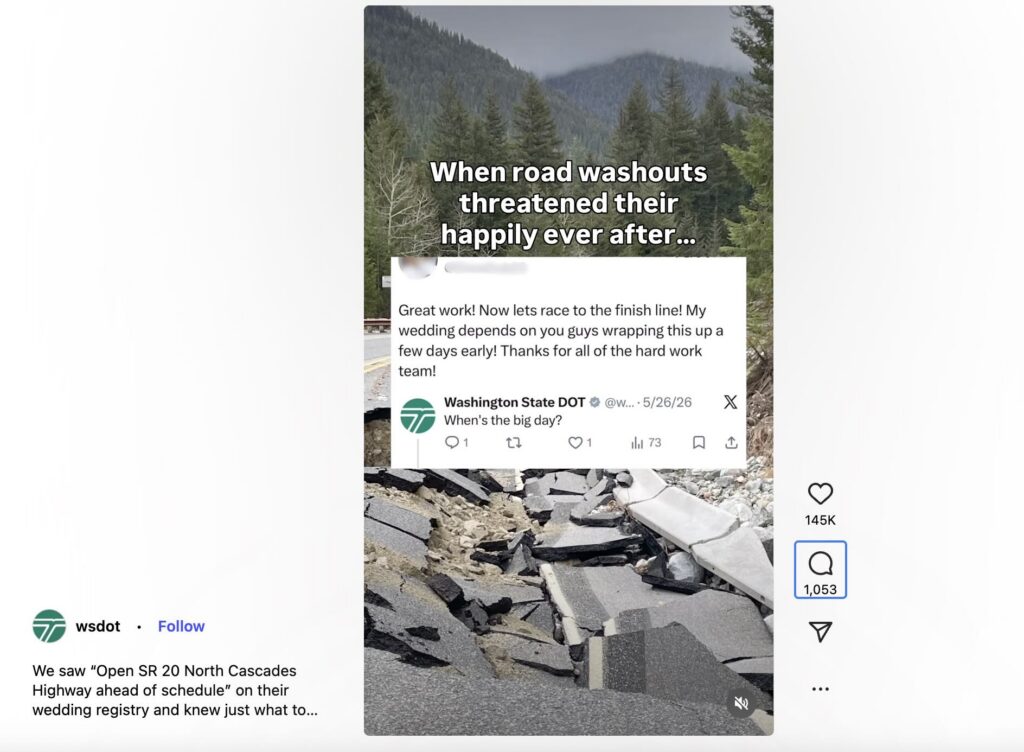
Industry analysts tracking the 2026 social landscape emphasize that community-building is no longer an ancillary metric. "People want to feel like they are interacting with an entity that understands the pulse of the internet," notes a recent Sprout Social insight report. "When an institution like WSDOT accelerates a highway reopening to help a couple meet their wedding registry wishes, or when Grillo’s Pickles takes a literal pickle to stand before the Statue of Liberty, they are building equity that no paid banner ad can buy."
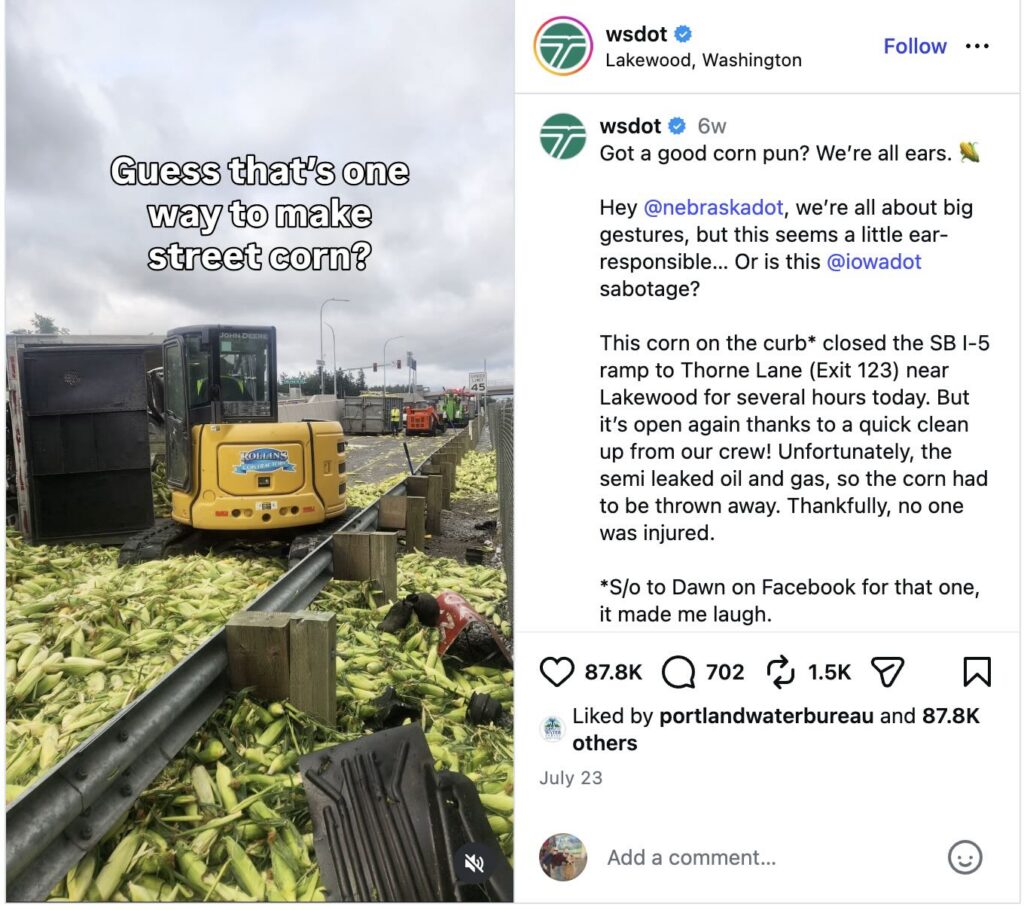
Public sector representatives have echoed these sentiments. Communications leads at departments of transportation note that humor acts as a vital "low-stakes narrative hook." By breaking up safety announcements and structural reports with jokes about spilled corn or inter-state rivalries, public institutions have successfully bridged the gap between civic duty and digital entertainment.
Implications for Content Teams: The Playbook for Moving Forward
What can social media managers, creative directors, and marketing teams take away from the 2026 data? Industry experts have broken down several actionable "plays" derived from this year’s top performers:
- Leverage Star Power Holistically: If you collaborate with influencers, creators, or elite athletes, do not treat their accounts as isolated billboards. Use cross-posting mechanics and collaborative features to harness their built-in audiences directly.
- Turn Restrictions into Creative Fuel: Red tape, legal guidelines, and platform limitations should be treated as prompts for irony and self-awareness. When Levi’s covered up its stadium signage, it didn’t cry foul; it leaned into the joke, inviting the audience to be accomplices in the humor.
- Build Your Own World: Trend-surfing is fleeting. Brands like Grillo’s Pickles succeeded by establishing an eccentric, self-contained universe where the product is a character experiencing absurd, real-world adventures.
- Humanize the Magnificent: Whether launching rockets to the moon or managing multi-million-dollar transport grids, highlighting human elements—such as a floating jar of Nutella or an early road opening for a wedding—transforms cold institutions into relatable entities.
- Prioritize Cultural Fluency Over Hard Selling: Audiences reject intrusions, but they welcome clever participants. By understanding the cultural zeitgeist before it peaks, brands can secure first-mover advantages that convert passive scrollers into active brand advocates.
As Instagram continues to evolve as a primary hub for visual culture, the mandate for brands is clear: stop trying to make the sale in the comment section. Instead, join the conversation, embrace the absurdity, and let your brand become a natural part of the cultural fabric.
Related posts: