Comments Off on Inside the Apple iPhone 18 Pro: How a Quest for Low-Light Perfection Led to Mobile Photography’s Most Advanced Variable Aperture
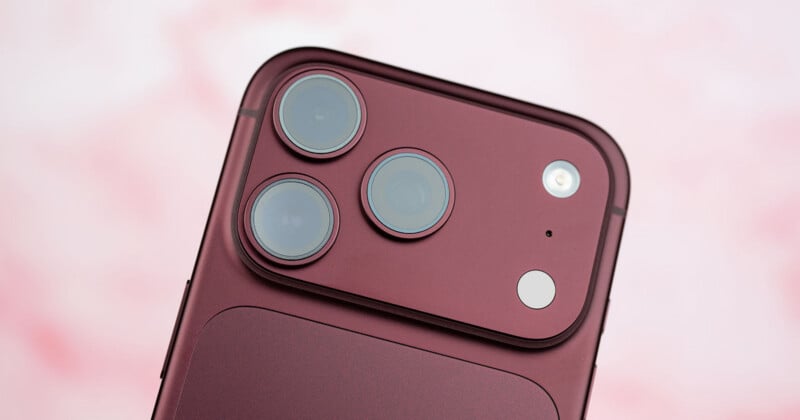
At first glance, the Apple iPhone 18 Pro and iPhone 18 Pro Max look almost indistinguishable from their predecessors. They retain the familiar polished titanium chassis, the refined flat edges, and the unmistakable triple-lens matrix resting comfortably in the upper-left corner of the rear glass. Yet, beneath this deceptively familiar exterior lies a tectonic shift in mobile imaging architecture. For the first time in the history of the smartphone line, an iPhone features a mechanical variable-aperture main camera.
In a rare, unscripted technical briefing, Apple executives sat down with PetaPixel to pull back the curtain on this engineering marvel. The conversation offered a fascinating look at the philosophy driving one of the world’s most valuable product lines, illuminating why Apple chose this moment to embrace a technology that many industry rivals previously abandoned.
Main Facts: The Anatomy of the iPhone 18 Pro’s New Main Camera
The crowning achievement of the iPhone 18 Pro series is its newly engineered main camera module, designed from the silicon up to bridge the gap between computational photography and traditional optical mechanics.
The Core Hardware: The primary wide camera introduces a blazing-fast native lens capable of opening up to f/1.48.
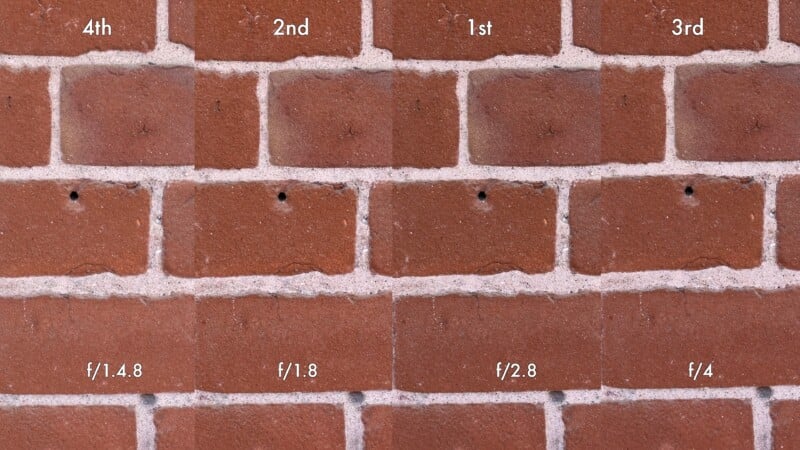
User-Accessible Settings: While the internal hardware supports a stepless range, Apple currently exposes four discrete user-selectable f-stops within the native Camera app: f/1.48, f/1.8, f/2.8, and f/4.
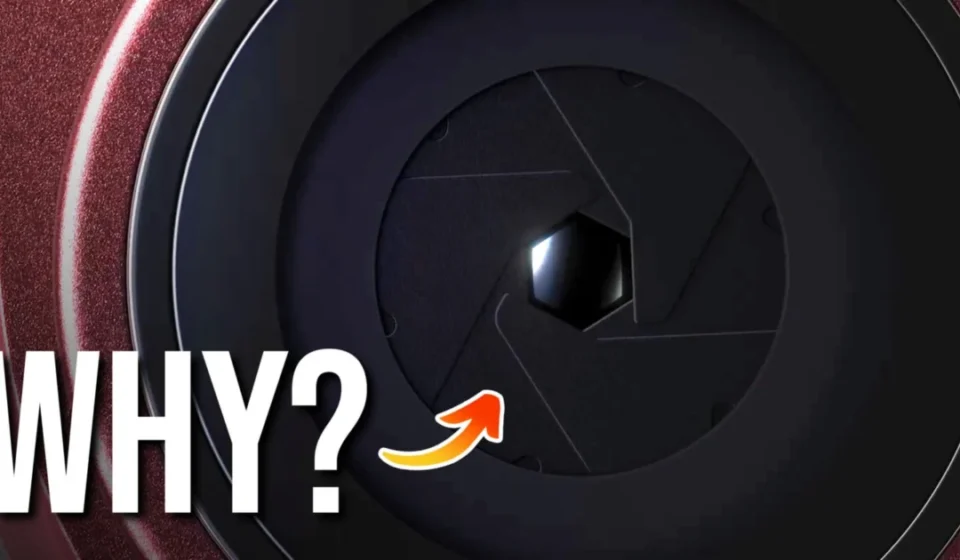
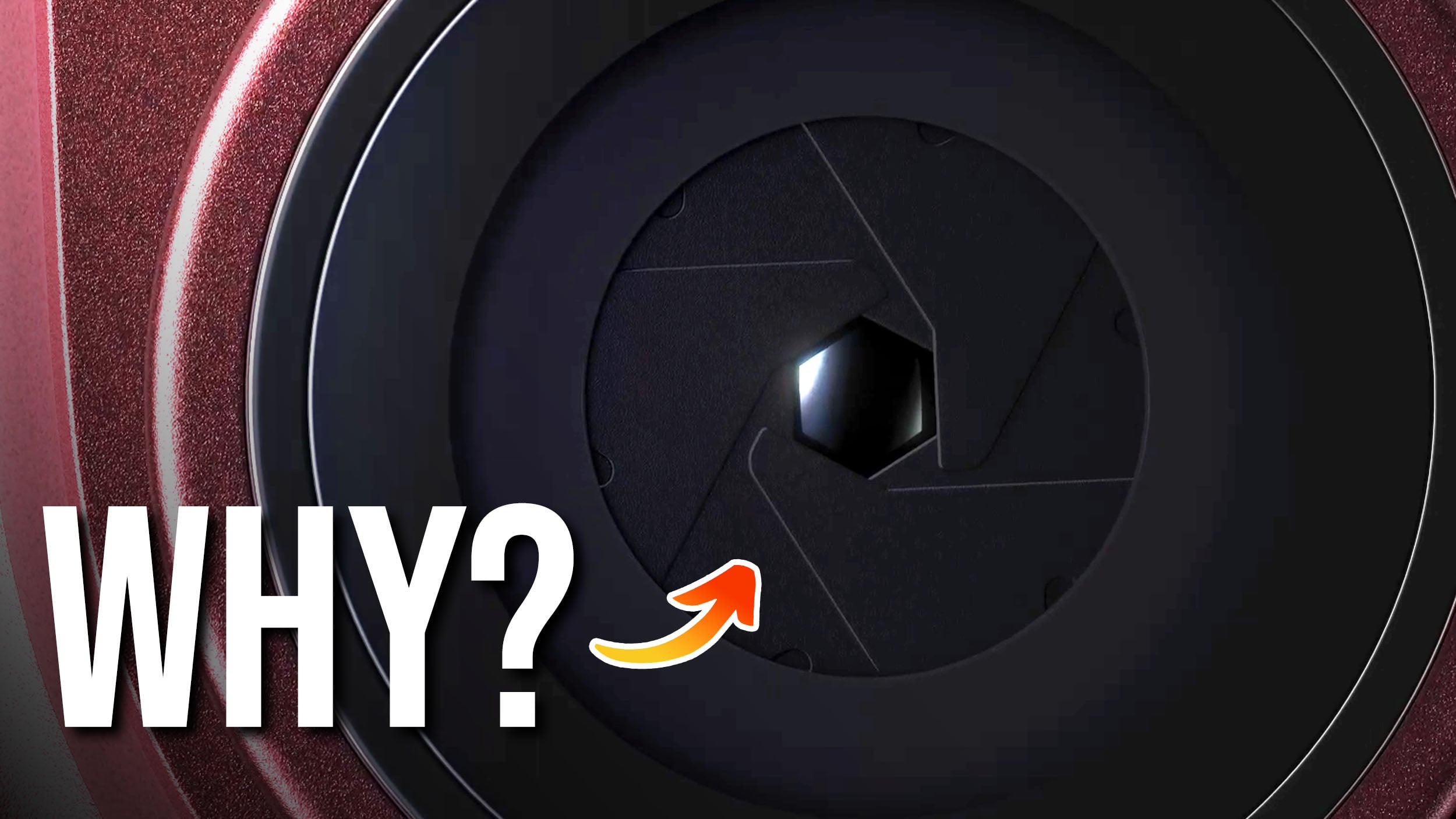
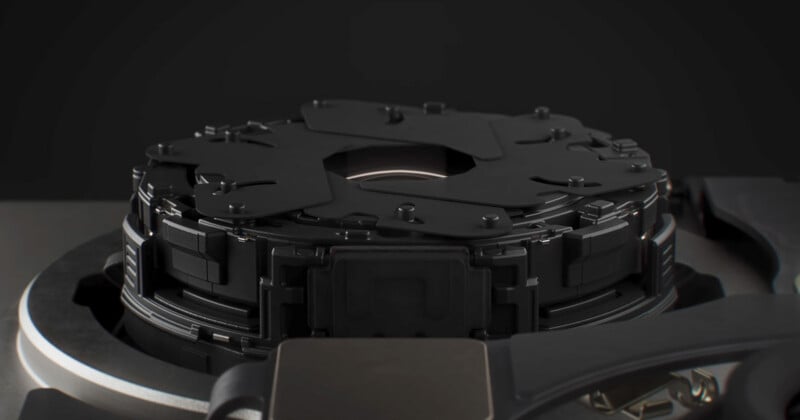
The Mechanical Marvel: To control light entry without sacrificing optical integrity, the aperture module utilizes six laser-cut blades fashioned from a proprietary polymer composite. Each blade is thinner than a human hair, driven by an ultra-compact internal rotor mechanism built specifically to fit within strict smartphone spatial constraints.
Pro Controls Integration: For the first time natively within Apple’s primary camera interface, users gain access to granular manual adjustments over shutter speed, ISO, and aperture, seamlessly tied into Apple’s deep computational processing pipeline.
Chronology: How a Single Quest for Better Image Quality Triggered a Hardware Revolution
The arrival of the iPhone 18 Pro’s variable aperture did not stem from a sudden desire to mimic old-school DSLR mechanics. Instead, it was the final destination on a cascading engineering journey that began with a singular, fundamental goal: improving low-light image sensitivity.
Step 1: The Sensitivity Dilemma
Matt Waldon, Apple’s Senior Director of Camera & Depth Hardware, explained that the team continually evaluates ways to pull more light onto the sensor. When engineering the next generation of mobile hardware, developers generally have two paths to increase sensitivity: physically enlarging the sensor, or increasing the speed of the lens.
While larger physical sensors sound appealing on paper, they carry severe drawbacks in smartphones. They require vastly more physical volume inside the chassis, demand significantly larger and heavier lens elements, and push processing pipelines to their limits to manage optical distortions at the edges of the frame.
Step 2: Choosing Speed Over Size
Apple decided that making the lens faster was the more prudent path for the Pro form factor, driving the aperture down from the traditional f/1.8 to an ultra-wide f/1.48.
However, optical physics dictates that there is no free lunch in lens design. While an f/1.48 aperture excels in deep twilight, it introduces optical compromises in everyday scenarios. When shooting subjects close to the camera while trying to maintain sharpness across a broader background, an ultra-fast aperture can lead to unwanted shallow focus drop-off and optical aberrations.
Step 3: Inventing the Variable Solution
Faced with this limitation, Apple’s engineers realized that a fixed f/1.48 lens was too restrictive for a general-purpose smartphone camera. To harness the light-gathering benefits of an f/1.48 optic without suffering its downsides in bright daylight or complex multi-subject scenes, the lens had to be variable.
Once a variable aperture was locked into the roadmap, a logical domino effect took hold. If the hardware can physically alter its aperture, users must be given the tools to control it. This realization forced the long-awaited overhaul of Apple’s native Camera app, birthing the robust "Pro Controls" suite that finally brings native manual overrides to the iPhone platform.
Supporting Data: Why Six Blades and Four Settings Strike the Balance
Fitting a mechanical aperture mechanism into a smartphone is notoriously difficult. Many competitors experimented with variable apertures years ago, only to quietly drop the feature in subsequent generations due to mechanical failure rates, thickness penalties, and thermal constraints. Apple’s approach relies on rigorous materials science and precise mechanical optimization.
The Engineering of the Six-Blade Rotor
When asked why Apple settled on a six-blade configuration, Matt Waldon pointed directly to physical constraints.
"The more blades you add, given the size constraints, it becomes difficult to fit them all in… Obviously, we want enough blades to give sort of a nice, smooth aperture at every setting. So we did a lot of optimization around the shape of the blades… It impacts how bokeh and out-of-focus areas look. It impacts how the starburst looks. So for this particular design, six was really the sweet spot."
The blades themselves are marvels of modern engineering. Laser-cut from a specialized polymer composite chosen by Apple, they balance mass, flexibility, and extreme thermal durability. Thinner than a single human hair, they operate silently alongside a micro-rotor that withstands daily drops, pocket friction, and thousands of actuation cycles.
Decoding the Four Aperture Values
Out of the box, the iPhone 18 Pro defaults to f/1.8. Apple’s internal testing revealed that f/1.8 remains the ultimate "sweet spot" for everyday mobile shooting. It balances exceptional edge-to-edge sharpness with pleasing subject separation, keeping images crisp while avoiding the optical aberrations found at f/1.48 or the diffraction-induced softness that creeps in at f/4.
f/1.48: Optimized for extreme low-light conditions, maximizing sensor sensitivity and minimizing digital noise, though requiring careful subject distance management.
f/1.8: The default workhorse. Delivers high contrast, razor-sharp rendering, and natural background separation for everyday snapshots.
f/2.8: Ideal for landscape or environmental portraiture where greater depth of field is required to keep both foreground and background elements in focus.
f/4: Utilized for maximum depth of field and to achieve controlled, brilliant starburst diffraction effects around pinprick light sources in bright daylight or night scenes.
Official Responses: Bridging Simplicity and Pro-Level Power
For Apple’s product marketing and engineering teams, the iPhone 18 Pro represents a delicate tightrope walk: satisfying professional visual artists while ensuring the device remains entirely frictionless for the casual user.
Jeremy Hendricks of Apple’s iPhone Product Marketing team emphasized that accessibility remains paramount.
"Especially on our Pro line, we really want to make it as simple as possible for anyone to get the best shot possible, all while giving really technically advanced capabilities for pros, people who may be experienced in photography and videography."
This philosophy is reflected in how the software behaves. By default, the iPhone 18 Pro remains a quintessential point-and-shoot camera. The computational photography pipeline—handling Deep Fusion, Smart HDR, and Apple’s advanced Picture Styles—operates entirely in the background, regardless of what aperture setting the hardware is currently utilizing.
At the same time, for experienced shooters, the introduction of native Pro Controls unlocks unprecedented creative control without forcing users to rely on clunky third-party applications. As Matt Waldon notes, once users begin playing with shutter speeds, manual ISO ceilings, and aperture blades in tandem with Apple’s real-time audio and video grading tools, the creative runway expands exponentially.
Implications: What the iPhone 18 Pro Means for the Future of Mobile Imaging
The debut of the variable aperture on the iPhone 18 Pro and 18 Pro Max sends a clear signal to the mobile industry: computational photography and optical physics are no longer competing philosophies; they are deeply interdependent partners.
While past implementations of variable apertures by rival brands were frequently criticized as gimmicks that yielded negligible real-world differences, Apple’s calculated, deliberate integration changes the conversation. By treating the physical aperture as a gateway to better low-light performance—and building out the mechanical reliability required for long-term daily use—Apple has validated a hardware approach that others abandoned.
For the mobile photographer and videographer, the implications are profound. Cinematographers can now dial in precise shutter angles using physical light control rather than relying purely on digital neutral density filtering or artificial software blur. Landscape photographers can push toward f/4 to capture crisp horizon-to-horizon detail without heavy reliance on multi-frame focus stacking.
What started as an engineer’s simple ambition to capture a cleaner night-time photograph has ultimately yielded the most mechanically sophisticated camera system ever fitted into a pocket-sized device. The iPhone 18 Pro proves that even in an era dominated by artificial intelligence and algorithmic rendering, the mastery of physical optics remains the ultimate frontier.