The Blood-Stained Shadows of the Habsburgs: Unmasking Vienna’s Forgotten Vampire Lore

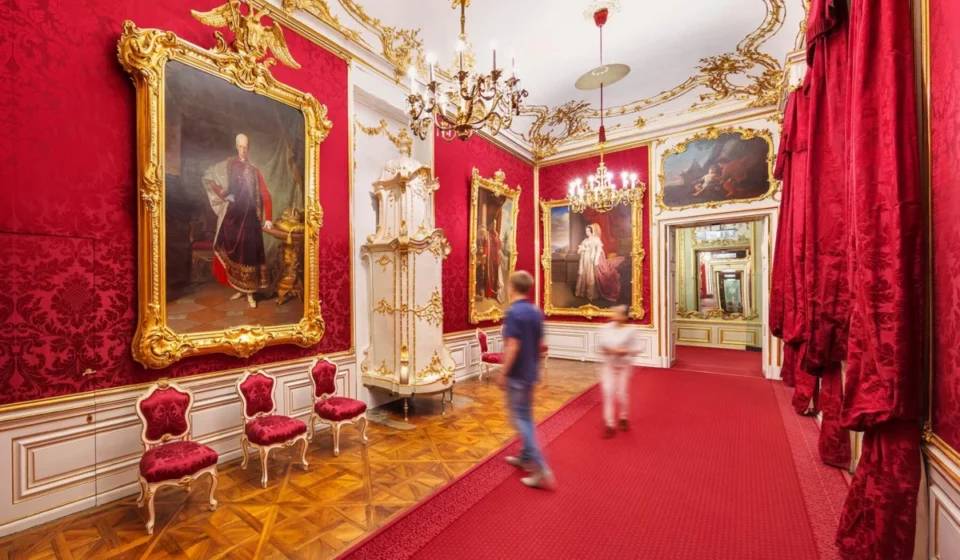
As one wanders through the gilded corridors of Vienna’s Schönbrunn Palace, the air is thick with the scent of beeswax and the silent, judging stares of centuries-old oil portraits. These canvases capture the stoic, powdered faces of the Habsburg dynasty—the architects of a sprawling empire that once commanded the fate of Europe. To the modern tourist, these halls represent the pinnacle of Baroque refinement, a place where Empress Maria Theresa once held court and where the melodies of Mozart once danced against the stucco.
Yet, beneath the veneer of imperial majesty lies a darker, more primitive narrative. While the palace serves as a bastion of Enlightenment-era elegance, it was also the administrative heartbeat of an empire that spent the 17th and 18th centuries grappling with a terrifying, subterranean fear: the belief in the vampire. While today we relegate such creatures to the realm of Gothic literature and silver-screen fantasies, to the Habsburgs, these blood-lusting ghouls were a genuine threat, one that required official state investigations, military reports, and, at times, cold-blooded intervention.
The Dual Faces of Terror: The Countess and the Soldier
The history of vampirism in the Habsburg realms is anchored by two distinct, chilling cases that permeated the royal consciousness. The first was a matter of noble depravity; the second, a matter of rural mass hysteria. Together, they form a grotesque tapestry that contrasts sharply with the pristine, manicured lawns of Schönbrunn.
The Vampire Countess: Elizabeth Báthory
Long before the term "vampire" was solidified in Western folklore, the figure of Elizabeth Báthory cast a long shadow over the Hungarian territories of the Habsburg Empire. Born in 1560 into one of Hungary’s most powerful families, Báthory was a woman of immense privilege and profound psychological fracture.
Her life was marred by the influence of her upbringing, which was defined by the pervasive inbreeding of the European aristocracy, manifesting in her own struggles with epilepsy and volatile mood swings. However, it was her marriage to Count Ferenc Nádasdy—a man known for his sadistic predilections—that catalyzed her descent into madness. Nádasdy famously forced his young bride to witness horrific acts of torture, desensitizing her to human suffering and planting the seeds of her own blood-soaked legacy.

Báthory’s notoriety rests upon the staggering claim that she murdered as many as 600 young women. The legend persists that she sought the secret to eternal youth by bathing in the blood of her victims. While the "vampire" moniker was applied retrospectively, her behavior—the draining of life and the pursuit of immortality through gore—solidified her place in the darker annals of history. Her reign of terror eventually reached the ears of the Habsburgs, forcing Emperor Matthias to intervene, leading to her imprisonment at Cachtice Castle, where she died in 1614.
The Medveda Monster: Arnold Paole
If the Báthory case was a crime of the aristocracy, the case of Arnold Paole in 1732 was a contagion of the peasantry. Situated in the village of Medveda (now in Serbia), this incident occurred at the height of what historians call the "18th-century vampire craze."
Paole, a soldier, had died in a tragic accident involving a broken neck. However, his death was merely the prologue. Locals soon claimed that Paole had returned from the grave, stalking the village and killing four residents. The desperation of the villagers reached such a fever pitch that the Habsburg authorities were forced to act. Emperor Charles VI dispatched a medical team led by military physician Johannes Fluckinger to investigate.
The resulting official report is one of the most significant documents in the history of folklore. Fluckinger described exhuming Paole’s body, noting that the corpse had not decomposed in the expected manner. Instead, "fresh blood" was found to be oozing from the eyes, nose, and mouth—the classic signs of a vampire according to the superstitions of the time. The subsequent "cleansing" of the village, which involved the stabbing and burning of multiple corpses, stands as a chilling testament to how deeply the fear of the supernatural had penetrated the bureaucratic and social structures of the Habsburg Empire.
Chronology of a Dark Obsession
To understand why the Habsburgs were so preoccupied with these phenomena, one must look at the timeline of their expansion.

- 1560–1614: The life and "reign" of Elizabeth Báthory. Her actions forced the Habsburgs to confront the brutality occurring within their own borders, though the aristocracy largely shielded her until the scale of her crimes became impossible to ignore.
- 1600s: The era of the Habsburg expansion into Hungary and the Balkans. As the empire pushed into new, rural territories, they encountered folklore and superstitions that were alien to the refined culture of Vienna.
- 1720s–1730s: The peak of "vampire mania." Reports of the undead began flooding into the Viennese court from the newly annexed territories in the Balkans.
- 1732: The official investigation into the Medveda incident. This marked the moment the Habsburg government officially engaged with the concept of the "vampire" through the lens of military science and medical reporting.
The Architecture of Denial: Schönbrunn Today
Walking through the Grand Gallery of Schönbrunn Palace, the contrast between the environment and these tales is jarring. The palace is an ode to the Enlightenment—a triumph of rationalism, geometry, and human achievement. It boasts 1,441 rooms, each designed to project power, stability, and order.
The internal architecture, characterized by vivid wallpaper, intricate frescoes, and gilded furnishings, serves as a deliberate distraction from the raw, unrefined reality of the frontier lands where these "monsters" supposedly lurked. The park outside, with its hedge-lined labyrinths and the iconic Gloriette, represents the Habsburgs’ attempt to tame nature itself. Yet, the existence of the Medveda report in the royal archives confirms that even at the center of this civilized power, the specter of the irrational remained a persistent, albeit hushed, guest.
Official Responses and Bureaucratic Fear
The Habsburg response to these incidents was not one of mystical belief, but of bureaucratic containment. When the Crown investigated the Medveda case, they did not send priests; they sent military doctors. The Habsburgs viewed these reports as potential threats to order and public health. If a village believed it was being haunted, it was a threat to productivity and loyalty to the Emperor.
By documenting these "vampires," the Habsburgs were attempting to neutralize the fear through the scientific language of the day. They wanted to understand why a body might appear fresh after death or why a community would descend into such violent paranoia. In doing so, they inadvertently validated the hysteria, creating a permanent record that has ensured these ghouls remain immortal in the history books long after the dynasty itself has fallen.
Implications for Modern Tourism
Today, Vienna is celebrated as a city of art, music, and intellectual history. The "vampire" narrative is largely absent from official tourism guides for Schönbrunn Palace. Visitors are treated to the splendor of the Maria Theresa era, but the darker stories remain hidden behind the heavy curtains of the palace windows.

However, the implications of these stories remain profound. They remind us that the transition from the medieval to the modern world was not a smooth, linear progression. It was a messy, terrifying struggle between the light of the palace and the shadows of the forest. The Habsburgs, for all their wealth and influence, were as vulnerable to the irrational as the lowest peasant in their realm.
As the sun sets over the Gloriette and the shadows stretch across the palace lawns, it is worth remembering that the history of Vienna is not just one of grand balls and imperial decrees. It is also a history of the night, of the fears that kept emperors awake, and of the monsters that were, for a brief time, considered just as real as the crown itself. The next time you visit Schönbrunn, look closely at the portraits hanging in the dim light of the corridors. Behind the stern gazes of the Habsburg monarchs, there lies a history that refuses to be entirely buried—a testament to an age when the boundaries between reality and nightmare were, quite literally, a matter of life and death.