Review: The NiSi 16mm f/2.8 ASPH. Lens Breathes Rare, Extreme Width Into the Fujifilm GFX Medium Format System

Main Facts
The medium format landscape has a new, aggressively wide glass option. The NiSi 16mm f/2.8 ASPH. lens brings an expansive 118-degree field of view to large-sensor digital cameras, catering primarily to the Fujifilm GFX ecosystem and the Hasselblad X series. When mounted on a medium format body like the vintage-yet-capable Fujifilm GFX 50S, the lens yields a full-frame equivalent field of view of roughly 12.6mm.
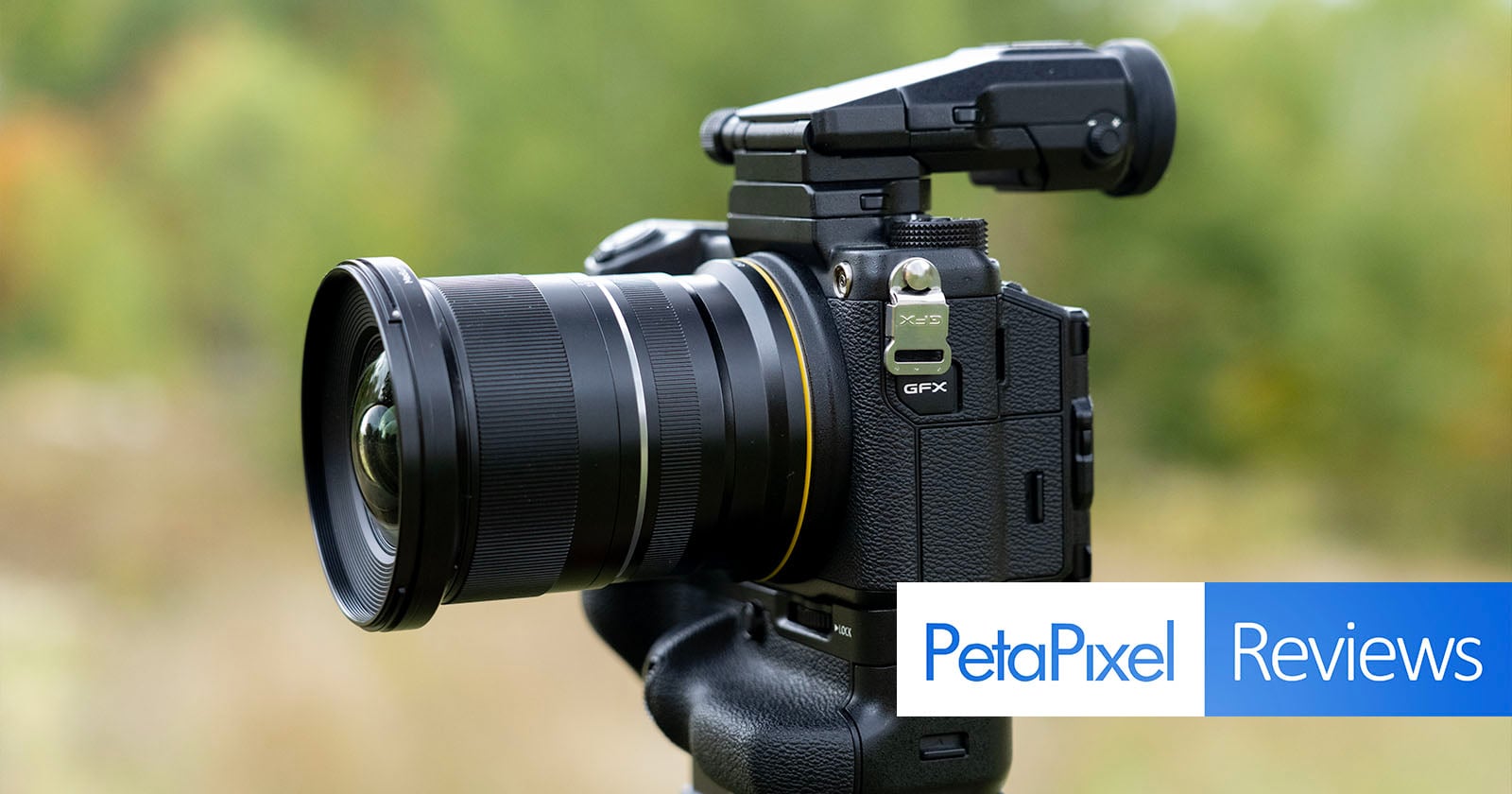
Priced competitively at around $1,399 (with promotional discounts bringing it down to roughly $1,189), the NiSi 16mm f/2.8 sits in a completely different financial league than first-party alternatives. It is a fully manual-focus, manual-aperture prime that features no electronic data-transfer contacts. This means zero EXIF communication, requiring shooters to manually log settings and configure their camera bodies to fire without an attached lens.
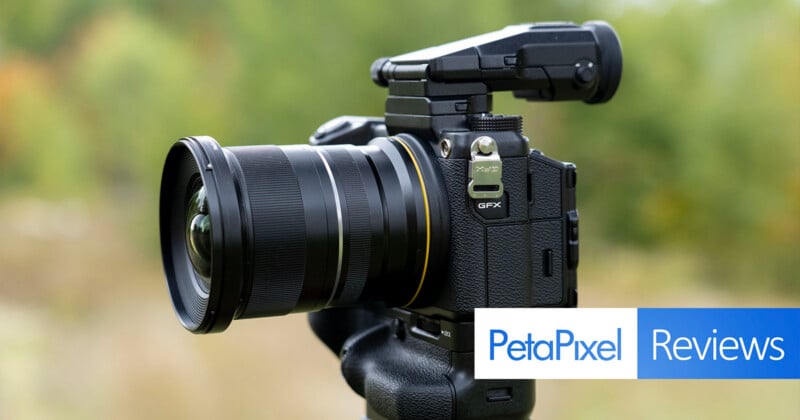
Despite these mechanical and workflow hurdles, the optic boasts an advanced optical formula comprising 16 elements in 12 groups—including three aspherical elements and four ultra-low dispersion elements—housed within a robust, weather-sealed metal chassis. It accepts standard 82mm filters (though standard filters risk vignetting) and ships bundled with a JetMag Pro 95MAG magnetic filter adapter ring for 95mm systems.
Chronology and Field Testing
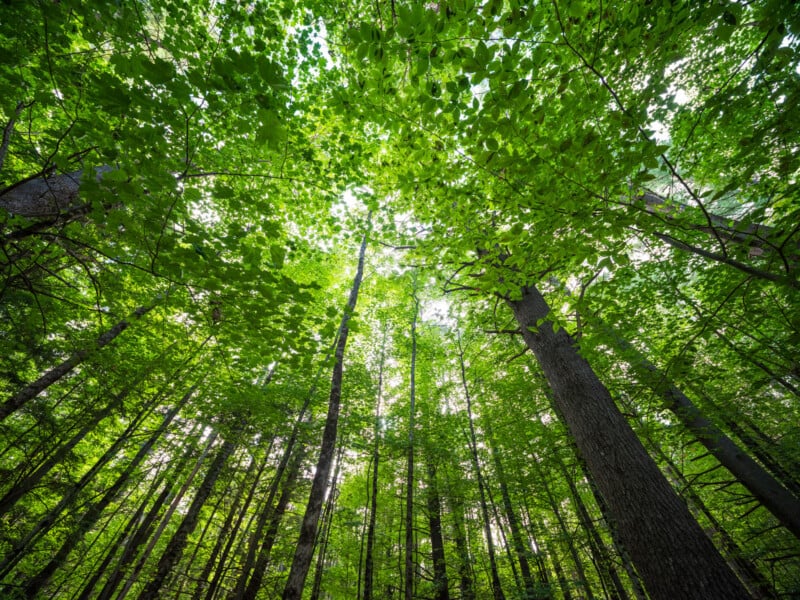
To understand how the NiSi 16mm f/2.8 ASPH. performs, reviewers took the lens out into diverse natural environments, testing everything from sweeping landscapes and forest canopies to architecture and night skies.
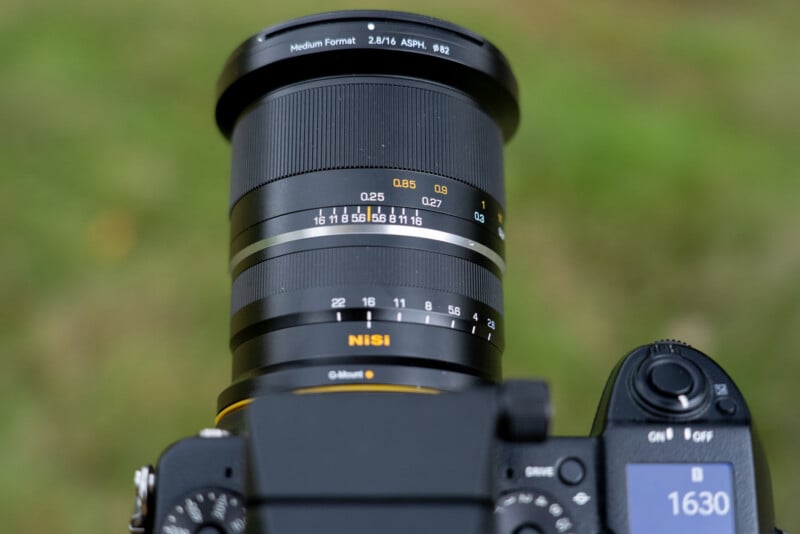
- Initial Mounting and Setup: Upon attaching the lens to the GFX body, the lack of electronic communication immediately presents a minor friction point. Users must navigate their camera menus to enable "Shoot Without Lens" mode. Because there are no electronic contacts, the camera permanently registers an aperture value of f/1 in the EXIF data, leaving the photographer to rely entirely on memory or physical inspection of the barrel to track settings.
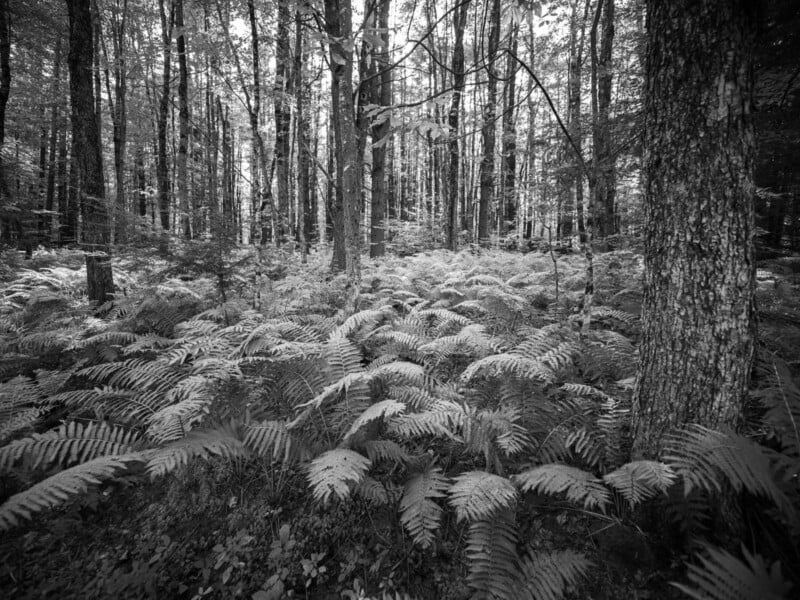
- Daytime Landscape and Close-Focus Trials: During daylight excursions into dense woods and open fields, the lens proved remarkably flexible regarding its minimum focusing distance. At just 0.25 meters (under 10 inches), photographers could close in on flora, fauna, and architectural details to yield dynamic, exaggerated perspectives. Stopped down to f/4 or f/5.6, the optical resolution across the frame surged, showcasing exceptional center-to-edge sharpness.
- Astrophotography Sessions: Given the dearth of fast, ultra-wide options for medium format, the lens was subjected to rigorous nighttime tests. While wide-open performance at f/2.8 delivered mostly circular star points with minimal chromatic aberrations, heavy corner vignetting proved challenging to manage during post-processing, demanding patient digital intervention.
Supporting Data and Technical Specifications
When stacked against the ecosystem’s first-party options and alternative third-party glass, the NiSi 16mm f/2.8 carves out a distinct space defined by physical metrics, pricing, and optical architecture:
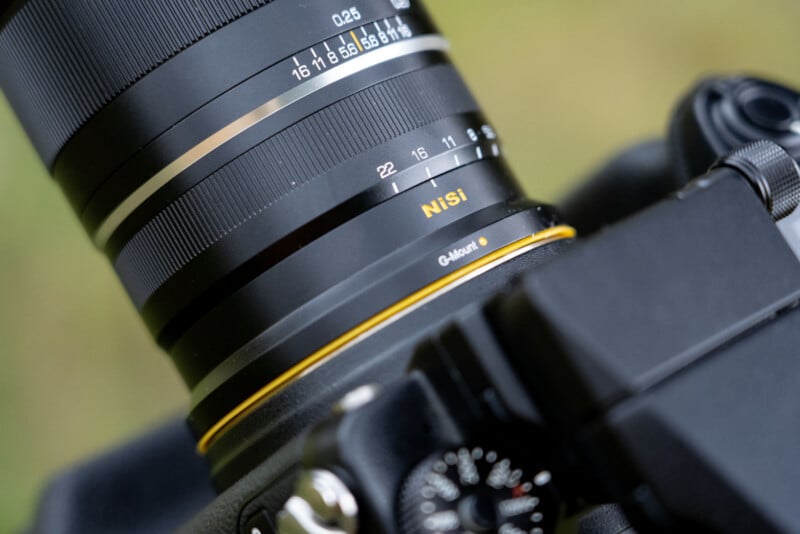
- Focal Length & Crop Factor: 16mm physical focal length; translates to a ~12.6mm equivalent on Fujifilm’s 4:3 medium format sensor.
- Aperture Range: f/2.8 to f/22, governed by an 8-bladed manual aperture ring with full-stop detents.
- Optical Construction: 16 elements in 12 groups, incorporating 3 aspherical elements and 4 ED (ultra-low dispersion) elements.
- Dimensions & Weight: Measures 108mm (4.3 inches) in length, matching the heft and dimensions of Fujifilm’s own GF 23mm f/4 R LM WR, carrying a dense, all-metal build.
- Minimum Focus Distance: 0.25 meters (approx. 9.8 inches).
- Pricing Comparison:
- NiSi 16mm f/2.8 ASPH.: $1,399 (regular) / $1,189 (sale)
- Fujifilm GF 23mm f/4 R LM WR: $2,999.95 (Autofocus, electronic communication, significantly narrower field of view)
- Fujifilm GF 20-35mm f/4 R WR: $2,899.95 (Zoom lens, wider than other GF glass but still not as extreme as 16mm)
- TTArtisan 17mm f/4 Tilt-Shift: $549 (A stop slower, features tilt-shift mechanics)
Official Responses and Manufacturer Intent
While NiSi is globally recognized by landscape and commercial photographers for its high-end optical glass filters, the company has methodically expanded its footprint into dedicated camera optics. Historically rooted in high-end cinema lenses—such as the NiSi 65 Prime 16mm T2.9 large-format cine lens for PL-mount video cameras—the photographic division appears to have directly adapted those cinematic optical layouts for still photography.
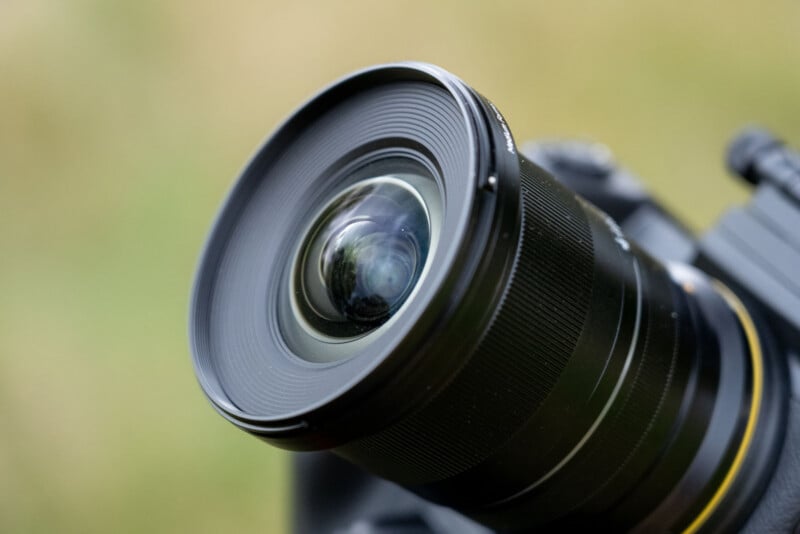
The inclusion of the JetMag Pro 95MAG magnetic filter adapter ring directly addresses feedback from hybrid shooters and filmmakers who utilize larger cinematic filter systems. NiSi positions the 16mm f/2.8 ASPH. as a bridge between high-end architectural, landscape, and specialized video production, giving medium-format sensor users access to a cinematic field of view previously unattainable without complex, expensive adapter setups.
Implications for the Fujifilm GFX Ecosystem
The introduction of the NiSi 16mm f/2.8 ASPH. carries several broader implications for medium-format photographers:
1. Filling a Wide-Angle Void
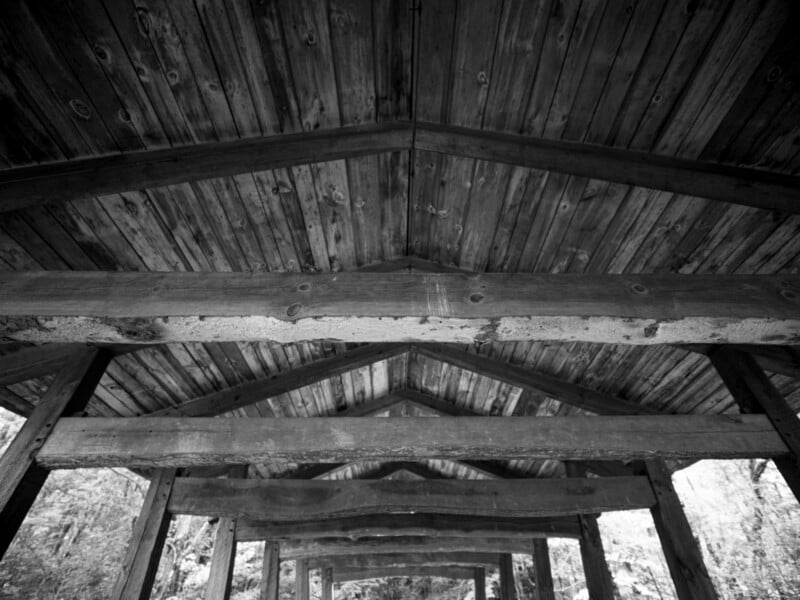
Fujifilm’s native GF lens lineup has matured impressively over the past decade, yet it has historically suffered from a lack of ultra-wide, fast prime lenses. While the GF 23mm f/4 and GF 20-35mm f/4 zoom are exceptional tools, they neither reach the extreme 118-degree perspective of the 16mm nor offer an f/2.8 aperture for low-light and astrophotography work. NiSi successfully targets this specific gap.
2. The Trade-Off Between Cost and Workflow Friction
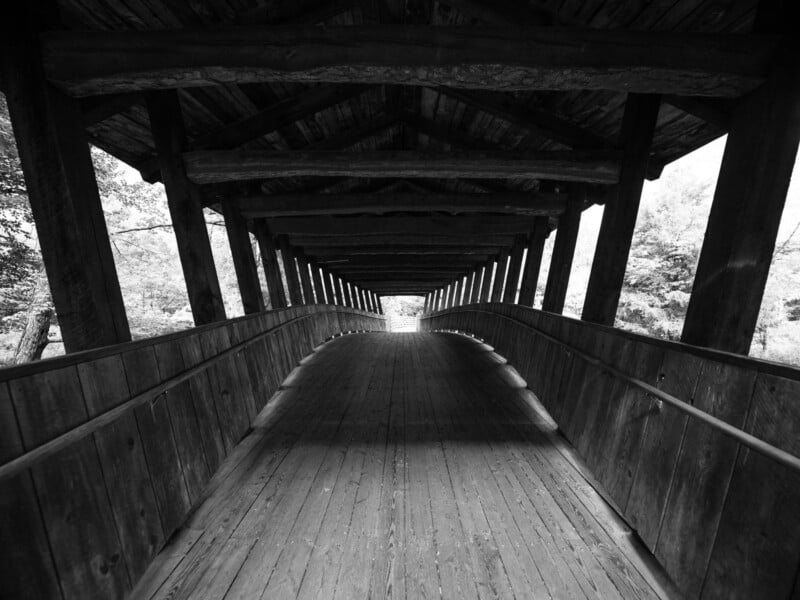
For budget-conscious medium-format users, saving upwards of $1,500 compared to first-party glass is a massive incentive. However, this savings comes with workflow compromises. The total lack of electronic communication strips away automated EXIF data, and manual focusing on older bodies like the GFX 50S requires patience and precision through sluggish electronic viewfinders (EVFs). On modern bodies like the GFX100 II, these manual-focus friction points are mitigated by higher-resolution, more responsive EVFs, but the missing aperture data remains an administrative hurdle in post-production.
3. A Niche Tool for Specialized Creators
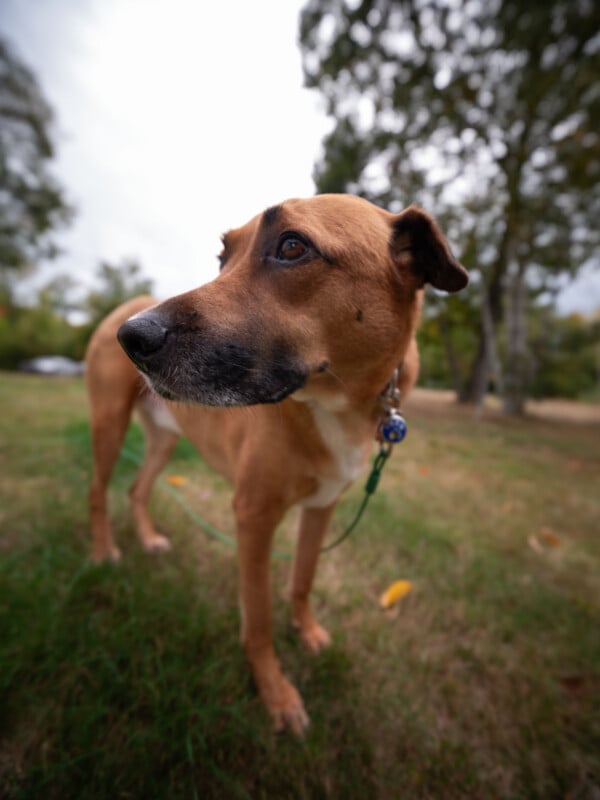
Ultimately, the lens is not an everyday walk-around optic for the average shooter. An ultra-wide field of view of this magnitude inherently produces busy, complex compositions that require deliberate curation. However, for landscape, architecture, and astrophotography enthusiasts willing to embrace manual workflows and post-processing corrections for vignetting, the NiSi 16mm f/2.8 ASPH. stands out as a sharp, robust, and uniquely capable instrument in the medium-format arena.