Chicago Hospitality on Edge: 7,000 Workers Poised for Potential Historic Strike

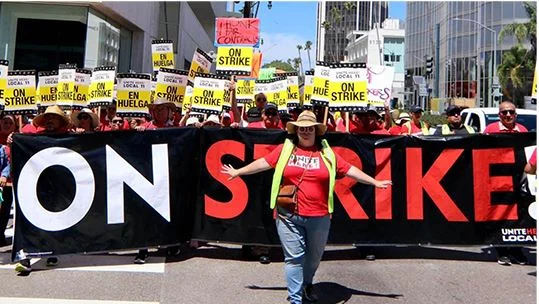
If you are a meeting planner, corporate traveler, or leisure tourist with upcoming reservations in downtown Chicago or near McCormick Place, you may be standing on the precipice of a significant travel disruption. A coalition of more than 7,000 hotel employees—ranging from housekeepers and cooks to front desk agents and food service staff—has voted by an overwhelming 85% margin to authorize a strike. This movement, spearheaded by Unite Here Local 1, threatens to trigger the largest hotel labor stoppage in the city’s history.
The potential labor dispute involves 46 hotels, including major industry stalwarts such as Hyatt, IHG, Hilton, and Marriott. From the gilded halls of The Ritz-Carlton Chicago to the high-traffic efficiency of the Home2Suites by Hilton McCormick Place, the threat is broad, encompassing both luxury and select-service properties. For a city that serves as a global hub for conventions and international tourism, the prospect of a walkout is not merely an operational hurdle; it is a potential economic crisis.
The Core Grievances: A Fight for Economic Survival
At the heart of this potential strike is a fundamental disconnect between the soaring profitability of the hospitality industry and the stagnant or declining quality of life for its workforce. Unite Here Local 1 has highlighted data from a recent survey of its membership that paints a stark picture: approximately one-third of these workers are unable to cover basic rent or mortgage payments, while nearly 30% report being unable to afford their monthly utility bills.
These economic anxieties are compounded by grievances regarding working conditions, health care benefits, and physical safety. For many, the job has become an endurance test.
"I voted yes to strike because I’ve had enough," says Cassandra Pope, a room attendant at the Palmer House Hilton. Her testimony serves as a window into the daily reality of the hospitality workforce. "They’re putting us on the schedule for six consecutive days without even asking us. They demand and demand, always rushing us in the rooms, without acknowledging that we are human beings. We only have two hands and two feet. I’m coming out of here extremely exhausted. And I have to come and work, because I need money to feed my four children."
Pope’s experience reflects a broader trend of "lean staffing" models that unions argue have pushed workers to their physical breaking points. As room occupancy and revenue per available room (RevPAR) recover from the pandemic-era slump, workers argue that the "post-pandemic" efficiency measures—such as reduced cleaning frequency or increased room quotas—have become permanent, unsustainable burdens.
Chronology of the Dispute
The path to this moment has been a steady march toward a contract expiration deadline. By the end of August, labor contracts at all but one of the affected 46 properties had officially expired. This expiration served as the catalyst for the strike authorization vote.
- Pre-August: Negotiations between Unite Here Local 1 and hotel management groups continued, with the union pushing for wage increases that track with inflation and the rising cost of living in Chicago.
- Late August: Labor contracts expired, legally positioning the union to initiate a strike should bargaining fail to yield a satisfactory agreement.
- Early September: The overwhelming 85% authorization vote was finalized, signaling to management that the rank-and-file membership is prepared to walk off the job.
- Current Status: The situation remains fluid. Unlike a single, synchronized walkout, labor experts suggest that any strike action in Chicago could occur in waves, staggered across different properties to maximize economic leverage and disrupt hotel operations in a sustained, strategic manner.
Supporting Data: A National Context of Labor Unrest
The Chicago situation is not an isolated incident; it is part of a broader, national resurgence of labor activism within the hospitality sector. Following a relatively quiet period in 2024, the labor front has reignited.
In 2025, Unite Here secured a landmark victory in Houston, where workers achieved a 25% wage increase in what was characterized as the first strike of its kind in Texas history. This victory provided a playbook for other chapters across the country. In the two years leading up to this summer, major gains were secured through strike actions or the credible threat thereof in key markets including Southern California, Honolulu, Boston, Baltimore, Las Vegas, and San Francisco.
These successes have bolstered the confidence of Chicago workers. The memory of the 2018 Chicago hotel strike—which involved 26 hotels and lasted four weeks—remains fresh. That strike, while grueling, resulted in a significant victory for the workers: the permanent securing of year-round health insurance. For many, this past success is proof that collective action remains the most effective tool for forcing management to the table.
Official Responses and Corporate Contingencies
The hotel chains caught in the crosshairs of this potential dispute have adopted a uniform stance: cautious calm. Management groups are working to reassure planners and guests that reservations remain secure for the time being.
In an official statement, a spokesperson for Hilton stated: "There is currently no labor disruption at the hotels, and a strike vote does not mean that there will be a strike. We are also focused on providing our guests with our signature hospitality and have contingency plans in place to ensure operations continue to run as smoothly as possible in the case of a work stoppage."
This rhetoric is standard procedure for large hotel conglomerates. By emphasizing that a vote is not a walkout, they aim to prevent a mass exodus of event bookings and individual travelers. However, the union is simultaneously reaching out to event organizers. Unite Here Local 1 has publicly suggested that some events have already begun to pivot, choosing to cancel or reschedule to avoid the potential chaos of a labor dispute.
Furthermore, the union is proactively providing meeting planners with "model contract language" that covers "excused non-performance due to labor dispute." This legal maneuver is designed to protect planners from cancellation fees should they choose to move their events to properties not involved in the labor strife.
The High Stakes of Autumn: Implications for Chicago
The timing of this dispute is particularly precarious for the city’s tourism board and the convention industry. October is one of the busiest months for Chicago, anchored by massive international events.
The most prominent of these is the Chicago Marathon, scheduled for October 11. The event is a massive logistical undertaking, drawing 55,000 runners from across the United States and more than 130 countries. The influx of tens of thousands of spectators creates a peak demand period for hotels. A strike during this weekend would not only be a public relations disaster for the city but would also create a catastrophic logistical nightmare for travelers who may find themselves arriving at hotels with picket lines instead of functioning front desks.
The Macroeconomic Impact
If a strike were to occur, the implications would ripple far beyond the lobbies of the impacted hotels:
- Event Tourism: Chicago’s reputation as a premier "Convention City" relies on the seamless operation of hotels near McCormick Place. Persistent labor issues threaten the long-term viability of the city’s bid for future trade shows.
- Labor Costs: Should the union win a wage increase similar to the 25% gains seen in other markets, hotels may be forced to pass these costs onto consumers through increased room rates or additional "resort" or "service" fees.
- Labor-Management Relations: The outcome of this dispute will set the tone for labor negotiations across the Midwest for the next decade. A win for the union would likely embolden hospitality workers in smaller regional markets, while a defeat could signal a period of retrenchment for the labor movement.
Conclusion: A City Watching the Clock
As the negotiations continue behind closed doors, the city of Chicago waits. For the workers, the strike is a matter of dignity and the ability to afford the city they serve. For the hotels, it is a delicate balance of maintaining profitability while navigating a landscape where the power dynamic between labor and capital has shifted decisively in favor of the former.
Meeting planners are advised to maintain open lines of communication with their hotel points of contact, monitor union updates via Unite Here Local 1, and review their force majeure and cancellation clauses. Whether the city experiences a quiet resolution or a disruptive wave of strikes remains to be seen, but one thing is certain: the era of "business as usual" in the Chicago hospitality sector is, for now, officially on hold.