The Anatomy of Everyday Footwear: A Journalistic Analysis of Comfort-Driven Market Trends

Main Facts: The Shift Toward Ergonomic Footwear
In an era defined by a cultural pivot away from strictly aesthetic-driven apparel and toward holistic well-being, the footwear market has experienced a radical transformation. Contemporary consumers no longer view comfort as a compromise; instead, ergonomic support, arch preservation, and joint relief have become the primary benchmarks of value in everyday footwear.

Recent market observations—highlighted by extensive consumer reviews and retail data from platforms like Amazon, SeaVees, and specialty retailers—reveal a surging demand for shoes that accommodate diverse foot anatomies without sacrificing modern style. From wide-toe-box walking shoes to memory-foam-cushioned sandals and supportive slip-on loafers, the modern consumer is voting with their wallet. Footwear that alleviates chronic conditions such as plantar fasciitis, diabetic neuropathy, and heel spurs is taking center stage.

Rather than relegating orthopedic support to clinical-looking medical devices, manufacturers are successfully integrating advanced cushioning technologies into mainstream casual and professional silhouettes. The implications of this shift point to a broader cultural rejection of fast-fashion footwear that forces feet into unnatural, painful geometries.
Chronology: How the Comfort Revolution Unfolded
To understand how the market arrived at this juncture, it is helpful to examine the timeline of consumer preferences over recent years:
- Pre-2020: The market was largely dominated by aesthetic trends. Pointed flats, rigid dress shoes, and minimalist flat-soled sandals ruled daily office and casual wear, often resulting in widespread foot fatigue, blisters, and long-term musculoskeletal strain.
- 2020–2022 (The Pandemic Shift): Lockdowns and remote work accelerated a massive pivot toward loungewear and footwear prioritizing pure comfort. Slippers, recovery slides, and cushioned clogs transitioned from indoor-only items to acceptable public attire.
- 2023–2024 (The Rise of Hybrid Footwear): Brands began bridging the gap between athletic recovery technology and streetwear. Ergonomic sandals mimicking luxury German contoured footbeds, platform comfort wedges, and maximalist walking sneakers gained mainstream traction.
- 2025–2026 (Mainstream Ergonomics): Comfort is no longer a niche category. Consumers demand orthopedic-grade arch support, wide-width accommodations, and slip-resistant properties in everyday lifestyle shoes, spanning everything from casual sneakers to embellished evening-ready flats.
Supporting Data & Product Breakdown: What Consumers Are Buying
An analysis of top-performing, highly reviewed footwear reveals exactly what features drive consumer loyalty in 2026. The following curated selections represent the pinnacle of this market trend, categorized by design and function.
1. Active Walking and Everyday Support
- Wide Adjustable Walking Shoes ($24.39+): Designed for individuals dealing with diabetic neuropathy and heel spurs, these shoes prioritize a wide toe box that prevents toe crowding. Reviewers consistently highlight that the built-in arch support eliminates the need for separate heel pads.
- Nortiv 8 Walking Shoes ($69.99): Positioned as a budget-friendly alternative to high-end maximalist running shoes like Hoka, these offer a spongy insole and wide construction that keeps healthcare workers and daily walkers pain-free through 12-hour shifts.
- New Balance 574 Core Sneakers ($76.24+): A timeless staple that blends lifestyle aesthetics with lightweight performance. Reviewers praise their durability across theme park trips and gym sessions alike, cementing their status as a versatile travel essential.
2. Contoured Sandals and Warm-Weather Footwear
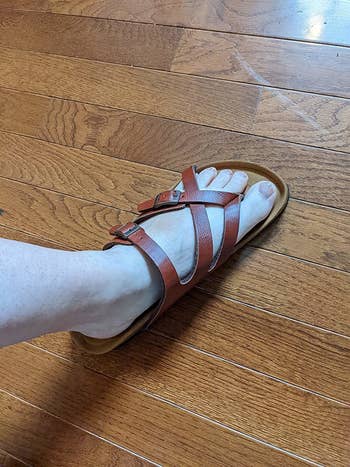
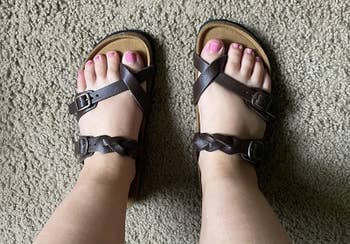
- Memory Foam Cork Sandals ($45.99): Offering the sought-after nature-sandal look at a fraction of the cost of legacy brands, these feature robust arch support and deep heel cups, though users note a brief break-in period.
- Cushionaire Cork Footbed Sandals ($34.99): A favorite for those battling plantar fasciitis in warmer climates, these deliver exceptional heel cushioning and stability across 27 colorways and inclusive sizing up to size 13 wide.
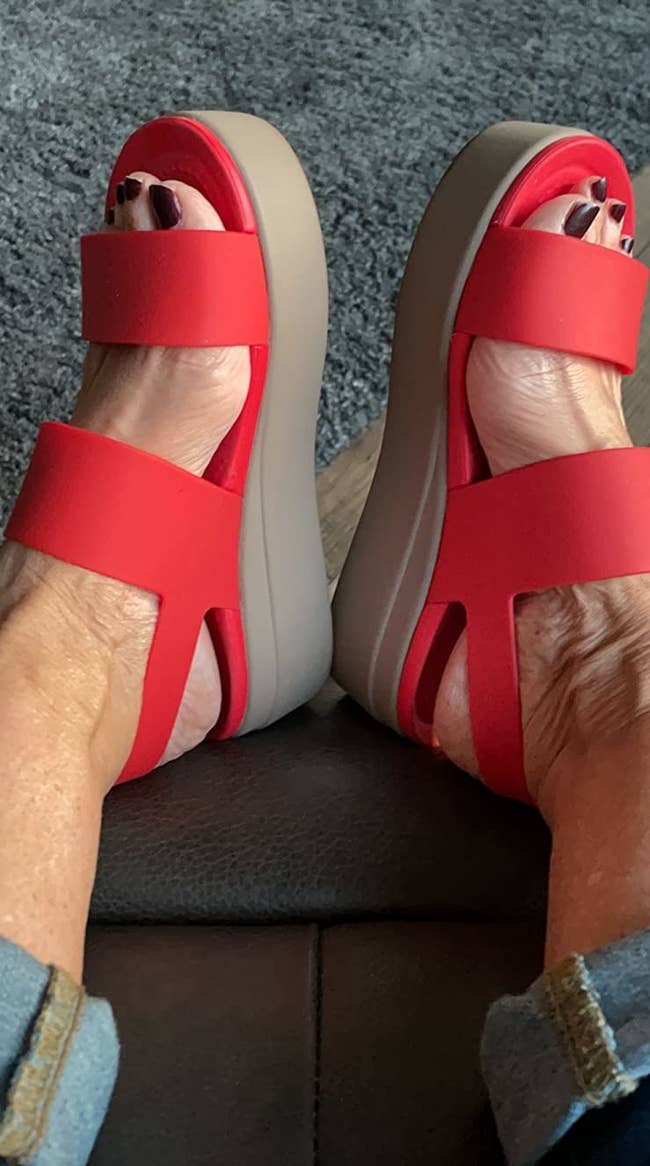
- Platform Crocs Brooklyn Low Wedges ($54.99+): Utilizing LiteRide foam footbeds, these wedges have shattered expectations by proving that height and all-day walking comfort can coexist without heavy, clunky construction.
- Ecco Sports Sandals ($104.99+): Built for all-day wear from dawn until dusk, these sandals offer multi-point adjustment options that relieve knee strain and provide instant out-of-the-box comfort.
- Arch-Support Flip-Flops ($40+ to $45.99): Challenging the notion that flat sandals must cause foot strain, these feature contoured footbeds that cradle the arch, prevent slipping on wet surfaces, and eliminate friction-based blisters.
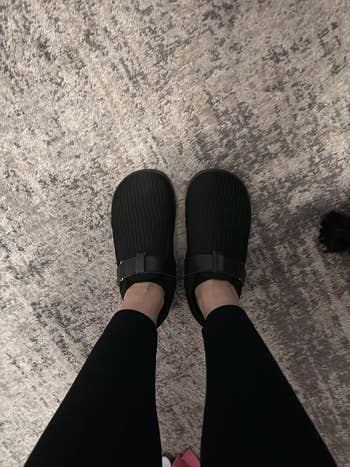
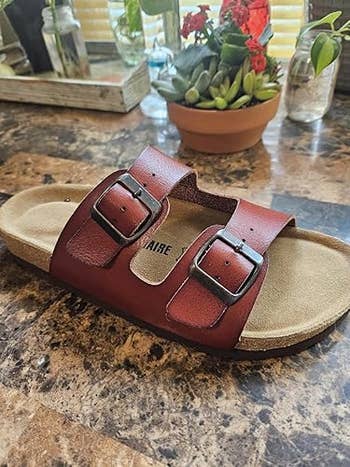
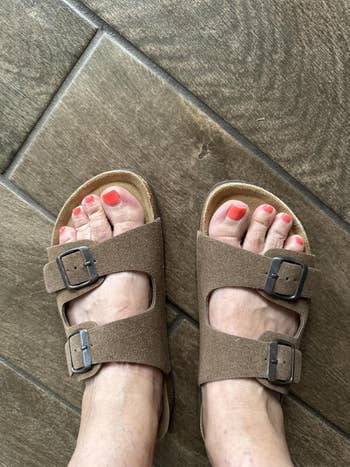
- Buckle Slides & Adjustable Slides ($25.99–$26.99+): Combining deep heel cups with customizable straps, these slides feel custom-molded to the foot while offering easy maintenance (washable in the sink).
- Keen Back-Strap Sandals ($57.44+): Combining the security of an enclosed heel strap with robust arch support, these prevent the slippage common in traditional summer sandals.
3. Closed-Toe Style & Professional Footwear
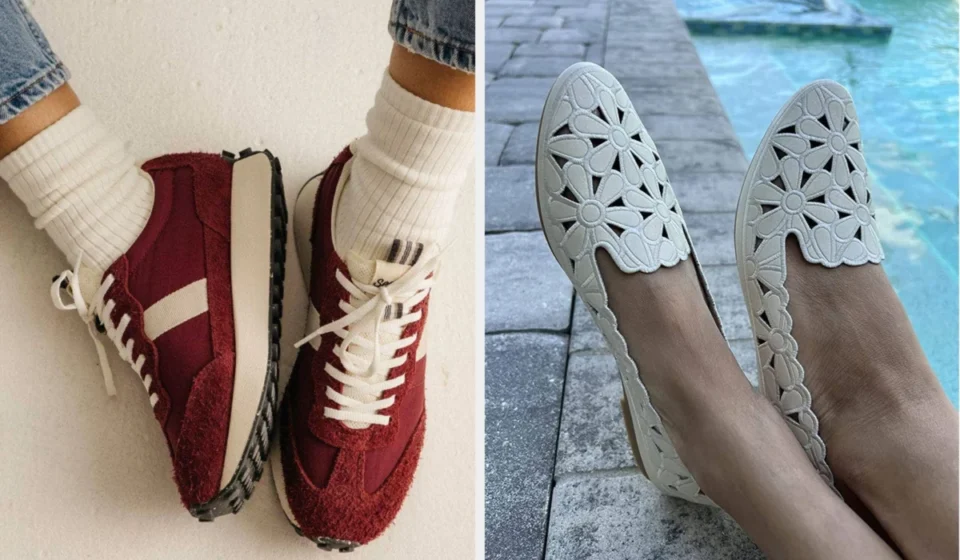
- SeaVees Acorn Trainers ($98.00, originally $140): A stylish distressed-suede sneaker that provides immediate comfort and exceptional arch support for individuals with conditions like plantar fibromas, requiring zero break-in time.
- Blundstone Chelsea Boots ($175.95+): A Pacific Northwest favorite praised as a long-term investment. Though stiff during the initial couple of days, they mold to the foot and offer stellar support for high arches.
- Clarks Slip-On Loafers ($40+): A professional go-to for nurses and educators, these loafers feature superb cushioning, lightweight builds, and slip-resistant outsoles available in narrow, wide, and extra-wide fits.
- Rhinestone-Embellished Open-Toe Slingback Sandals ($35.99+): Proving that evening wear does not require sacrificing comfort, these feature soft, cushy insoles with hidden arch support and zero-rub strap placement.
- Floral Cutout Ballet Flats ($22.69): Lightweight, flexible, and travel-friendly, these flats incorporate hidden cushioning that allows wearers to navigate airport terminals and city streets without foot fatigue.
Official Perspectives: Why Service Journalism Matters
The transition toward comfort-first footwear is heavily championed by retail analysts and service journalism platforms like BuzzFeed Shopping. Editorial guidelines in modern consumer journalism emphasize vetting product claims against real-world usage rather than relying on glossy marketing copy.
Industry advocates argue that transparent consumer reviews—detailing specific medical conditions like neuropathy, arthritis, and plantar fasciitis—provide essential data that traditional advertising often overlooks. By highlighting both budget-friendly alternatives and long-term investment pieces, modern shopping journalism empowers consumers to make informed health decisions regarding their daily footwear choices.
Implications: The Future of Footwear Manufacturing
The sustained popularity of ergonomic, supportive footwear carries profound implications for the global fashion and retail industries:
- The Demise of Form-Over-Function: Fast-fashion brands that prioritize extreme pointed toes and unsupportive flat soles are facing increased consumer resistance. Footwear manufacturers are learning that style must be engineered around anatomical realities.
- Inclusivity as a Standard: The demand for true wide-width options, half-sizes, and adjustable straps (such as Velcro and buckles) is forcing brands to expand their sizing matrices beyond narrow commercial baselines.
- Preventative Wellness: As consumers become more cognizant of how foot mechanics impact knee, hip, and spinal alignment, shoes are increasingly viewed as preventative wellness tools rather than mere accessories.
Ultimately, the modern footwear market has established a new baseline: comfort, style, and structural support are no longer mutually exclusive. As long as consumers continue to prioritize long-term physical well-being, the era of painful fashion footwear is officially behind us.
Related posts: