The Silent Stakes: Why Policy Decisions Define the Future of the Events Industry

As the nation approaches a pivotal midterm election cycle, the hum of political campaigning has become the backdrop of everyday life. For the average business professional, these elections represent shifts in tax codes or healthcare regulations. However, for those operating within the global exhibitions and events industry, the stakes are far more granular—and far more existential.
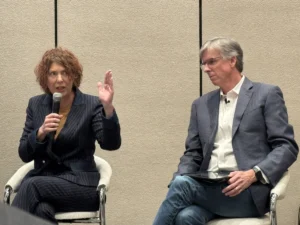
In Washington, D.C., and state capitals across the country, legislative and regulatory decisions are currently being debated that will directly determine the operational viability of trade shows, the ease of international participation, and the bottom-line costs of convening professionals. Marsha Flanagan, President and CEO of the International Association of Exhibitions and Events (IAEE), argues that the industry can no longer afford to be a passive observer of the political process.
The Core of the Matter: Why Advocacy is an Industry Pillar
The exhibitions industry is not merely a collection of logistics and venues; it is an economic engine. According to recent data, business events contribute roughly $1.3 trillion to the global economy. Yet, this massive contribution relies on a stable regulatory environment.
Advocacy has become a core strategic pillar for organizations like the IAEE, which works in tandem with the Exhibitions and Conferences Alliance (ECA). The goal is simple: to ensure the industry speaks with one credible, unified voice. Without this collective action, the sector risks being sidelined as policymakers prioritize other industries that are more vocal about their needs.
Chronology: A Snapshot of Current Policy Pressures
The legislative calendar is rarely kind to the events industry, often moving at a pace that catches organizations off guard. To understand the urgency, one must look at the recent timeline of regulatory challenges:
- The FCC Regulatory Hurdle: In recent months, the Federal Communications Commission (FCC) proposed changes to equipment authorization rules. If enacted, these changes could significantly hinder international exhibitors from bringing cutting-edge technologies to U.S. trade shows. Because the show floor is the premier stage for technological debut, such a rule would weaken the competitive advantage of American events.
- The Federal Grant Stalemate: Proposed shifts in federal grant rules threatened to restrict the ability of grant-funded professionals to attend industry conferences and imposed new, burdensome conditions on venue services.
- The September-December Bridge: Thanks to a continuing resolution, these grant rule changes have been paused through December 11. However, industry leaders warn that this is merely a temporary reprieve, not a permanent solution.
- The Terrorism Risk Insurance Act (TRIA): Congress is currently navigating the reauthorization of TRIA, a critical piece of legislation that ensures large-scale gatherings remain insurable. While the House has passed its extension with strong bipartisan support, the measure must cross the finish line before the current legislative session expires.
Supporting Data: The Economic Weight of Events
The necessity of this advocacy is underscored by the sheer scale of the industry’s economic impact. Business events are the "front porch" of global commerce, facilitating trade, innovation, and knowledge exchange that cannot be replicated in a purely digital environment.
When an exhibition is canceled or attendance drops due to policy hurdles—such as visa delays or restrictive regulatory compliance—the ripple effects are felt throughout the local economy. Hotels, restaurants, transportation services, and local labor unions all suffer. The $1.3 trillion figure is not just a statistic; it represents the livelihoods of millions of people whose work is centered on the "face-to-face" economy.
When the ECA organized a coalition of 100 organizations to submit a single, unified comment letter regarding the FCC proposal, it proved that the industry has the capacity to act as a formidable political force. This level of coordination is required whenever the regulatory environment shifts.
Official Responses and Strategic Perspectives
Marsha Flanagan, in her capacity as the leader of IAEE, emphasizes that the industry’s strength lies in its diversity of stakeholders. "Our industry is made up of organizers, exhibitors, venues, suppliers, and associations of every size," Flanagan notes. "No single organization can carry this work alone."

The prevailing sentiment among industry leadership is that advocacy is a shared responsibility. The "silent" nature of many of these policy shifts—which often occur in committee markups or through agency rulemaking—makes them dangerous. By the time a rule is finalized and its negative impact is felt on the show floor, the window to shape the policy has usually slammed shut.
The strategy, therefore, is proactive rather than reactive. By providing the tools for engagement—such as the ECA Votes nonpartisan resource—industry leaders are empowering members to educate lawmakers before legislation is even drafted.
The Global Dimension: Borderless Challenges
While much of the focus is on domestic policy, the exhibitions industry is inherently global. The free flow of ideas, products, and people is the lifeblood of the trade show business.
Current challenges regarding visa wait times and international trade policies are constant concerns. The industry depends on the ability of international exhibitors and attendees to move freely. IAEE and its partners continue to advocate for policies that make the United States a welcoming destination for global commerce. Failing to do so doesn’t just hurt the U.S. events industry; it weakens the United States’ position in the global marketplace by making it harder for foreign companies to bring innovation to American soil.
Implications: A Call to Action
The consequences of inaction are clear. If the events industry fails to engage with the political process, it will inevitably find itself subject to rules written by people who do not understand the intricacies of event management or the economic importance of the face-to-face business model.
Flanagan proposes a three-step framework for every professional in the industry:
- Learn: Utilize nonpartisan resources to understand how specific policies impact your sector. Ignorance is the greatest vulnerability an industry can have.
- Engage: Move beyond passive agreement. Add your name to industry letters, share personal stories about the economic impact of your events with local lawmakers, and, whenever possible, invite those lawmakers to attend events. Seeing the industry in action is the most powerful tool for persuasion.
- Vote: Participation in the electoral process is the baseline. Understanding what is on the ballot and ensuring that candidates understand the value of business events is essential.
Looking Ahead: The Power of the "Reserved Seat"
Optimism is a necessity for those in the event industry, a sector defined by the logistical miracle of bringing thousands of people together in one place. However, as Flanagan points out, the outcomes that the industry desires are never guaranteed. They are earned.
"When our community is informed and engaged, we are a formidable force," says Flanagan. The progress made in recent years—ranging from COVID-19 relief efforts to the current push for insurance reauthorization—proves that the industry can influence Washington when it acts in concert.
The goal is to ensure that the exhibitions and events sector has a "reserved seat" at the table where decisions are made. If the industry does not take that seat, it will likely find itself on the menu. As the midterms approach, the call to action is clear: show up, speak up, and stay involved long after the headlines fade. The future of the $1.3 trillion industry depends on it.
Key Takeaways for Professionals
- Policy is Industry-Specific: Regulatory changes often fly under the radar until they are already in effect.
- Coalitions Matter: The ECA model proves that when the industry speaks with one voice, it can influence federal agencies like the FCC.
- The Local Economy Connection: Advocacy is most effective when it is tied to tangible, local economic outcomes—jobs, tax revenue, and small business growth.
- Long-Term Engagement: Election cycles are just the beginning; sustained relationship-building with elected officials is the only way to ensure the industry is protected year-round.