The Anatomy of a PR Disaster: How an Ambiguous TFL Ad Sparked a Firestorm of Controversy

In the high-stakes world of public information campaigns, the margin for error is razor-thin. A message intended to promote safety or public awareness can, if executed poorly, collapse into a chaotic storm of public outrage. This is exactly the scenario that recently unfolded within the London Underground, where a controversial advertisement featuring an unsettling, abstract design and a loaded question—"Are they trying to hide something?"—triggered an immediate and visceral backlash from commuters.
The incident has highlighted the perils of relying on "Corporate Memphis"—the flat, minimalist, and often featureless art style popularized by tech giants—in contexts where clarity and nuance are paramount. As the digital sphere continues to deconstruct the image, the incident has evolved from a simple design critique into a complex investigation regarding accountability, guerrilla marketing, and the dangers of visual ambiguity.
The Spark: A Commuter’s Perspective
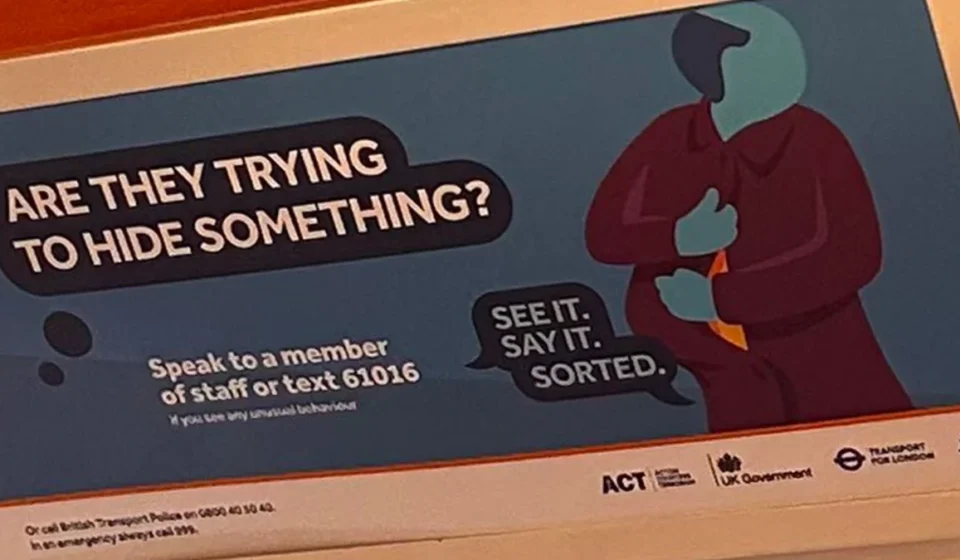
The controversy began on social media when passengers began sharing images of a poster found on the London Transport network. The design featured a minimalist illustration that, to the casual observer, appeared to depict a woman wearing a hijab. Below the graphic, the provocative text "Are they trying to hide something?" loomed in bold, stark lettering.
For many, the association between a religious garment and a trope of suspicion was immediately inflammatory. On platforms like X (formerly Twitter), the reaction was swift. Commuters branded the campaign "disgusting," "appalling," and a "toxic insinuation" that targeted a specific demographic under the guise of public safety.
"Suspicion, paranoia, and ethnically ambiguous abstract art—1984 is here in full force," one user remarked. Others approached the situation with dark humor, labeling the poster a "Rorschach test" for institutional bias. The design’s lack of detail, intended to be universal, instead became a canvas onto which commuters projected their own interpretations, leading to a massive breakdown in communication between the authority and the public.
Chronology of the Crisis
The timeline of the controversy serves as a case study in how modern digital outrage can outpace institutional crisis management.
- October 25, 2026: Photos of the poster begin circulating on social media. The public outcry peaks as users tag the Mayor of London, Transport for London (TfL), and various transit police accounts.
- October 25, 2026 (Late): TfL issues a rapid response on X, claiming the posters were "unauthorised" and "flyposting," an illegal act where promotional material is placed without consent.
- October 26, 2026: Public skepticism grows. Investigations by users and journalists reveal that the posters appeared to be part of a larger, coordinated campaign, with multiple variants spotted across the network.
- Late October 2026: Tensions rise as users point out that official media channels had previously reported on the campaign, casting doubt on TfL’s claim that the posters were rogue additions. The discrepancy between official statements and the visible reality of the campaign’s placement remains a primary point of contention.
The Design Critique: Why Corporate Memphis Failed
The root of the aesthetic failure lies in the adoption of "Corporate Memphis." This design style is characterized by thin-limbed, flat, and often faceless human figures. While designed to be inclusive by stripping away specific identifiers, the style frequently suffers from a lack of emotive clarity.
In this instance, the lack of defined facial features meant that viewers were forced to infer the subject’s identity. Because the silhouette suggested a hijab, the pairing with a line about "hiding something" transformed an abstract safety warning into a xenophobic dog whistle.
Design experts argue that when dealing with public policy, visual communication must be explicit. The "less is more" approach inherent in modern minimalist design ignores the cultural semiotics of the subject matter. By choosing a style that favors abstraction over specificity, the campaign designers inadvertently created a vessel for controversy. Whether the intent was malicious or merely the result of a creative team being "out of touch," the result was an image that failed to perform its most basic duty: to convey a clear, non-negotiable message.
Official Responses and the Accountability Gap
Transport for London’s response was characterized by a rapid, almost defensive pivot. By categorizing the posters as "flyposting," TfL attempted to distance its corporate identity from the content of the ads.
"Our media partner, our teams, and contractors have been instructed to inspect trains and remove any unauthorised posters that are found on our network," a spokesperson stated. "The incident has been reported to the British Transport Police as flyposting is an illegal activity."
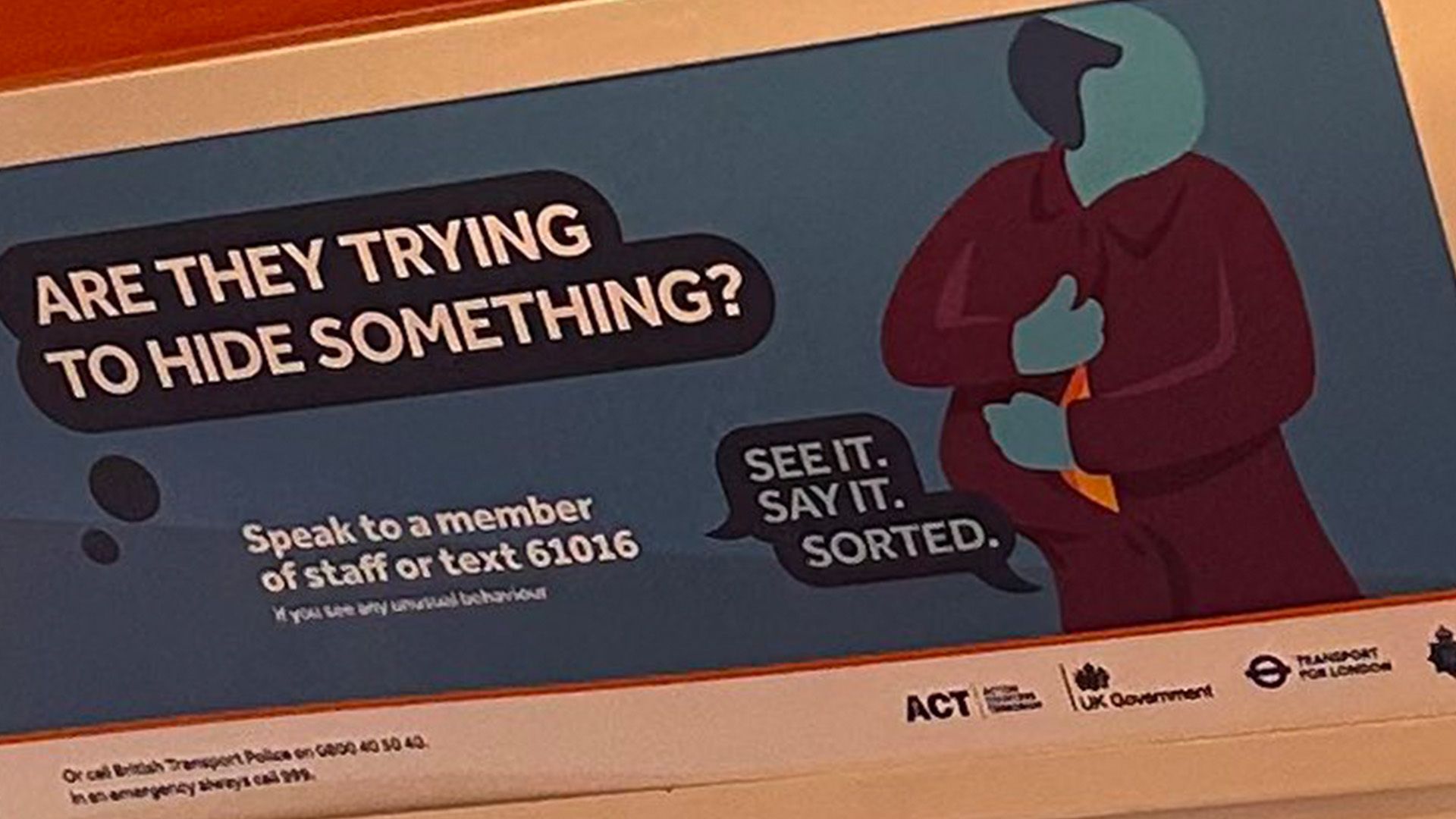
However, this response was met with intense scrutiny. Critics were quick to point out that the posters were professionally printed and displayed in high-traffic areas, which is atypical for standard, ad-hoc illegal flyposting. Furthermore, the existence of multiple variants of the same campaign—all sharing the same aesthetic language and tone—suggested a level of professional production that contradicted the "unauthorised" narrative.
The assertion that the British Transport Police (BTP) were investigating the matter did little to quell the skepticism, with many online observers noting that the campaign appeared to align with the tone of previous official public safety drives, leading to accusations that TfL was attempting to "gaslight" the public rather than admit to a failure in their advertising vetting process.
Implications for Public Advertising
The fallout from this campaign raises fundamental questions about the future of public space advertising.
1. The Vetting Crisis
If, as TfL claims, the ads were unauthorized, how did they bypass the rigorous security protocols inherent in public transit advertising? The incident suggests a potential vulnerability in the physical maintenance of the network, or, alternatively, a failure in corporate transparency.
2. The Responsibility of the Medium
Advertising in public spaces is not a neutral act. When an authority like TfL provides the canvas for a message, they are implicitly endorsing that message. The "Are they hiding something?" campaign proves that even if an ad is "unauthorized," its presence on official property creates a link between the transit authority and the message that is difficult to break.
3. The End of Abstract Minimalism?
This incident may mark a turning point in how government agencies approach visual design. We may see a retreat from the vague, minimalist aesthetics of Corporate Memphis in favor of more human-centric, realistic, and culturally sensitive imagery that cannot be easily misinterpreted or manipulated.
The Broader Context: A Year of Cancelled Ads
This incident is not an isolated event. 2026 has been dubbed "the year of the cancelled ad." From high-profile fashion campaigns that misread the room to corporate PSAs that triggered unintended culture wars, the advertising industry is currently experiencing a profound disconnect between brand messaging and public sentiment.
As noted by recent industry discourse, when a brand or institution attempts to address complex societal issues, they often fall into the trap of using "edgy" or "provocative" copy to generate engagement. In the case of the TFL poster, this strategy backfired spectacularly. The "paranoia-inducing" copy was intended to make commuters more observant of their surroundings, but instead, it fostered an environment of suspicion and division.
Conclusion
The TFL "Are they hiding something?" saga serves as a sobering reminder of the power of visual language in public spaces. It demonstrates that in an era of heightened social awareness, "ambiguity" is no longer a design feature—it is a liability.
Whether the posters were truly the work of an outside agitator or a botched internal campaign, the damage to public trust is palpable. For institutions, the lesson is clear: transparency is not just about what is said, but how it is presented. As the investigation continues and the debate rages on, the legacy of this campaign will likely be a more cautious, more scrutinized approach to the imagery that populates our daily commutes.
The incident highlights a critical truth: when you ask the public a question, you must be prepared for the answer. And when your design is as open to interpretation as this one was, the public’s answer will inevitably be one of frustration, anger, and a demand for better from those in positions of power.