A Masterpiece Emerging from the Shadows: Toledo Museum of Art Acquires F. Holland Day’s Radical 1898 Work The Seven Words

By Art & Culture Desk
Published: October 2026
Main Facts: A Historic Acquisition for Ohio
The Toledo Museum of Art (TMA) in Ohio has announced the acquisition of The Seven Words (1898), a groundbreaking and historically monumental photographic series by American artist F. Holland Day (1864–1933). Widely celebrated by historians as one of the most important photographic works in history—yet paradoxically remaining largely unknown to the general public—the piece represents a monumental addition to the museum’s permanent holdings.
According to reports from The Art Newspaper, this purchase stands as the most expensive photographic acquisition in the history of the Toledo Museum of Art. It also marks the very first work by F. Holland Day to enter the institution’s collection.
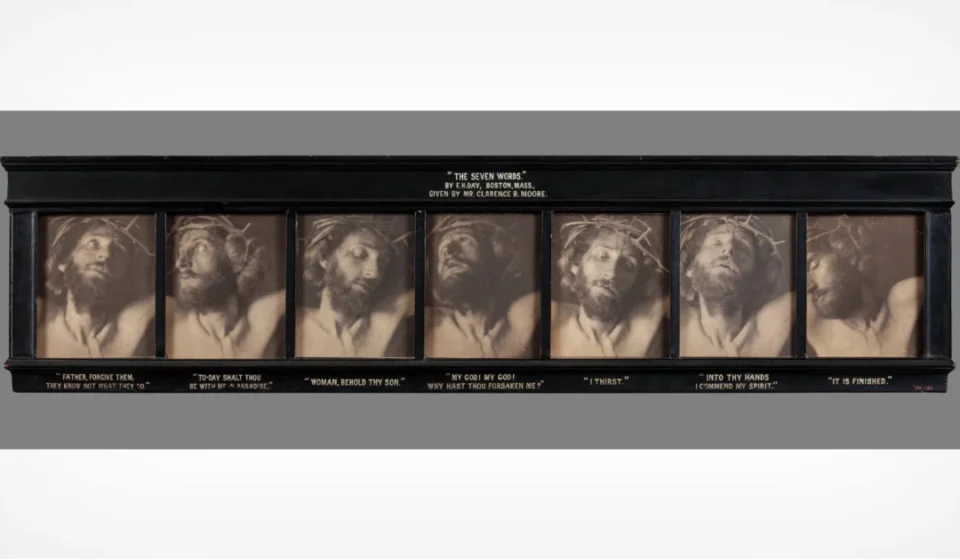
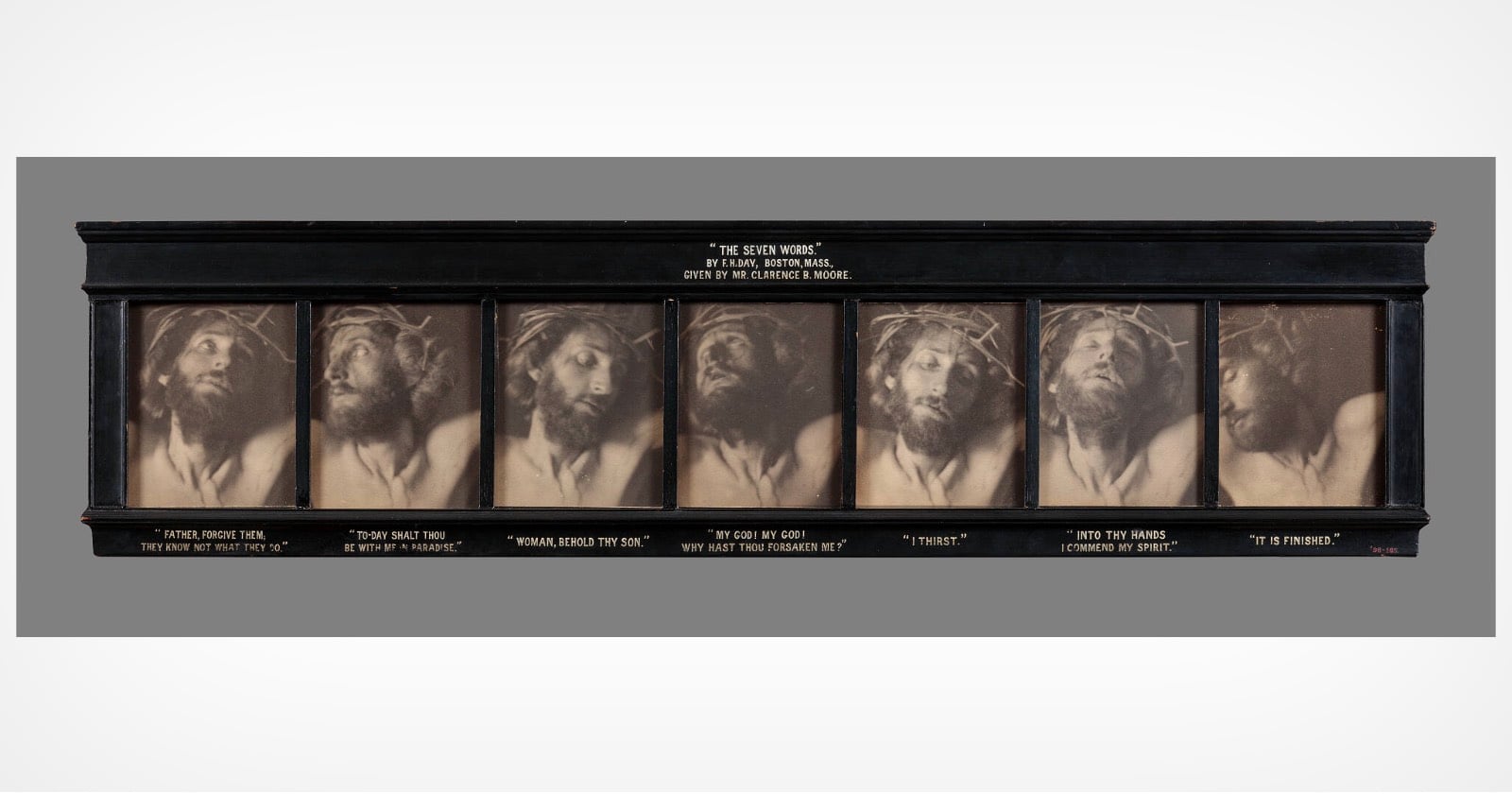
Comprising a framed series of seven intimate platinum prints, The Seven Words depicts the artist himself cast in the role of Jesus Christ during his final moments on the cross. Each image is accompanied by a corresponding biblical quote, creating a somber, deeply meditative, and visually arresting narrative. The Ohio museum’s newly acquired set is one of only three known surviving original portfolios of the work in existence, with the other two residing in the prestigious collections of New York’s Metropolitan Museum of Art and the Museum of Fine Arts, Boston.
The acquisition will serve as a cornerstone of TMA’s upcoming permanent collection reinstallation, slated to debut to the public next year following an extensive gallery overhaul.
Chronology: The Making of a 19th-Century Masterpiece
To understand the weight of TMA’s new acquisition, art historians look back to the turn of the 20th century, a time when photography was still fighting for cultural legitimacy as a vehicle for high art rather than merely a scientific tool for documentation.
1864–1890s: The Rise of F. Holland Day
Born in Boston, Massachusetts, Fred Holland Day was a wealthy eccentric, publisher, and impassioned champion of aestheticism. Alongside contemporaries, Day fought tirelessly to elevate photography to the status of fine art, placing it on equal footing with painting, sculpture, and etching. However, his visionary approach was eventually overshadowed by his fierce rival and contemporary, Alfred Stieglitz. While Stieglitz successfully institutionalized modern photography and built a formidable legacy, Day’s career faded into relative obscurity.
1896–1898: The Crucifixion Project
Between 1896 and 1898, Day embarked on what would become his magnum opus, turning heavily toward religious and Christian iconography. Seeking total authenticity, Day subjected himself to rigorous physical preparations. He grew out his hair and beard and undertook severe fasting to hollow his features, altering his physical form to better mirror traditional European artistic depictions of Christ.
With the assistance of local neighbors in rural Massachusetts, Day meticulously staged an outdoor recreation of the Crucifixion. He designed authentic costumes, sourced period-accurate props, and constructed a custom mirror attachment for his large-format camera. This ingenuity allowed him to step in front of the lens as both the subject and the director, framing and adjusting his own posture and expressions in real-time as he photographed his own Passion.
The process was exhaustively iterative. Day produced approximately 250 plate studies in pursuit of his vision, out of which only a dozen exposures were deemed successful enough to satisfy his exacting artistic standards.
1898: Public Debut and Controversy
The Seven Words made its public debut at the inaugural Philadelphia Photographic Salon, held at the prestigious Pennsylvania Academy of the Fine Arts in 1898. The reaction was immediate and polarized. The work sparked intense debate within artistic and religious circles, challenging contemporary sensibilities regarding whether a mechanical medium like photography was appropriate—or even sacred enough—to tackle divine and spiritual subjects.
Supporting Data: Technical Brilliance and Rarity
The aesthetic power of The Seven Words lies heavily in its medium: the platinum print. Unlike silver gelatin prints common in later decades, platinum printing yields an extraordinary tonal range, producing luminous highlights and velvety, profound blacks that mimic charcoal or fine ink drawings.
- Project Scale: 250 experimental plate studies conducted between 1896 and 1898.
- Final Selection: Only a dozen successful exposures achieved; the primary surviving complete sequence consists of seven prints (The Seven Words).
- Extant Portfolios: Only three complete original sets are known to exist worldwide:
- The Toledo Museum of Art (Ohio)
- The Metropolitan Museum of Art (New York)
- The Museum of Fine Arts (Boston)
- Institutional Milestone: The most expensive photographic acquisition in the history of the Toledo Museum of Art.
Erin Corrales-Diaz, the TMA curator of American art, notes that the scarcity of early masterworks in the museum’s holdings made securing The Seven Words a vital institutional priority. "Today, we’re so inundated with photography that we forget its original exploratory nature," Corrales-Diaz explains. "If sculpture and painting could depict religious subjects, why not photography? Day made 250 plate studies… It’s one of the most ambitious, radical, and beautiful projects."
Official Responses and Museum Perspectives
The acquisition has generated palpable excitement among museum leadership and art historians alike, who view the piece as a crucial missing puzzle piece in the broader historical narrative of artistic expression.
Adam M. Levine, the director of the Toledo Museum of Art, did not mince words when discussing the cultural weight of the acquisition with The Art Newspaper.
"This is the most important photograph that people don’t know about," Levine stated. "We can situate it with performance art, and it’s a work that anticipates what will happen with cinema."
Levine also emphasized the deceptive visual texture of the prints, which frequently confounds first-time viewers. "When you see it for the first time, you can’t believe it’s a photograph. You think it’s charcoal with those deep blacks. It’s exquisite as a work of both photography and performance."
Curator Erin Corrales-Diaz echoed these sentiments, pointing out the avant-garde nature of Day’s methods. By stepping in front of the camera to enact a narrative, rather than simply documenting the world around him, Day broke free from 19th-century photographic conventions and laid conceptual groundwork that modern performance artists would explore decades later.
Implications: Rewriting the History of Photography
The arrival of The Seven Words at the Toledo Museum of Art carries profound implications for how art history is taught, curated, and perceived.
- Reassessing the Canon: For over a century, the history of early American art photography has been dominated by the legacy of Alfred Stieglitz and the Photo-Secession movement. The prominent acquisition and upcoming exhibition of Day’s masterwork invite scholars and the public to re-evaluate the polyphonic nature of turn-of-the-century photography, acknowledging that modernism had multiple, competing pioneers.
- Blurring Media Boundaries: By staging a multi-day theatrical performance in the Massachusetts wilderness, capturing it via a custom-rigged camera, and rendering the final output with the deep, moody tonality of fine charcoal drawings, F. Holland Day obliterated the boundaries between theater, performance art, cinema, and photography. The exhibition of The Seven Words in 2026 will allow contemporary audiences to view a 19th-century artifact through a 21st-century lens—one deeply familiar with body art, conceptual performance, and self-portraiture.
- Elevating Regional Collections: For a regional institution like the Toledo Museum of Art to secure one of only three extant copies of such a historically vital portfolio places the museum firmly on the global map for photography scholarship. It signals a growing trend among mid-sized American museums to aggressively acquire masterworks that challenge traditional art historical hierarchies.
When The Seven Words finally goes on display next year during the museum’s grand reopening, it will no longer remain "the most important photograph people don’t know about." Instead, it will take its rightful place in the blinding light of public appreciation, inviting a new generation of viewers to bear witness to F. Holland Day’s radical, haunting vision.