
The Tren Maya, a monumental 966-mile railway infrastructure project winding through the lush landscapes of Mexico’s Yucatán Peninsula, is far more than a transit route. Connecting five states, the network weaves together a complex tapestry of bustling urban centers, pristine jungle ecosystems, historic Maya ruins, and the crystalline waters of coastal beaches. Among its 34 strategically placed stations, the Maxcanú Station stands as a testament to a growing architectural movement that seeks to marry high-speed modern infrastructure with the deep-rooted cultural and environmental identity of its host region. Designed by the Mexico City-based firm Gi21 Arquitectura, this terminal transcends the utilitarian nature of a transport hub, functioning instead as a bridge between the ancient legacy of the Maya and the contemporary aspirations of the Mexican state.
Main Facts: The Vision Behind the Terminal
The Maxcanú Station is a 68,470-square-foot facility that serves as a vital gateway for both local commuters and international travelers navigating the western reaches of the Yucatán. Located approximately 40 miles west of Mérida, the state capital, the station is a masterclass in regionalist design.
Gi21 co-founders Eduardo Ramírez Plata and Ximena Beltrán Plata approached the commission with a philosophy rooted in deep observation. "We wanted to stand and watch everything, to visit the people and to see how they live," the duo stated. This immersive research phase—observing weather patterns, the quality of light, local vegetation, and the vernacular architecture—became the primary driver for the building’s form.
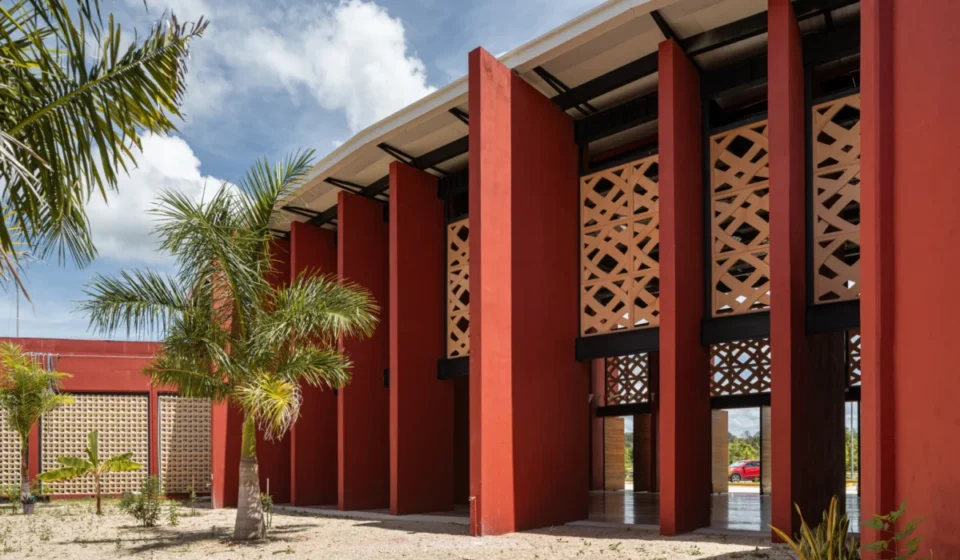
The resulting structure is a curved volume designed to offer fluid navigation. By prioritizing permeability, the architects ensured that passengers maintain a constant visual connection to the exterior from any point within the building. The station’s aesthetic language is derived from the ancient city of Palenque; specifically, the use of vertical columns supporting horizontal platforms. This structural logic has been reinterpreted into full-height, plastered concrete brackets that frame entrances, guide pedestrian circulation, and provide passive cooling through cross-ventilation and strategic sunshading.
Chronology: A Project of Scale and Sensitivity
The development of the Tren Maya, and by extension the Maxcanú Station, has unfolded over several years of intense construction and logistical coordination.
- Initial Planning & Site Analysis: Prior to the groundbreaking, architects spent months analyzing the socio-cultural fabric of Maxcanú, a town historically celebrated for its jicama production and proximity to the 16th-century Iglesia de San Miguel Arcángel.
- Design Development: The design phase focused on blending the station into the geological and cultural landscape. The decision to use natural materials, such as cochineal-pigmented concrete and local tropical woods, was finalized during this period.
- Construction and Discovery: The construction process was marked by significant challenges. Given the karst topography of the region, which is riddled with subterranean cenotes and archaeological remnants, the building process required continuous oversight.
- Completion and Integration: Upon its completion, the station became a functioning Category A infrastructure asset, integrating modern transport technology with a design that honors the site’s history.
Supporting Data: Materiality and Environmental Stewardship
The environmental performance of the Maxcanú Station is a direct result of its material palette. The building’s deep terracotta hue is not merely aesthetic; it is achieved through a natural dye extracted from cochineal insects—a material with profound significance in Indigenous history. This color palette serves as a deliberate nod to the ochre-toned walls of the neighboring San Miguel Arcángel church.
Structural Efficiency and Ventilation
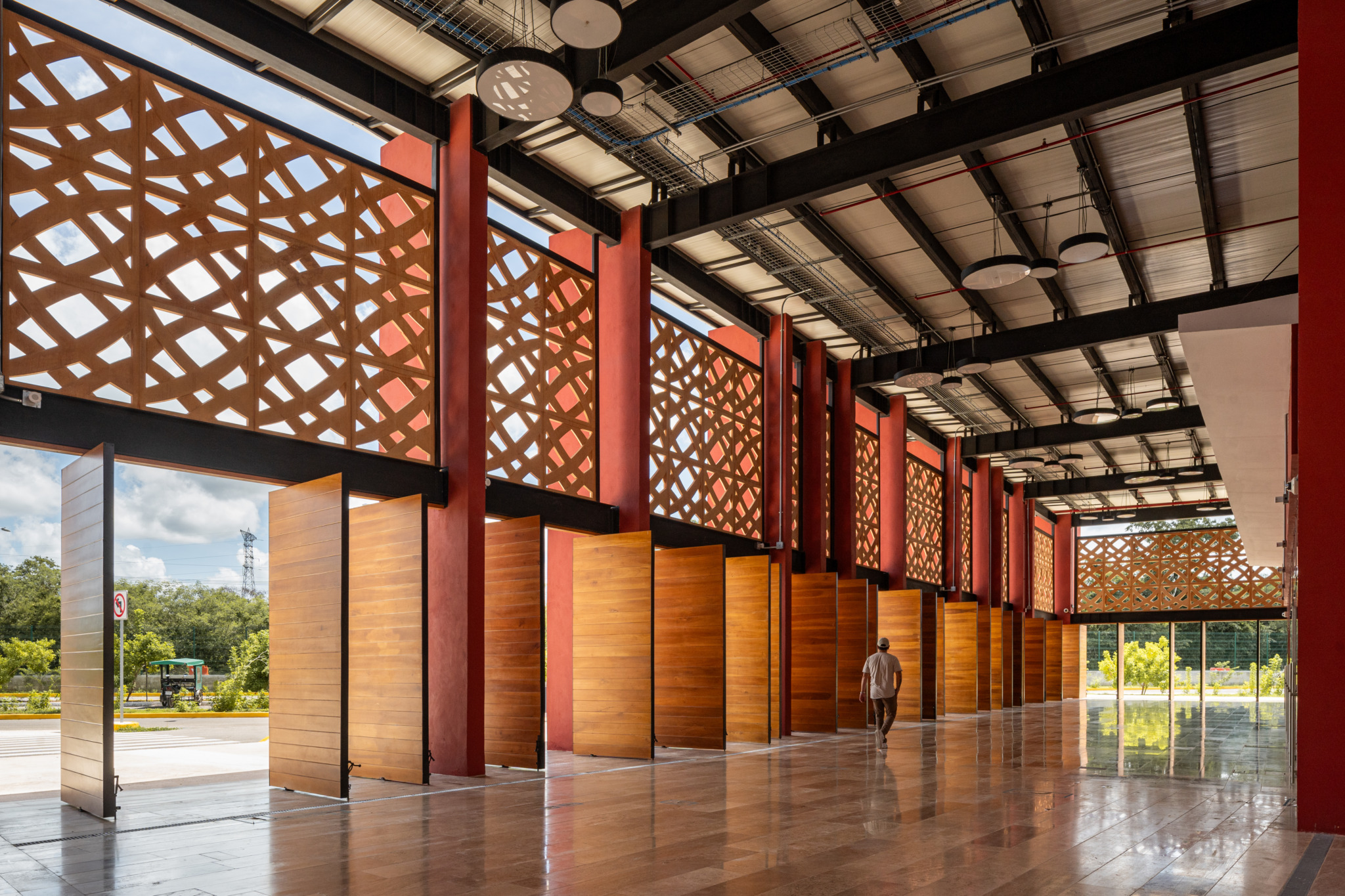
The station utilizes a sophisticated system of lattice-like panels crafted from prefabricated concrete. These panels employ a basket-weave detail that references regional textile traditions. Beyond their cultural resonance, these panels serve a critical environmental function:
- Airflow: They regulate the flow of air, cooling the interior naturally.
- Light Modulation: The interplay of light and shadow created by the weave mimics the dappled light of the Maya Forest canopy.
- Privacy and Shade: The platform-level panels feature a tighter weave, providing a sense of seclusion and protection from the harsh tropical sun.
The building is further supported by local travertine marble flooring and an exposed beam-and-vault system, which minimizes maintenance requirements and contributes to the overall sense of spaciousness. The integration of tropical wood pivot doors allows for an "open-air" experience during the day, which can be sealed at night, providing both security and operational flexibility.
Official Responses and Collaborative Governance
The realization of the Maxcanú Station was not an isolated architectural exercise but a massive collaborative undertaking involving federal entities. The project saw Gi21 Arquitectura working in close coordination with:
- INAH (National Institute of Anthropology and History): Charged with the protection of archaeological heritage, INAH was instrumental in ensuring that the station’s footprint did not disturb hidden cenotes or historical artifacts discovered during excavation.
- Ministry of Environment: Oversight regarding the ecological impact of the construction on the surrounding jungle.
- SEDENA (Ministry of National Defense) and the Government of Mexico: These bodies provided the logistical framework and security protocols required for Category A infrastructure of this magnitude.
These partnerships were essential in navigating the "sensitive building process" necessitated by the site’s complex geology. By utilizing a shallow foundation and reinforced concrete footings, the architects managed to satisfy both the stringent requirements for seismic safety and the preservation of subterranean features.

Implications: The Station as a Cultural Anchor
The broader Tren Maya project has faced significant public and political debate, with critics often focusing on the potential environmental impact on the Yucatán’s fragile ecosystems. The Maxcanú Station serves as a focal point in this dialogue. By choosing to prioritize context-sensitive design, Gi21 Arquitectura has attempted to address these concerns through architecture that is meant to endure while minimizing its footprint.
A New Model for Transit
The implications of this project are twofold:
- Infrastructure as Civic Space: The terminal demonstrates that transit hubs need not be sterile, industrial zones. By incorporating courtyards, lobbies, and artful light modulation, the station invites passengers to linger, effectively turning a travel stop into a "place for contemplation and rest."
- Modernizing Tradition: The station proves that ancient techniques and regional aesthetics can be successfully translated into 21st-century infrastructure. The use of cochineal dyes and basket-weave concrete patterns provides a blueprint for how future projects in Mexico can respect local heritage while meeting international engineering standards.
Environmental and Historical Sensitivity
The discovery of archaeological remains during construction serves as a reminder of the historical density of the Yucatán. The station’s successful completion highlights the necessity of collaboration between architects and state preservationists. While the debate regarding the Tren Maya continues, the Maxcanú Station stands as a testament to the fact that when architects are given the time and resources to understand the land they are building upon, the resulting structure can become an asset to the local community.
In conclusion, Maxcanú Station is not just a node in a 966-mile network; it is an architectural milestone. It effectively balances the mechanical requirements of a modern railway with the spiritual and environmental demands of the Maya region. Whether viewed through the lens of engineering, cultural preservation, or sustainable design, the terminal serves as a poignant example of how human infrastructure can engage in a respectful, long-term conversation with the landscape it inhabits. It remains a destination that promises to shape the experience of travel in Mexico for generations to come.