
Standing at an imposing 11,249 feet, Mount Hood is more than just the highest peak in Oregon; it is a sentinel of the Pacific Northwest. For the thousands of climbers who attempt its summit annually, the mountain represents a formidable rite of passage. But for photographer Scott Smorra, the ascent was not merely a physical challenge—it was an opportunity to capture a fleeting, ethereal intersection of light, shadow, and endurance.
The Geography of a Legend
Mount Hood’s prominence is undeniable. Visible from over 100 miles away on clear days, it dominates the skyline of the Cascade Range. Its sheer scale and technical climbing requirements make it a magnet for mountaineers, with over 10,000 individuals attempting to summit the peak each year. The mountain offers dozens of routes, each presenting its own set of dangers and rewards, but the South Side/Old Chute route remains the standard for those seeking to test their mettle.
This path, originating from the historic Timberline Lodge, is a grueling test of stamina. It requires an ascent of approximately 5,250 feet over just 3.6 miles—a steep, relentless climb that punishes the legs and demands a high level of physical fitness. While the late spring and early summer months offer the most stable weather and the best conditions for snow and ice travel, the mountain is never a destination to be taken lightly.
Chronology of an Ascent: From Darkness to Light
The decision to carry camera gear on such a strenuous climb is a dilemma many landscape photographers face. The trade-off between capturing an once-in-a-lifetime shot and the physical burden of hauling professional-grade equipment can be debilitating. Smorra, the sole photographer in his party, ultimately opted for a minimalist kit: one camera body, a single lens, and a lightweight tripod.
The Midnight Departure
The expedition began shortly after midnight. The atmosphere at the base was far from hospitable; gusts of 40 to 50 mph roared through the Timberline area, pushing wind chill factors well below freezing. For the team, the initial hours were a battle of willpower. "The wind was absolutely ripping," Smorra recalls. "The climbing was challenging, but we pressed on since the forecast called for decreasing winds as we moved higher."
The Mid-Climb Struggle
As the team ascended, the mountain began to demand its toll. The psychological relief of the winds calming above 9,000 feet was quickly overshadowed by the physiological reality of the climb. By the time the group reached 10,750 feet, the added weight of the camera gear became a significant impediment. "In the last push to the summit, my quads felt as though they were on fire," Smorra notes. The thin, oxygen-deprived air of the high altitude only intensified the burn, turning every step into a calculated effort of grit and determination.
The Summit Revelation
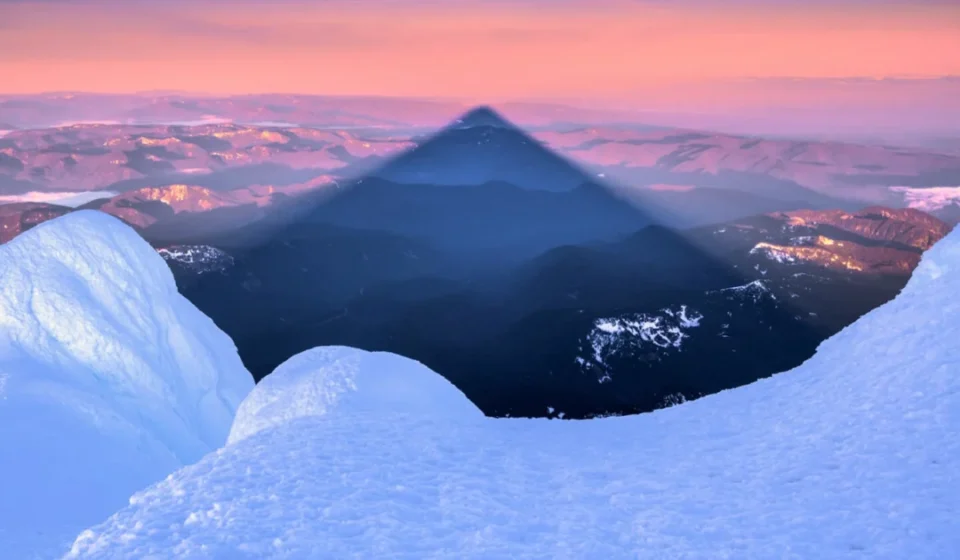
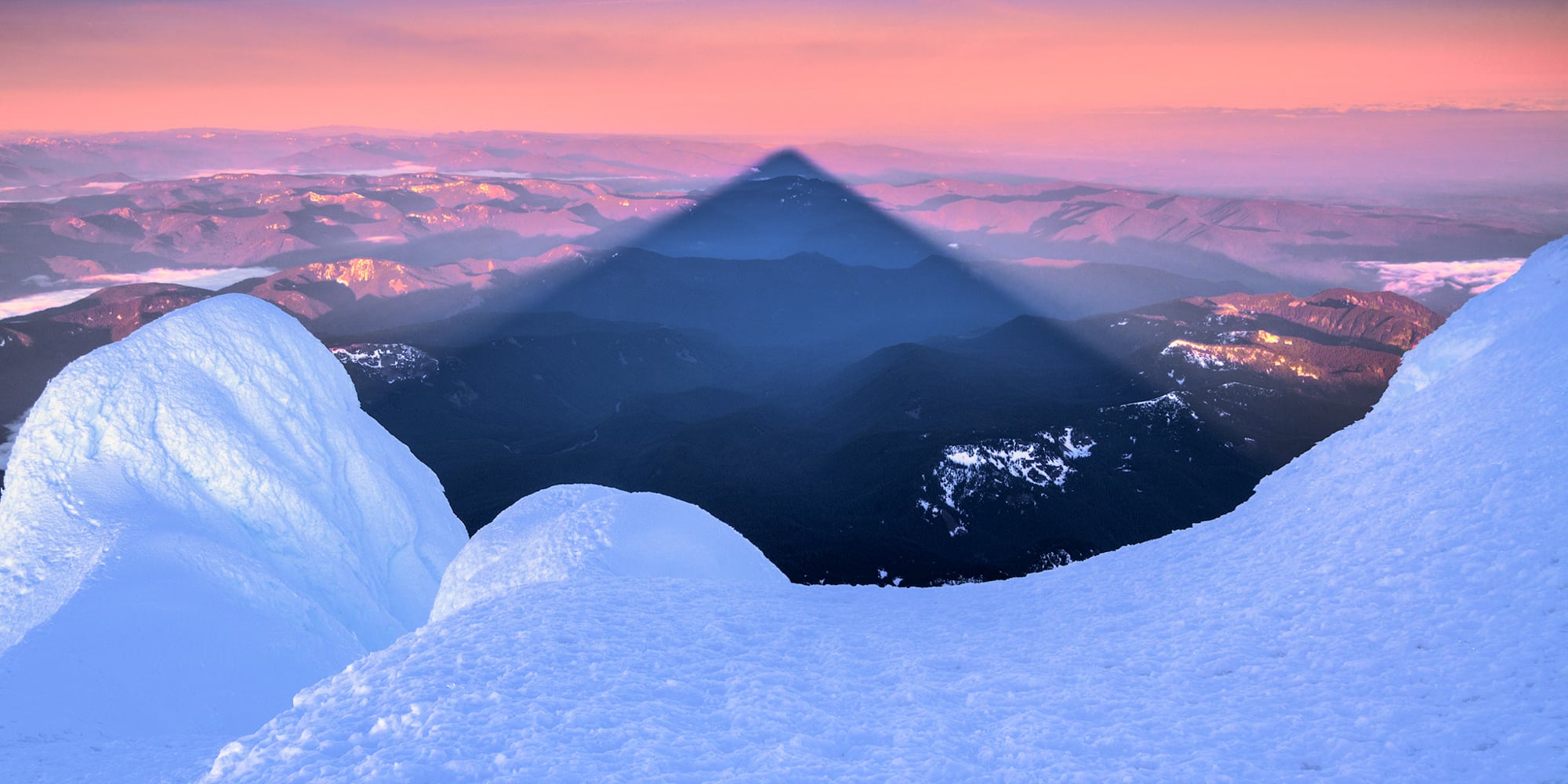
At 5:30 a.m., just as the sun crested the horizon, Smorra reached the summit. The exhaustion of the climb vanished instantly, replaced by a visceral reaction to the spectacle before him. The mountain had cast a massive, triangular shadow across the valley below—a phenomenon rarely witnessed with such clarity. Overwhelmed by the angular, geometric precision of the shadow against the pink and purple hues of the dawn sky, Smorra let out a shout of pure exhilaration, startling his climbing partners. It was, in his words, a moment that justified every ounce of effort expended during the ascent.
Supporting Data: The Technicality of the Shot
Capturing a moment of such magnitude under extreme conditions requires more than just luck; it requires technical foresight and the ability to work under physical duress.
Compositional Challenges
Composing a photograph at 11,249 feet is a logistical nightmare. The physical symptoms of high altitude—shortness of breath, elevated heart rate, and light-headedness—make steady, thoughtful composition difficult. Furthermore, the shadow of the mountain was not static; as the sun rose, the shadow began to shrink and shift. Smorra had to work intuitively, balancing the delicate, ephemeral light with the stark reality of the summit’s rime-iced terrain.
Technical Specifications
To ensure the shot was technically sound, Smorra utilized a Nikon D7000 paired with a 12-24mm f/4 lens at 19mm. The exposure was set at 1/6 of a second at f/16, ISO 100, stabilized by a tripod.
Post-processing played a pivotal role in the final output. Working in Lightroom Classic and Photoshop, Smorra focused on intensifying the shadow as the anchor of the image. By employing luminosity masks to increase midtone contrast and carefully separating cool shadow tones from warm highlight areas, he created a visual narrative that guides the viewer’s eye through the vast, rugged landscape.
Implications for Future Mountaineer-Photographers
The experience serves as a case study for the intersection of outdoor adventure and professional photography. While the temptation to prioritize weight reduction is high, the rewards of documenting remote landscapes are often found in the gear left behind.
Essential Considerations
For those inspired by Smorra’s experience, the following takeaways are critical:
- Physical Preparation: Climbing with camera gear is not just a test of technical photography skills; it is a test of athletic endurance. Specialized training is required to handle the extra load at high altitudes.
- Minimalism: Bringing a single, versatile lens and a carbon-fiber tripod can mitigate the weight issue without sacrificing image quality.
- Safety First: Mount Hood is a high-risk environment. The use of crampons and ice axes is mandatory. For those who lack technical experience, hiring a guide is the most responsible way to ensure both a successful summit and a safe return.
Expert Perspective: The Role of Conservation
Scott Smorra’s commitment to photography is deeply rooted in his role as a professional nature photographer and conservationist. His work, often featured in publications like ELEMENTS Magazine, serves a greater purpose: to showcase the inherent value of wilderness areas.
"Conservation of wild places is an important theme in my photography," Smorra explains. By bringing the viewer to the summit of Mount Hood—a place inaccessible to many—he highlights why such environments deserve protection. His photography acts as a bridge between the average observer and the fragile, spectacular reality of the high-alpine environment.
Concluding Thoughts
Climbing Mount Hood with heavy camera gear is objectively one of the most grueling tasks a photographer can undertake. However, as Smorra’s story illustrates, the ability to capture the fleeting, transformative beauty of a sunrise from the highest point in Oregon creates a legacy that outweighs the temporary physical pain of the climb.
As the mountaineering community continues to evolve, the integration of professional imaging into high-altitude expeditions remains a vital tool for environmental advocacy. Whether you are a professional looking to document the changing face of our peaks or an amateur hoping to capture a personal milestone, the lesson remains the same: the gear is worth the weight, provided you are prepared for the mountain’s demands.
This article features insights from the latest edition of ELEMENTS Magazine, a premier publication for landscape photographers worldwide. For those looking to refine their craft, the magazine offers in-depth analysis and imagery from global masters of the field.