

In the high-stakes world of luxury brand partnerships, few collaborations have achieved the seamless aesthetic integration seen at the 2026 U.S. Open. Inside Arthur Ashe Stadium, Emirates has unveiled a 1,600-square-foot hospitality suite that does more than simply offer a premium view; it serves as a physical translation of the airline’s flagship Airbus A380 experience. By transposing the meticulous design language of aviation into the high-octane atmosphere of professional tennis, Emirates has created a unique "design exchange" that blurs the lines between transit and entertainment.
The Architectural Vision: Bringing the A380 Courtside
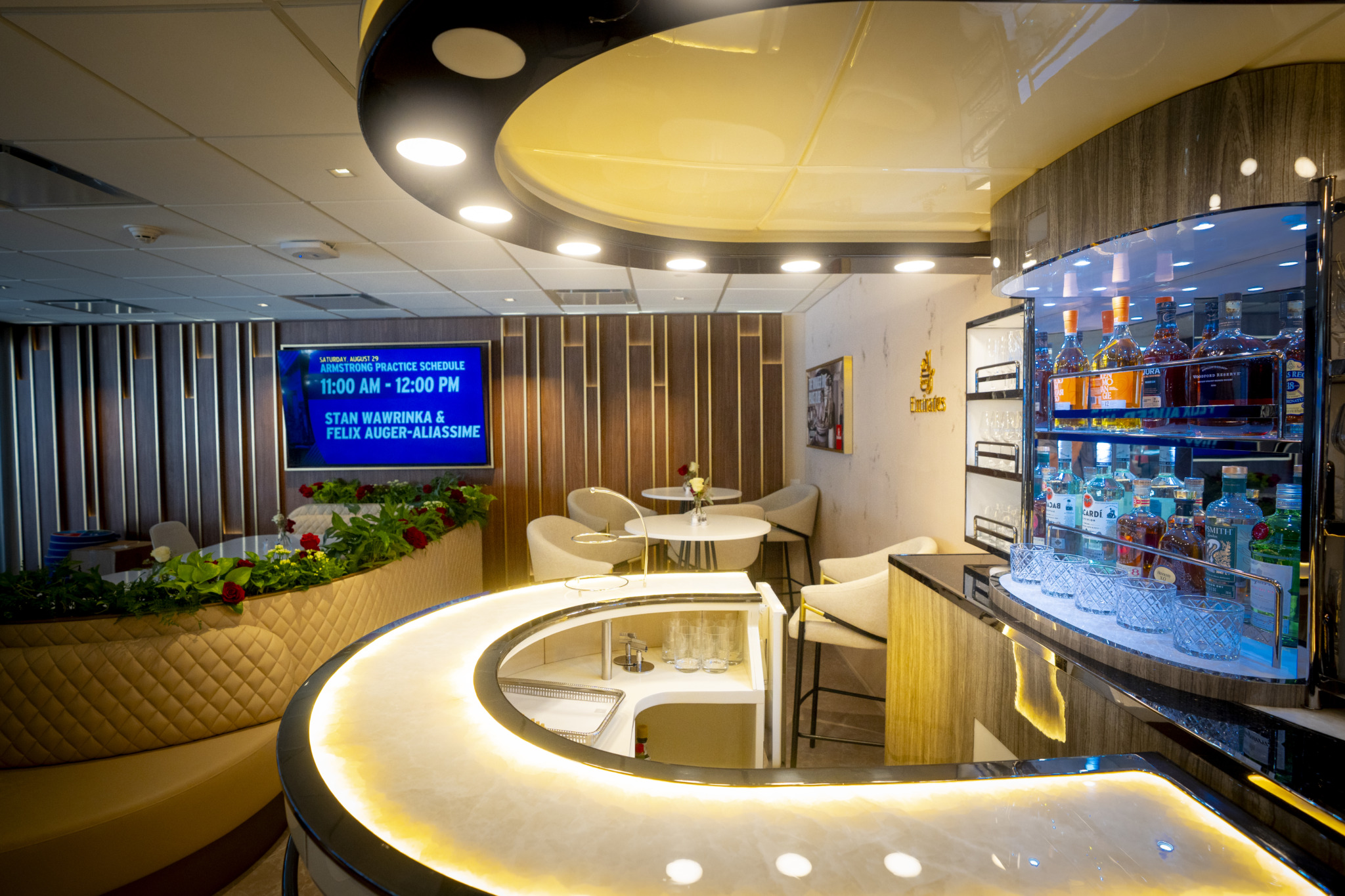
The suite, which debuted during the 15th year of Emirates’ partnership with the U.S. Open, is characterized by a sophisticated palette of ivory and champagne, accented by rich, lacquered woodgrain and supple, leather-clad seating. These materials are not merely aesthetic choices; they are the exact components found within the front cabins of the Emirates A380 fleet.
The centerpiece of this hospitality suite is the iconic horseshoe-shaped bar, a direct recreation of the A380’s upper-deck lounge. Originally commissioned in 2004 by Emirates and designed by the Paris-based firm Pierrejean Vision, the bar represents a masterclass in spatial efficiency and ergonomic luxury. By installing a faithful reproduction of this famous onboard feature within the stadium, Emirates has successfully anchored the suite in its own corporate heritage, offering guests a sensory bridge between the comfort of the clouds and the intensity of the court.
A Chronology of Design and Partnership
The evolution of this space is part of a much larger, multi-year narrative involving the transformation of the Billie Jean King National Tennis Center in Flushing Meadows.
- 2004: Emirates commissions Pierrejean Vision to develop the iconic lounge concepts for its forthcoming A380 fleet, establishing the "horseshoe" geometry that would define the airline’s luxury brand.
- 2008: The finalized A380 onboard lounge design enters commercial service, setting a new industry standard for in-flight social spaces.
- 2011–2025: Emirates solidifies its role as a premier partner of the U.S. Open, gradually increasing its footprint within the grounds of the National Tennis Center.
- 2026: In conjunction with the second phase of the stadium’s $800 million reimagining, Emirates launches its most ambitious suite to date. This space marks the first time the A380 lounge architecture has been deployed in a sports hospitality setting.
- 2027 (Projected): The final phase of the HOK+ROSSETTI-led renovation of Arthur Ashe Stadium is slated for completion, marking the conclusion of a decade-long project to modernize the Flushing Meadows campus.
Supporting Data: The Scale of the Transformation
The suite is a vital component of a broader $800 million capital improvement project led by the architectural heavyweights HOK and ROSSETTI. This massive undertaking is designed to accommodate the more than one million visitors who traverse the U.S. Open grounds each year.
The scope of the project, which remains ongoing, includes:
- Expanded Capacity: The completion of the second of three phases has introduced an expanded courtside bowl, significantly increasing seating capacity for premium ticket holders.
- Luxury Infrastructure: Two entirely new levels of suites have been integrated into the stadium’s vertical footprint, providing a more refined viewing experience that balances enclosure with the "live" energy of the match.
- Spatial Synergy: The Emirates suite occupies a prime mid-court vantage point. By extending the interior space into terraced outdoor seating, the design team has managed to preserve the privacy of a luxury lounge while maintaining the auditory and visual proximity to the play that fans demand.
Bridging the Skies and the Court: A Design Exchange
The relationship between the U.S. Open and Emirates is not a one-way street of brand visibility. While the airline has brought the A380 aesthetic to the stadium, the U.S. Open has, in turn, permeated the cabin. During the two weeks of the tournament, Emirates passengers flying across their global network encounter a "court-themed" service. This includes championship-themed dishes, commemorative coasters, and branded headrest covers.
This creates a fascinating, reciprocal design exchange. The passenger in the sky is reminded of the global reach of the tennis championship, while the guest in the stadium is reminded of the seamless, high-end travel experience offered by the airline. It is a calculated, holistic marketing strategy that relies on the "transfer of cool"—associating the high-performance, high-tension environment of Grand Slam tennis with the premium, relaxed environment of international long-haul travel.

Official Responses and Strategic Implications
For the USTA and Emirates, this project represents the future of sports hospitality. As professional sports venues transition from simple arenas into year-round "lifestyle destinations," the quality of the interior design has become as important as the quality of the match itself.
"The suite was designed to translate the cabin experience into a hospitality setting," notes a spokesperson close to the project. "It’s about more than comfort; it’s about brand immersion. By pairing familiar materials—the lacquer, the leather, the champagne tones—with the view of the court, we create a sense of place that is uniquely Emirates."
The implications for the broader architectural industry are significant. The use of aircraft-grade materials in temporary or semi-permanent hospitality settings showcases a trend toward modular, high-performance design. As HOK and ROSSETTI continue their work on the Billie Jean King National Tennis Center, the success of the Emirates suite serves as a benchmark for how corporate partners can integrate their brand identity into the fabric of a public, world-class sporting venue without compromising the architectural integrity of the stadium itself.
The Future of Stadium Architecture
As we look toward the 2027 completion of the Billie Jean King National Tennis Center renovations, the focus on the "fan experience" is reaching a fever pitch. Stadiums are no longer merely containers for athletes; they are complex ecosystems of hospitality, luxury, and technology.

The Emirates suite stands as a testament to the fact that modern architecture in sports must be as much about the "lounge" as it is about the "stands." By successfully porting the design language of an A380 into the heart of Flushing Meadows, Emirates has proven that the most successful brand activations are those that feel like a natural extension of the architecture.
Whether one is a tennis aficionado or an aviation enthusiast, the synthesis of these two worlds within Arthur Ashe Stadium offers a glimpse into how global brands will continue to shape our physical environment. As the lines between different types of leisure continue to blur, the "Emirates Suite" model—one of intentional, high-end, and contextually aware design—is likely to become the blueprint for future premium hospitality experiences across the globe.
In the final analysis, the project is a triumph of branding through physical environment. It acknowledges that the modern spectator demands more than just a seat; they demand a narrative. By weaving the story of the A380 into the fabric of the U.S. Open, Emirates has ensured that its presence is felt long after the final serve is returned, creating a lasting impact on both the landscape of the stadium and the memory of the guest.