
In a significant shift for the global sports broadcasting landscape, the European Broadcasting Union (EBU) has released a comprehensive set of official guidelines titled Raising the Bar. The document aims to fundamentally change how women’s track and field athletes are captured on camera, explicitly addressing and providing solutions for the long-standing issue of sexualized camera angles and inappropriate framing in sports media.
The EBU, acting as the world’s leading alliance of public service media with 113 member organizations spanning 56 countries, has set a new benchmark for production standards. By providing concrete, visual examples of how to position cameras to emphasize athletic prowess rather than compromising, suggestive perspectives, the organization is attempting to shift the industry culture away from "the male gaze" and toward a professional, athlete-centered focus.
The Core Objective: Redefining Athletic Coverage
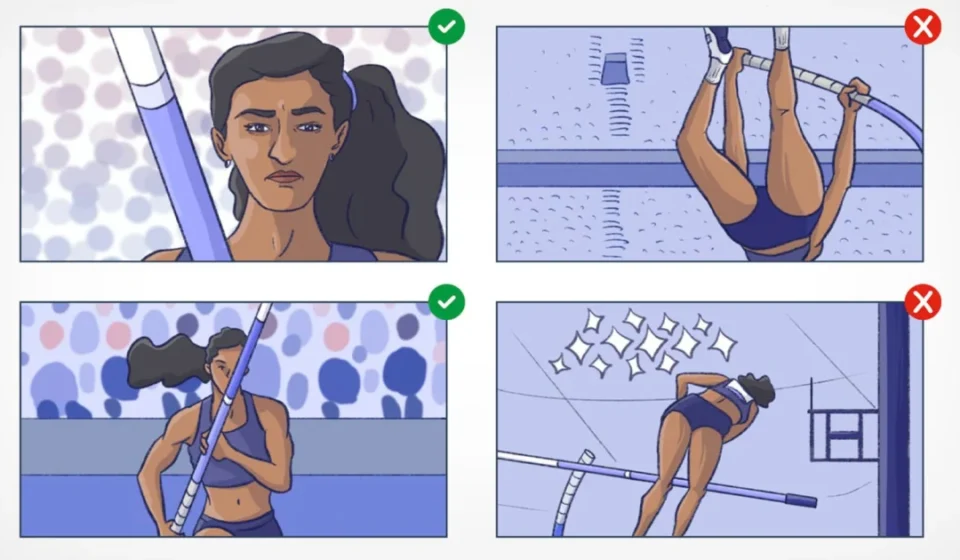
The central premise of Raising the Bar is that the camera angles that best capture a sportswoman’s technique, speed, and raw emotion are fundamentally the same ones that uphold her dignity. The guide serves as a practical manual for directors, camera operators, and producers, teaching them how to frame shots that honor an athlete’s power and skill without resorting to the intrusive, lingering, or suggestive shots that have historically plagued women’s sports coverage.
The EBU has made it clear that these are not merely "restrictions" designed to limit creative expression. Instead, they are a toolkit for better storytelling. By eliminating gratuitous slow-motion replays of an athlete’s body or low-angle shots that focus on anatomy rather than the mechanics of the sport, broadcasters can produce higher-quality, more respectful content that appeals to a broader audience.
Chronology of a Growing Industry Concern
The push for these guidelines did not emerge in a vacuum. For years, athletes, advocacy groups, and sports psychologists have pointed to the disconnect between the intensity of women’s competition and the often-degrading way it is presented to television audiences.
The 2024 Olympic Catalyst
The conversation reached a boiling point during the 2024 Summer Olympics. Amidst widespread scrutiny of broadcasting habits, the CEO of Olympic Broadcasting Services issued a direct, urgent warning to camera operators. The directive was clear: film both male and female athletes with the same technical parameters to avoid the encroachment of stereotypes and systemic sexism into the live broadcast of the Games.
From Awareness to Action
Following the 2024 Olympics, the EBU recognized that a broad, generalized directive was insufficient. While the intent was there, production crews lacked the technical, field-tested guidance required to translate these ethical mandates into everyday camera work. Raising the Bar is the direct result of this realization. By collaborating with elite athletes—including pole vaulter Holly Bradshaw and jumpers Ivana Španović and Blanka Vlašić—the EBU spent the intervening years analyzing footage, identifying problematic trends, and mapping out the specific camera placements that lead to "compromised" shots.
Supporting Data: What Constitutes "Sexualized" Coverage?
The EBU’s research highlights several recurring issues that undermine the credibility of women’s sports broadcasting. These issues are categorized by the organization as "significant concerns" that require immediate remediation:
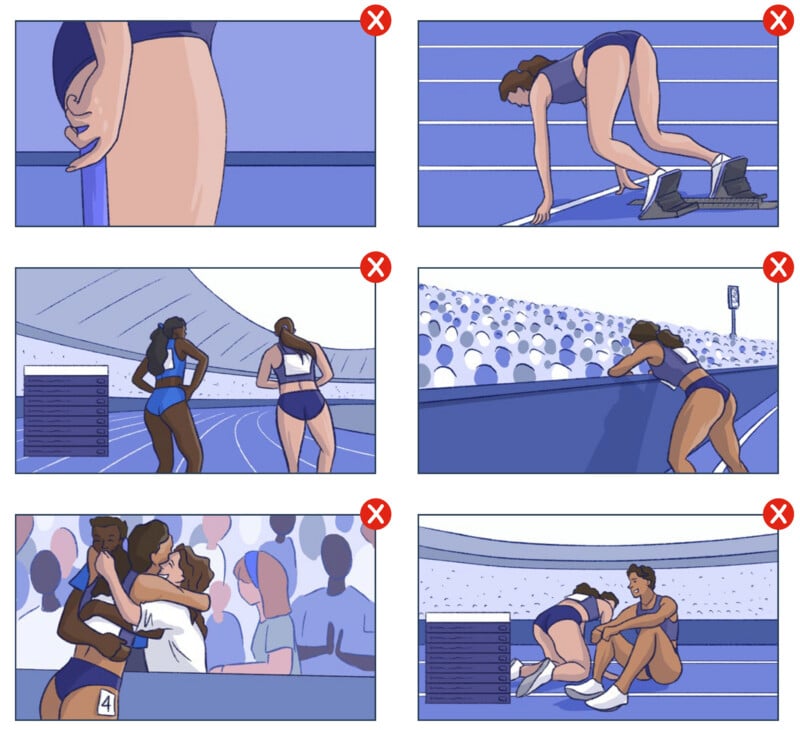
- Lingering Shots: The tendency for cameras to remain on an athlete’s body during downtime, particularly after a race or a jump, rather than cutting away to show the scoreboard, the coach, or the athlete’s mental state.
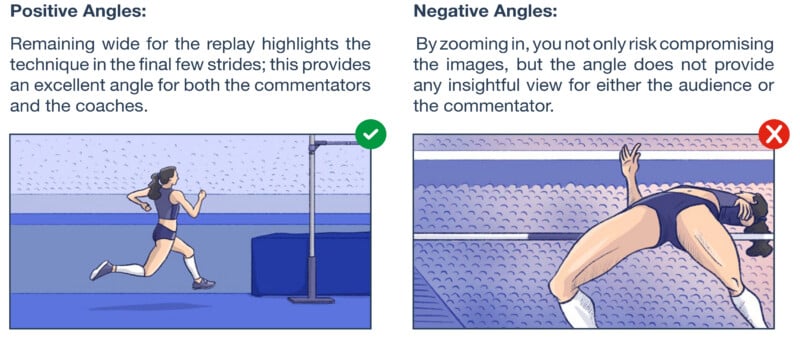
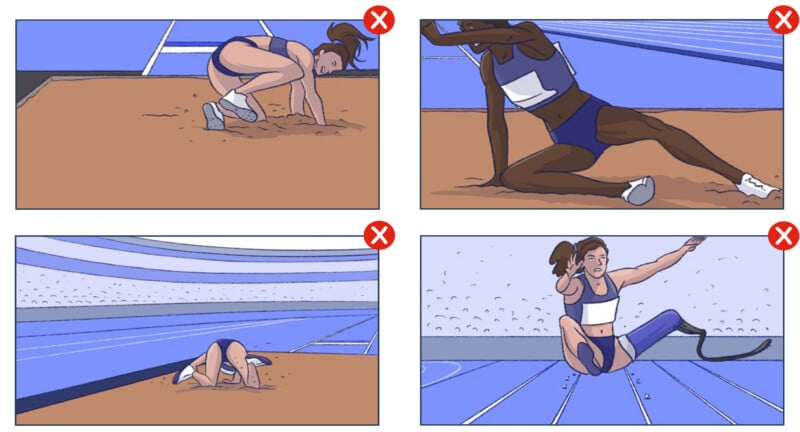
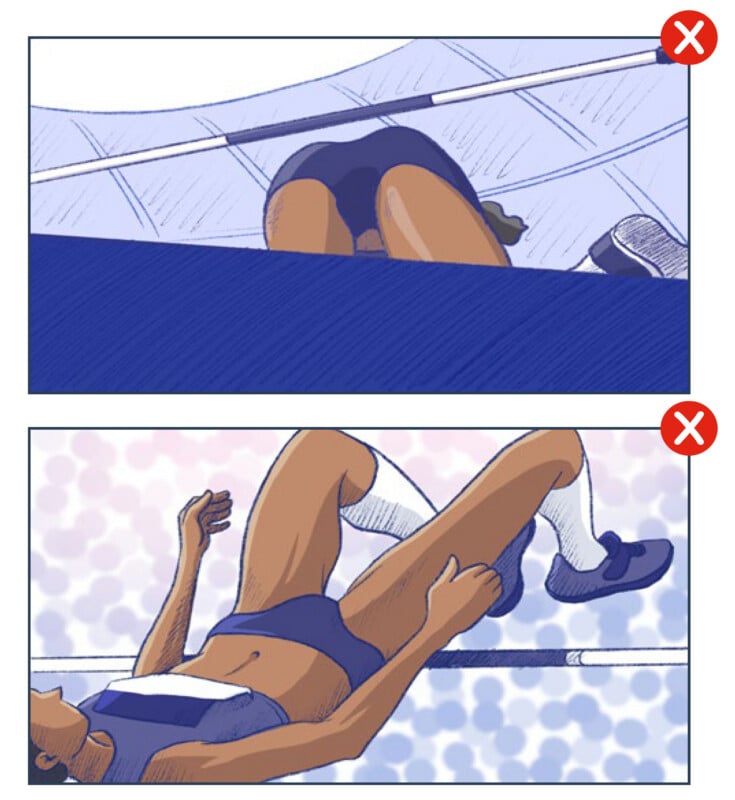
- Intrusive Low-Angle Shots: The use of cameras positioned on the ground looking upward, which often captures revealing views that have no technical relevance to the athletic event being performed.
- Excessive Slow-Motion: The use of slow-motion replays that serve no pedagogical purpose in explaining the athlete’s technique. The EBU notes that when these shots are focused on specific body parts rather than the movement of the joints or the trajectory of the body over a hurdle or bar, they become purely voyeuristic.
- Inappropriate Contextual Editing: Selecting footage of athletes in vulnerable or compromised positions—such as when they are bent over in exhaustion or adjusting equipment—when that footage offers no narrative value to the competition.
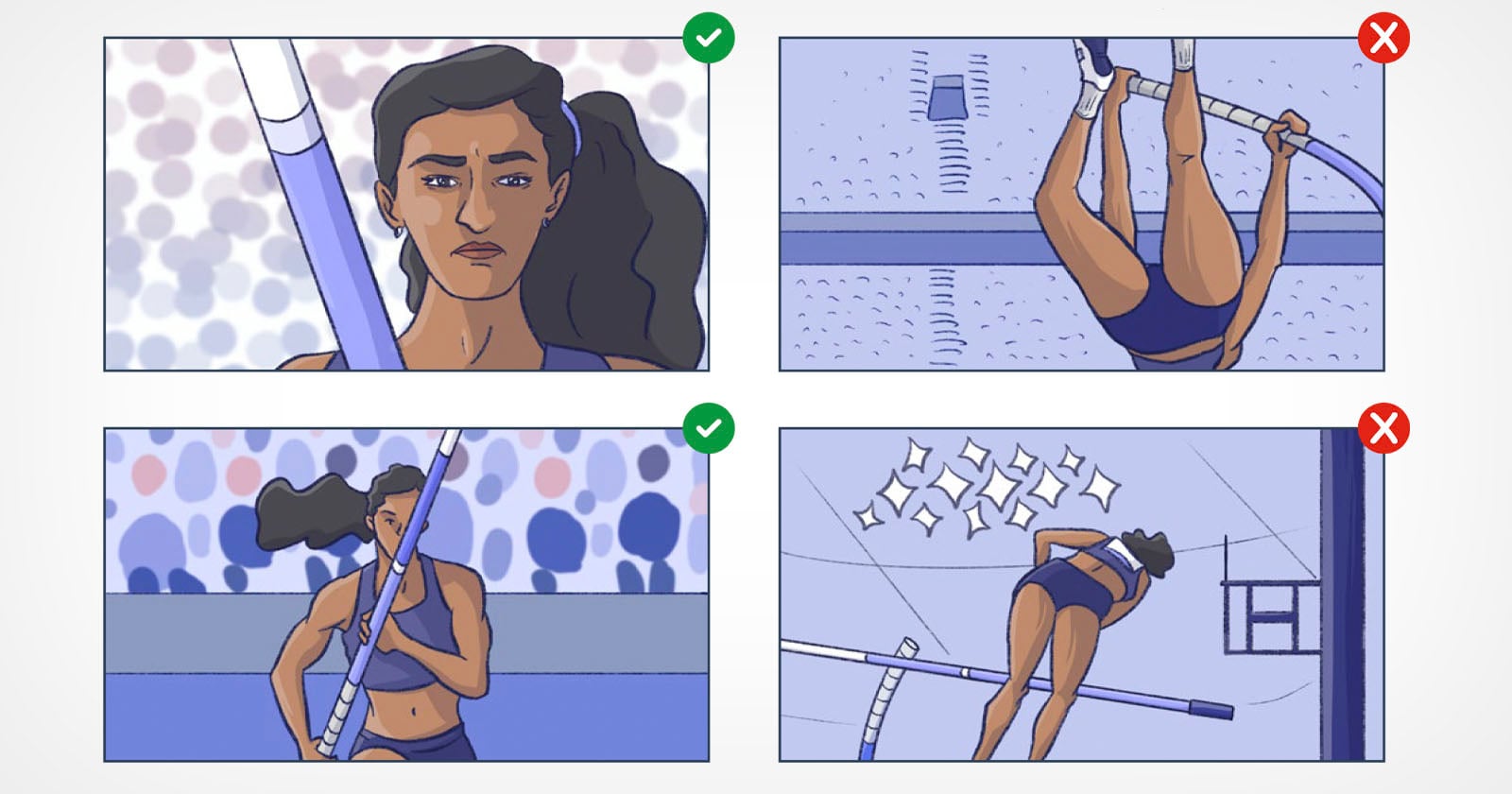
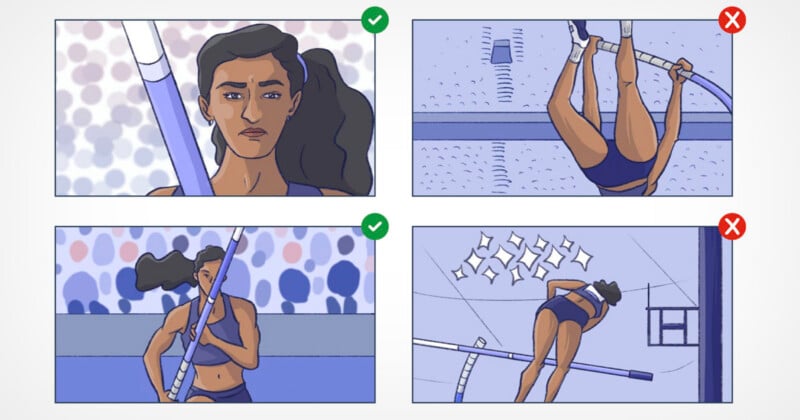
The guide includes detailed, annotated illustrations showing "green check" moments—where cameras capture the intensity of the run-up or the focus of the prep—and "red X" moments, where the camera choice serves to objectify rather than report.
Official Responses and Stakeholder Perspectives
The reception from the sporting community has been overwhelmingly positive, particularly from the women who are most affected by these broadcasting choices.
The Athlete’s Perspective
Holly Bradshaw, a decorated Olympic pole vaulter, has been one of the most vocal advocates for these changes. "How our sport is displayed during live broadcast can be incredibly powerful yet sometimes harmful to the women competing and the women/girls watching," Bradshaw stated.
She shared the deeply personal impact of these broadcasting failures, noting that she has personally been subjected to social media abuse and has witnessed inappropriate, sexualized videos of herself and her peers circulating online—all of which originated from slow-motion, "uncomfortable" camera angles captured during live competitions. For athletes like Bradshaw, these guidelines represent a move toward a safer, more professional environment where they can focus on their craft without the anxiety of being exploited by the very cameras covering their achievements.
The EBU’s Stance
Glen Killane, Executive Director of EBU Sport, has been instrumental in positioning this document as a fundamental pillar of modern sports ethics.
"Our coverage should reflect the skill, dedication, and excellence that define athletics, and uphold the trust placed in us by audiences and competitors alike," Killane remarked. He emphasized that this is a "shared responsibility." By publishing these guidelines, the EBU is signaling to all 113 member organizations that they are expected to adopt these standards. Killane underscored that while the guide currently focuses on large-scale track and field productions, the principles of dignity and accuracy are universal and should be applied to smaller crews and other sports disciplines as well.
Implications for the Future of Broadcasting
The implications of Raising the Bar extend far beyond the track. The EBU’s initiative is likely to set a precedent that other international sporting federations will be pressured to follow.
Standardization of Production Ethics
For years, broadcasting has operated under a "wild west" of aesthetic choices, where directors often prioritized whatever produced the most engagement, regardless of whether that engagement was rooted in sport or objectification. By establishing a formal, written standard, the EBU is effectively creating a new industry "code of conduct." This makes it much harder for production companies to plead ignorance or claim that their choices were "artistic decisions" rather than harmful ones.
The "Trickle-Down" Effect
While the EBU guide is aimed at high-level professional sports, the "trickle-down" effect on local, university, and collegiate sports could be profound. As students and young producers learn from these industry-standard guides, the next generation of camera operators will be trained to identify these problematic angles as inherently unprofessional. This cultural shift within the industry is arguably more important than the immediate changes to broadcast footage.
Expanding the Scope
The EBU has already hinted that this is just the beginning. Given the positive reception and the logical necessity of these guidelines, it is highly probable that similar manuals will be developed for other sports—such as swimming, gymnastics, and beach volleyball—where athletes are often subjected to similar issues of over-sexualization in media coverage.
Conclusion
The release of Raising the Bar is a watershed moment for the intersection of technology, media, and gender equality in sports. It serves as a stark reminder that technology is never neutral; how we choose to point a camera is a reflection of our values.
By choosing to prioritize the athlete’s skill over the objectification of her body, the EBU is not just cleaning up its own broadcasts—it is helping to change the way the world perceives women in athletics. The guidelines provide a clear path forward for any production team, proving that respectful, dignifying, and high-quality sports broadcasting is not only possible but, in the end, superior. As the industry moves toward this new standard, the focus of the conversation will finally shift back to where it belongs: on the strength, the speed, and the incredible achievements of the athletes themselves.
For those in the industry looking to align their operations with these new standards, the full document is available for download on the EBU’s official website, serving as an essential roadmap for the future of sports media.