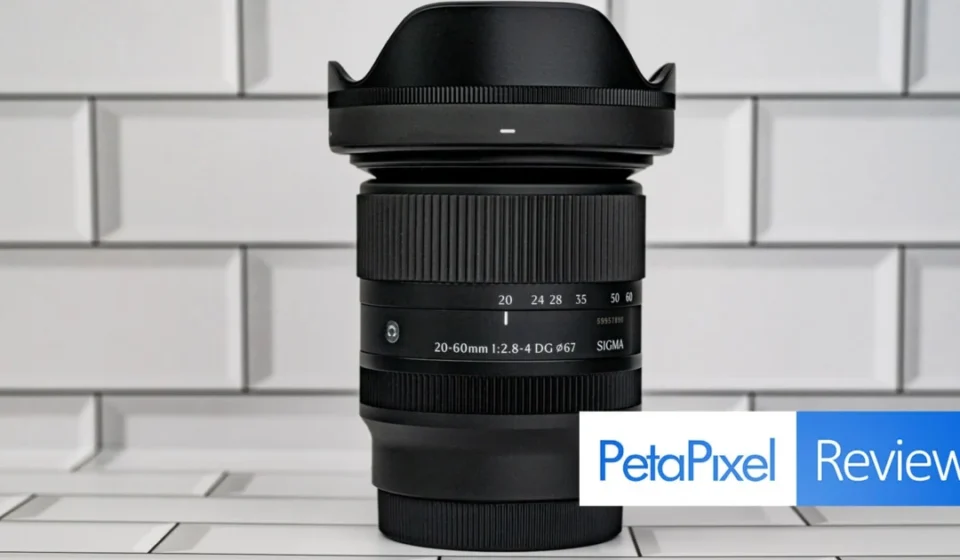
Sigma 20-60mm f/2.8-4 DG Contemporary Review: A Lightweight Ultra-Wide Game-Changer for Sony and L-Mount

In modern photography and videography, the constant tug-of-war between uncompromising optical performance and everyday portability often dictates what ends up in a shooter’s camera bag. Increasingly, creators are prioritizing convenience over laboratory-grade perfection, recognizing that a compact, versatile lens with an ultra-wide focal range eliminates the need to haul heavy secondary optics into the field.
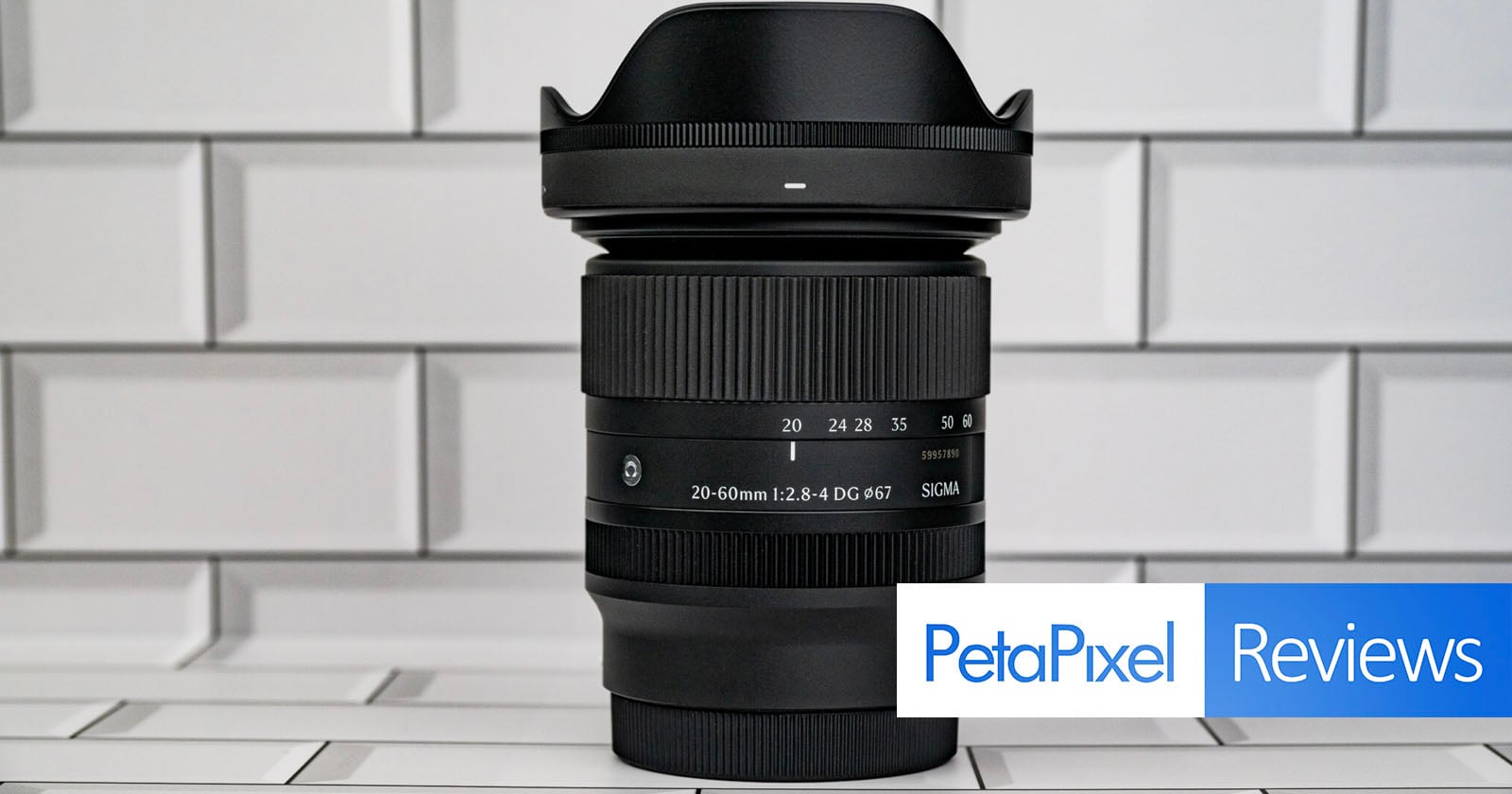
Enter the Sigma 20-60mm f/2.8-4 DG Contemporary, a compelling new entry in the full-frame mirrorless landscape. Priced at an accessible $849 and built for Sony E-mount and Leica/Panasonic/Sigma L-mount systems, this lens attempts to strike the ultimate balance between weight, aperture brightness, and creative range.

Main Facts: What is the Sigma 20-60mm f/2.8-4 DG Contemporary?
The Sigma 20-60mm f/2.8-4 DG Contemporary is an ultra-wide-to-standard zoom lens designed specifically for full-frame mirrorless camera systems. Its primary specifications position it as a direct challenger to established kit and travel lenses from Sony and Panasonic:
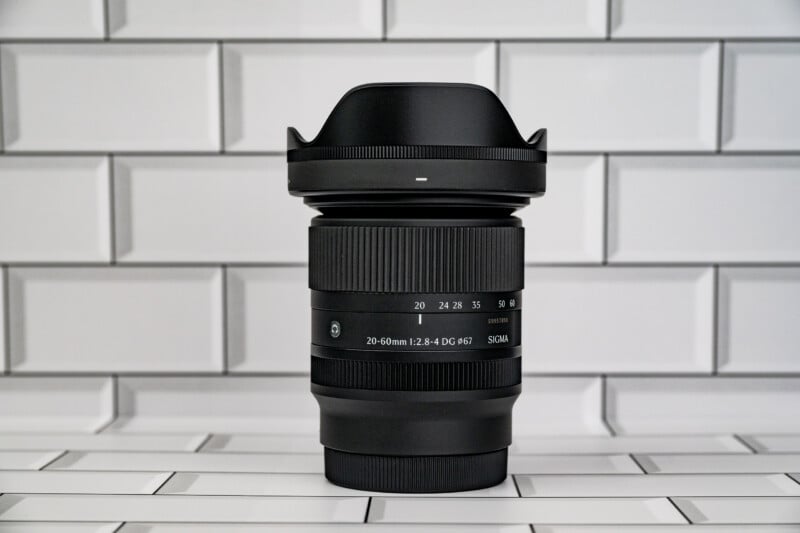
- Focal Range: 20mm to 60mm
- Aperture Range: f/2.8 at the wide 20mm end down to f/4 at the 60mm telephoto end
- Weight: 13.2 ounces (375 grams)
- Filter Diameter: 67mm
- Autofocus Motor: High-speed linear motor
- Weather Sealing: Dust and splash-resistant construction consistent with Sigma’s Contemporary lineup
- MSRP: $849 USD
- Mount Availability: Sony E-mount and L-mount
By delivering a fast f/2.8 aperture at the crucial 20mm starting point while keeping the physical footprint remarkably small, Sigma has carved out a unique niche in the market, offering more light capture than its primary competitors without inflating the price tag.
Chronology: Development and Hands-On Field Testing
The demand for versatile, wide-angle zoom lenses has accelerated rapidly over the last several years. Panasonic initiated the modern 20-60mm trend with its budget-friendly f/3.5-5.6 kit lens, followed closely by Sony’s premium, constant-aperture FE 20-70mm f/4 G. Recognizing a gap in the market for a compromise between Panasonic’s lower-cost, slower glass and Sony’s more expensive $1,200 price point, Sigma engineered the 20-60mm f/2.8-4 DG Contemporary.
The lens made its unofficial public debut in hands-on environments like the Sony Kando event, where creators were given the opportunity to test its limits in real-world scenarios—ranging from fast-paced festival coverage and street photography to intimate macro work and low-light gimbal applications. Field testers quickly noted that the lens’s physical footprint made it an effortless everyday carry, seamlessly transitioning from landscapes to environmental portraits without missing a beat.
Supporting Data: Performance, Sharpness, and Optical Behavior
To evaluate whether the Sigma 20-60mm f/2.8-4 lives up to its spec sheet, extensive testing was conducted across sharpness, chromatic aberration, flare control, and macro performance.
Build and Ergonomics
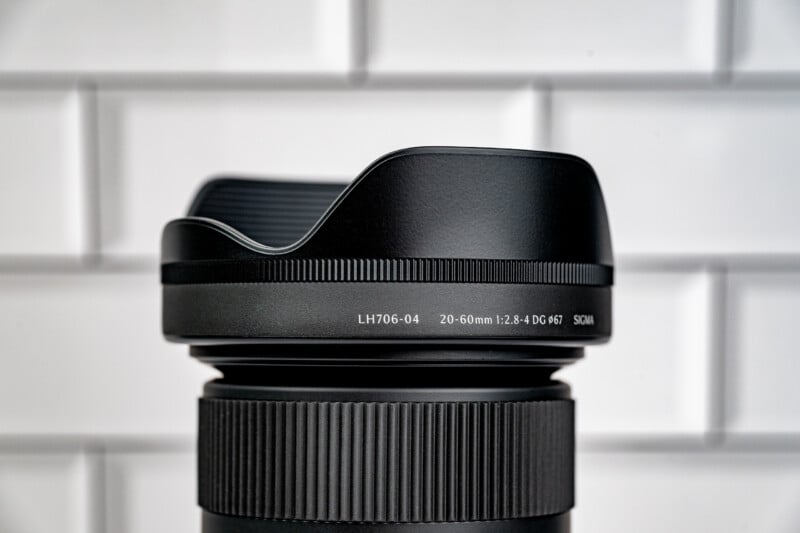
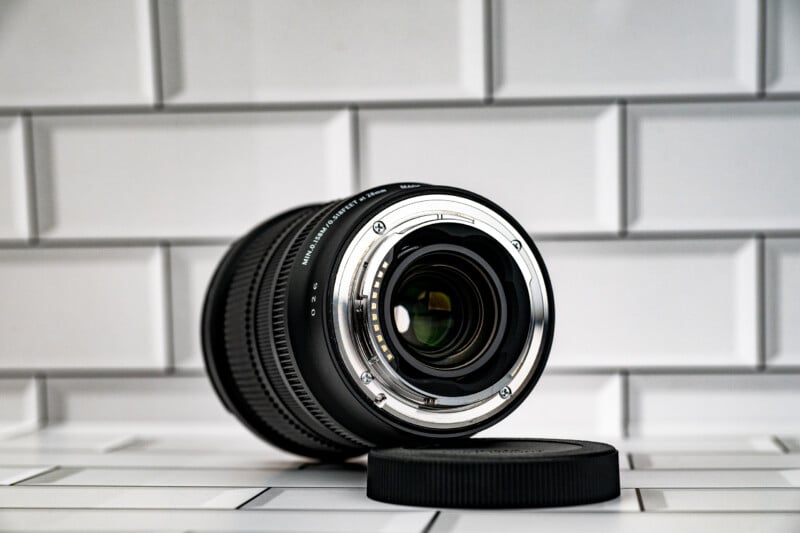
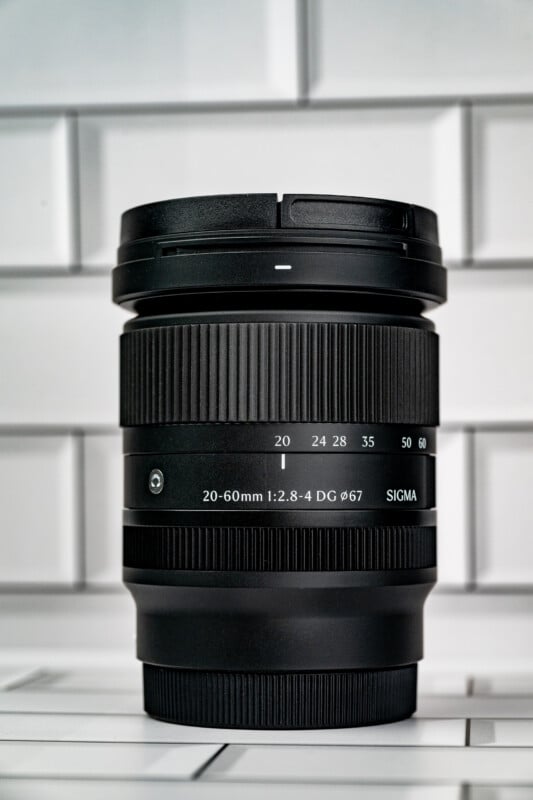
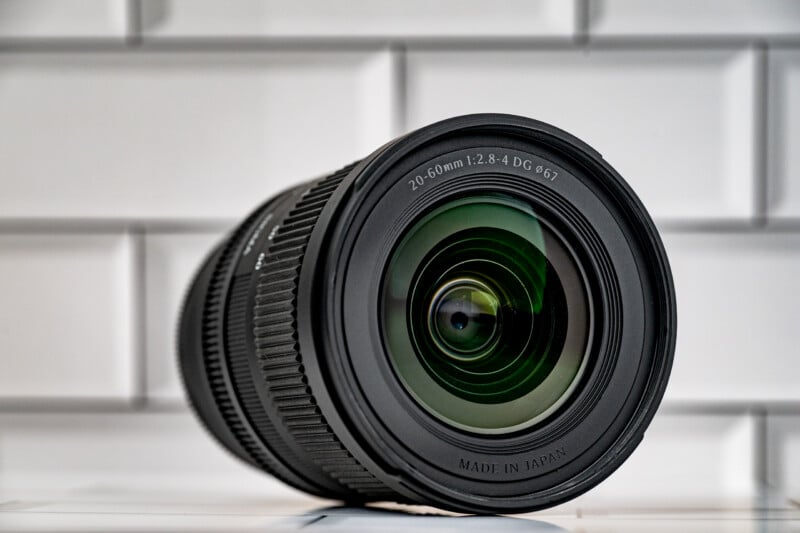
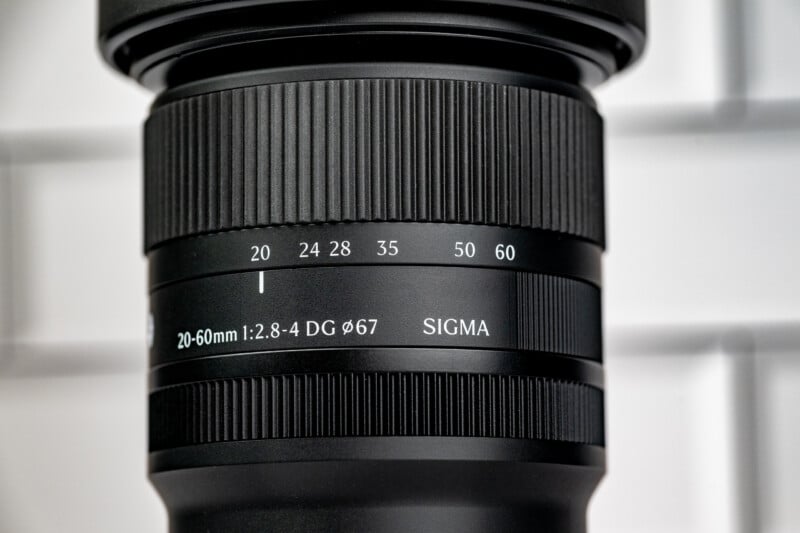
True to the Contemporary series, the lens focuses on minimalist efficiency. Weighing just 13.2 ounces, it is even lighter than the Sony 20-70mm f/4. The chassis features a smooth zoom ring and a manual focus ring, though it lacks an external AF/MF toggle switch. The manual focus ring exhibits a slightly loose feel, but it remains fully functional. Inside, a high-speed linear motor drives fast, quiet autofocus acquisition. Weather sealing protects the internal elements against moisture and dust, and a standard lens hood is included in the box.
Sharpness and Contrast
- At 20mm: Wide open at f/2.8, the lens delivers impressive center sharpness and decent contrast. The extreme corners show some minor softness, but this resolves quickly as the aperture is stepped down. Longitudinal chromatic aberration (LoCA) is minimal, appearing only faintly at 20mm and f/2.8.
- At 60mm: The telephoto end performs admirably. At f/4 in the center, detail is rich and crisp, and corner consistency improves significantly compared to the wide end.
Flare and Ghosting
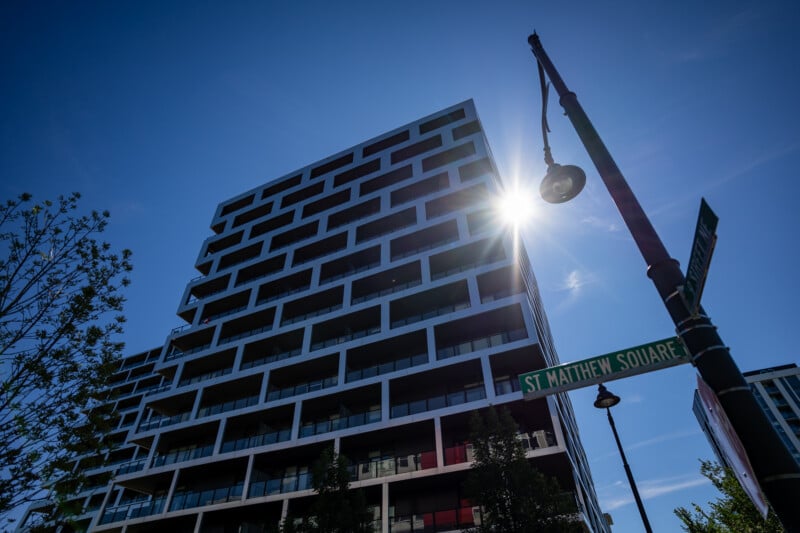
Sigma’s proprietary lens coatings continue to excel in difficult lighting. When shooting directly into harsh light sources at 20mm f/2.8, flare suppression is exceptional. Stopping down the aperture introduces minor purple ghosting diagonally across the frame, but overall results remain exceptionally clean. However, sunstars produced by this lens are distinctly average and unlikely to win over landscape purists.
Macro Capabilities
A standout feature of this lens is its close-focusing utility. The Sigma achieves its best macro performance near the 35mm focal length, delivering an impressive macro magnification ratio of 1:2.3. This allows creators to capture tight, detailed close-ups of flora and fauna, adding a layer of versatility rarely found in standard wide zooms.
Bokeh Quality
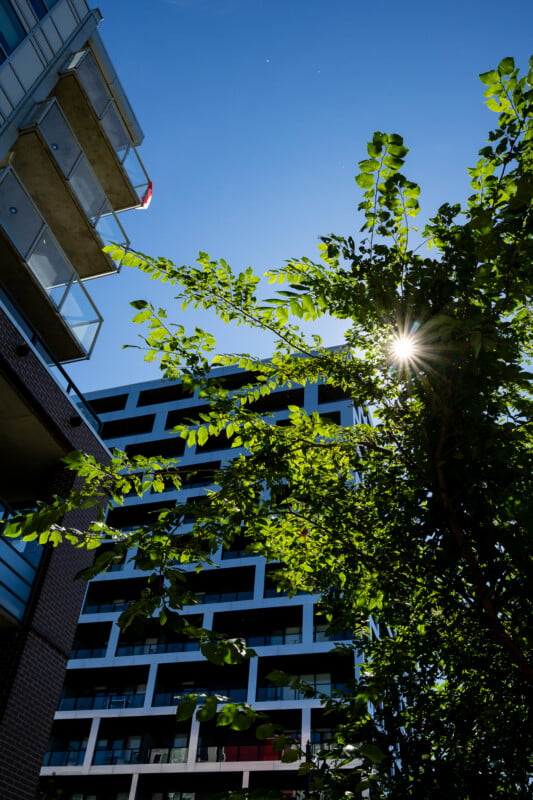
Bokeh is perhaps the lens’s most divisive optical characteristic. Background blur tends to look slightly harsh and busy. Specular highlights reveal visible "onion-ring" patterns, rendering the overall bokeh quality as distinctly average—functional, but lacking the creamy smoothness of dedicated prime lenses.

Official Responses and Market Positioning
While traditional manufacturer press releases emphasize the balance of portability and optical clarity inherent to Sigma’s Contemporary line, the real-world discourse is happening among creators comparing the lens to existing ecosystem staples.

Industry analysts and early reviewers have highlighted how the Sigma 20-60mm alters the purchasing calculus for both Sony and L-mount shooters:

- For Sony Users: The Sigma presents a direct, wallet-friendly alternative to the Sony FE 20-70mm f/4 G. While Sony’s option offers an extra 10mm on the long end and a constant f/4 aperture, the Sigma provides a faster f/2.8 aperture at the wide end for $350 less ($849 versus $1,200).
- For Panasonic/L-Mount Users: The choice is even more pronounced. The Sigma significantly outperforms the Panasonic 20-60mm f/3.5-5.6 in light gathering and overall construction, making the extra investment worthwhile for creators who frequently shoot in dim environments.
Implications: Who Should Buy the Sigma 20-60mm f/2.8-4?
The release of the Sigma 20-60mm f/2.8-4 DG Contemporary has profound implications for travel photographers, vloggers, and gimbal operators.

Videography and Vlogging
From a cinematic perspective, this lens is tailor-made for gimbal use. The faster f/2.8 aperture provides crucial low-light capability, and zooming through the range does not violently shift the camera rig’s center of balance. While there is a noticeable amount of focus breathing—where the field of view shifts subtly as focus is adjusted—burgeoning videographers and content creators will find its lightweight profile and versatile range invaluable.
The Verdict
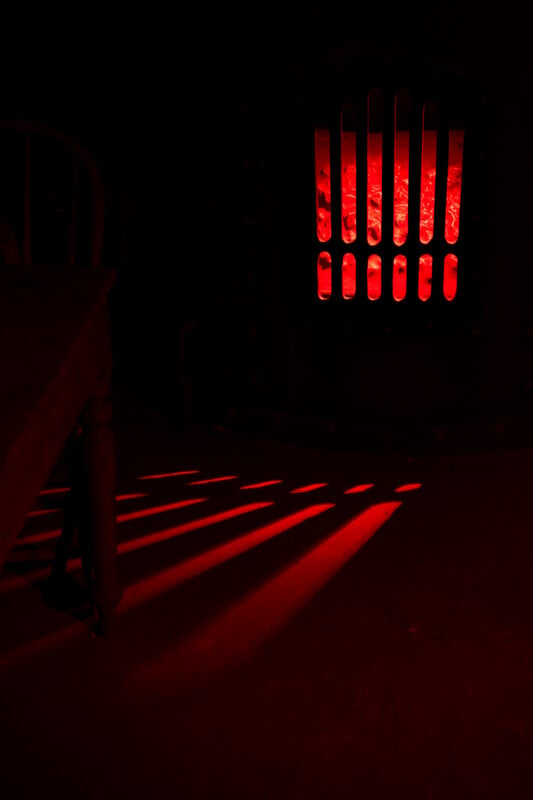
If your workflow demands an ultra-wide 20mm starting point, good optical sharpness, and a lightweight build without breaking the bank, the Sigma 20-60mm f/2.8-4 DG Contemporary is an easy recommendation. It successfully bridges the gap between cost and capability, proving that photographers no longer need to sacrifice convenience to capture professional results.