
The AI Paradox: Why Hollywood is Betting on Algorithms to Save the Bottom Line

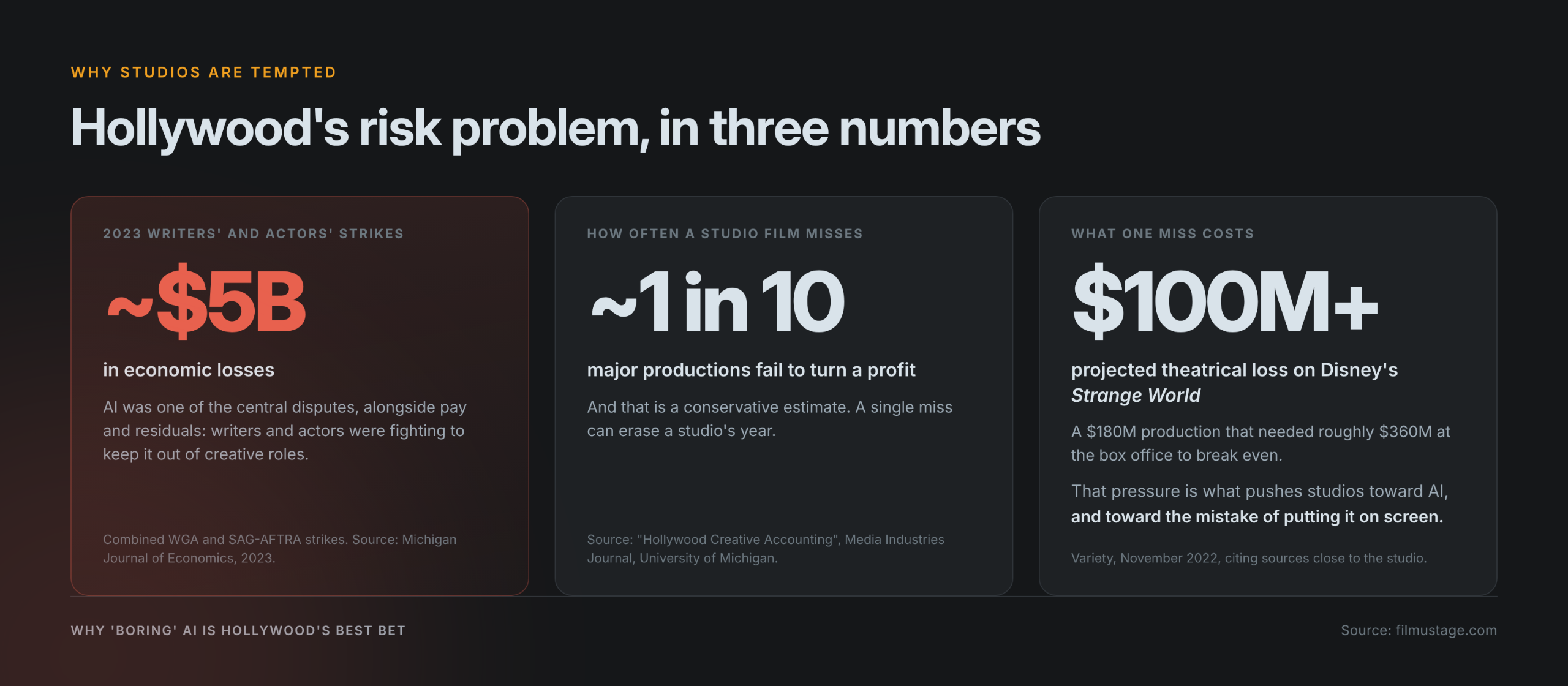
The film industry is currently undergoing a structural transformation as profound as the transition from silent pictures to "talkies." However, this time, the catalyst is not a new form of hardware, but the cold, calculating logic of generative artificial intelligence. For major studios, the stakes have never been higher; with box office bombs like Disney’s Strange World hemorrhaging $200 million and DC’s The Flash resulting in a $150 million deficit, the traditional "gamble" of filmmaking has become an existential liability.
Industry data suggests that approximately 10% of major productions fail to turn a profit, a statistic that has sent studio executives scrambling for technological solutions to de-risk their portfolios. As generative AI promises to streamline production and slash budgets, the industry finds itself at a crossroads: does AI represent a tool for efficiency, or an existential threat to the very soul of cinema?

The High Cost of Failure: A Brief Chronology of Hollywood’s Crisis
To understand why the industry is flirting with AI, one must first look at the recent economic instability of major studios. For decades, the "blockbuster model"—spending hundreds of millions on a single tentpole release—worked under the assumption that a massive global opening weekend would offset the risk.
- 2020–2022: The post-pandemic landscape shifted viewing habits. Streaming services cannibalized theatrical windows, and audience appetite for generic, high-budget spectacles began to wane.
- 2023: A defining year for labor relations in Hollywood. The SAG-AFTRA and WGA strikes were largely catalyzed by fears that studios would use generative AI to replace human writers and actors, effectively "mining" their likenesses and creative work to generate content at a fraction of the cost.
- 2024–Present: The industry has moved into a phase of tactical integration. While the "AI-generated movie" remains a marketing poison, the "AI-supported production" has become the new standard for efficiency-minded executives.
The $5 billion loss attributed to the 2023 strikes served as a stark reminder of the industry’s volatility. Studios learned that attempting to replace human creativity with algorithms is a public relations catastrophe, but they also realized that the current, manual way of managing production logistics is prohibitively expensive and slow.

The "Boring" Revolution: Why Logistics, Not Art, is the Frontier
Egor Dubrovsky, co-founder and CEO of Filmustage, argues that the narrative surrounding AI in film has been fundamentally misunderstood. For many, the term "AI in film" conjures images of uncanny, deep-faked actors or scripts written by hallucinating chatbots. However, the true value of AI lies in the "unsexy" backend of the industry.
"Filmmaking is a grueling, high-stress environment," says Dubrovsky, who has worked as a director’s assistant in the industry. "Nobody goes to film school because they love combing through call sheets for scheduling clashes or calculating line-item expenses for the tenth time."

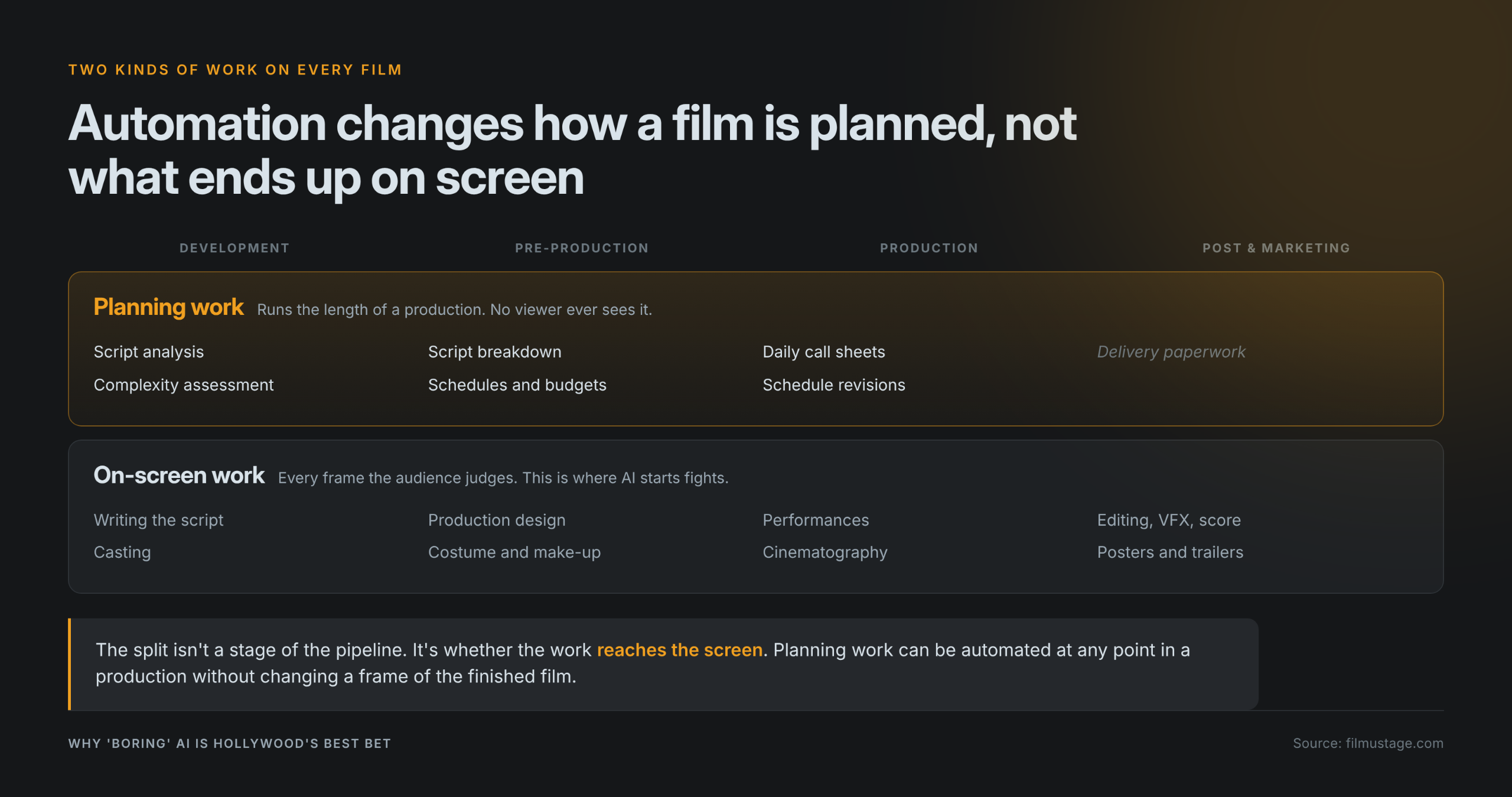
According to Dubrovsky, whose platform has been used on high-profile projects like Apple TV’s Masters of the Air and Netflix’s The Gentlemen, AI is best deployed when it handles the "heavy lifting" of pre-production. This includes:
- Script Breakdown: Automatically identifying characters, props, locations, and special effects requirements.
- Scheduling: Optimizing shooting days to minimize location costs and actor downtime.
- Budgeting: Real-time analysis of production costs, allowing for instantaneous adjustments when a shoot runs over.
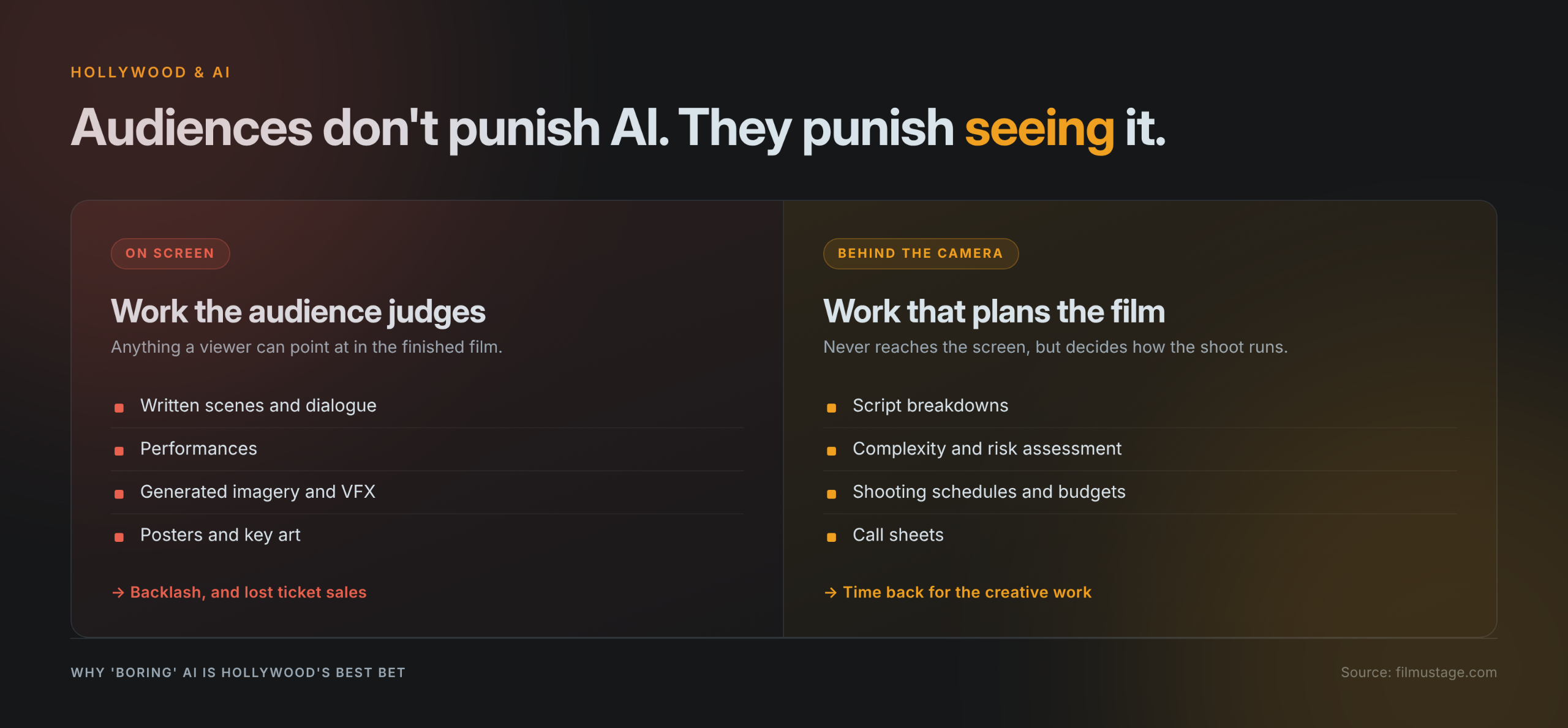
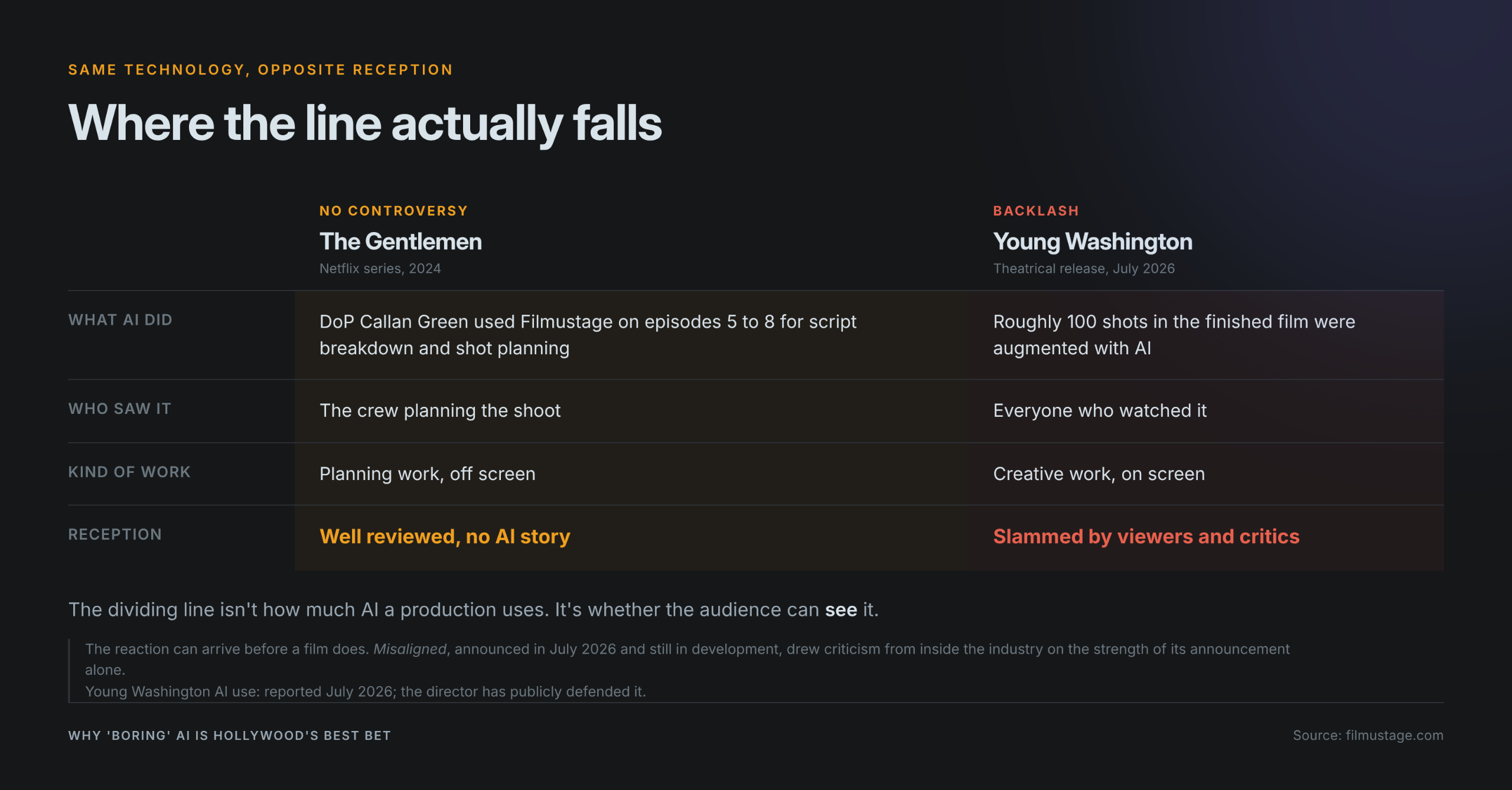
By automating these processes, production teams can save thousands of hours. In the case of The Gentlemen, AI was used strictly to facilitate organizational efficiency, not to replace the creative vision of the director or the performances of the cast. The audience, rightfully, remained unaware of the AI’s presence, as it never appeared on screen.
Supporting Data: Efficiency as an Economic Imperative
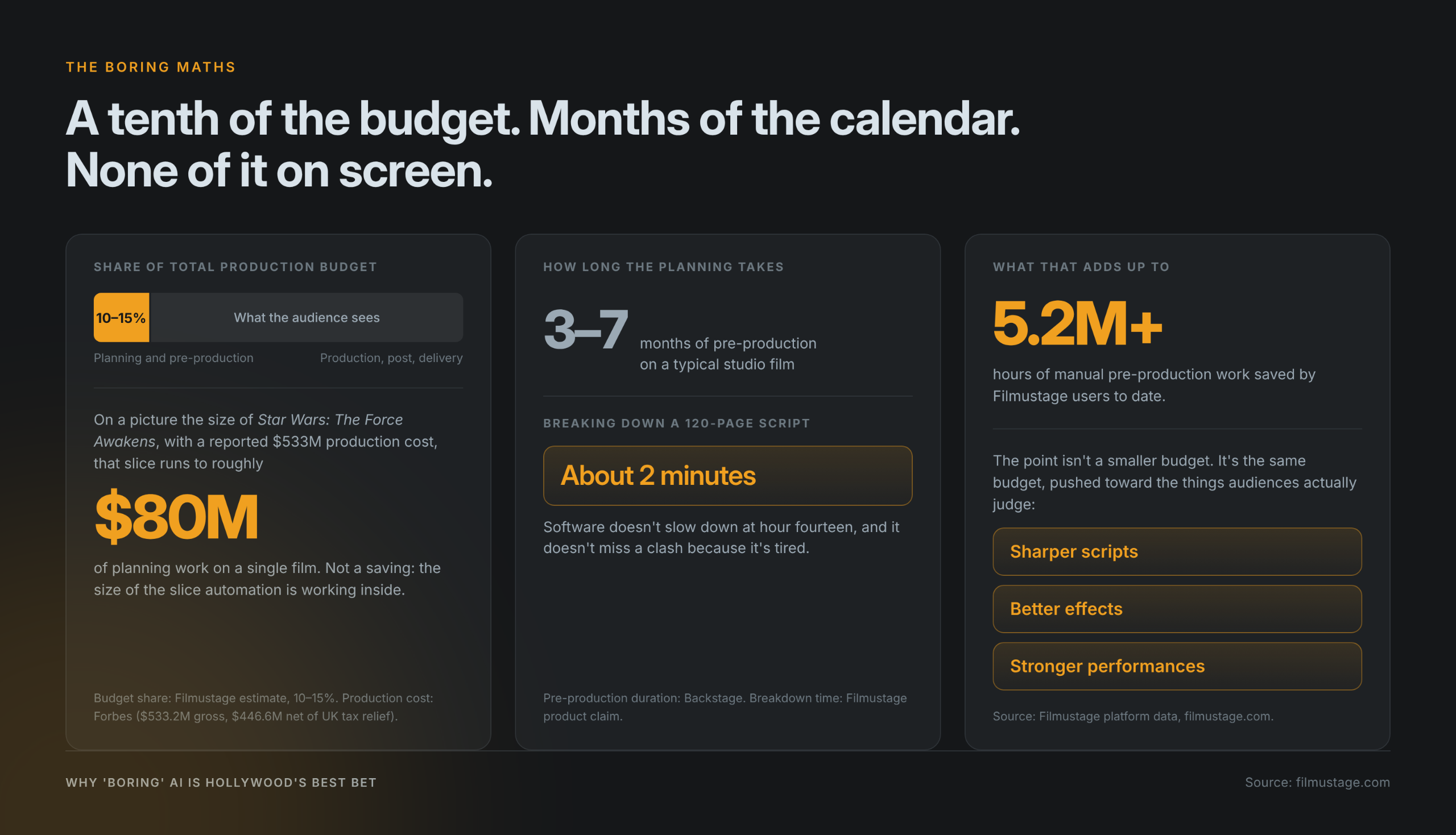
The economic arguments for AI-driven logistics are compelling. Pre-production typically consumes 10% to 15% of a film’s total budget. For a massive production like Star Wars: The Force Awakens, which carried a production budget of $537 million, a 15% reduction in pre-production costs through automation could have saved the studio roughly $80 million.
Furthermore, human error caused by fatigue—common in an industry where 16-hour workdays are the norm—is a significant source of "hidden" costs. AI does not suffer from fatigue, nor does it become bored with repetitive data entry.
- Time Savings: Manual scene breakdowns that once took days can now be accomplished in minutes.
- Industry Impact: To date, platforms like Filmustage have helped save the industry over 5.2 million hours of manual, repetitive labor.
- Resource Reallocation: The primary goal of this automation, according to proponents, is not to shrink the workforce, but to redirect those saved millions toward the "on-screen" experience—improving VFX, deepening narratives, and ensuring actors have the time they need to deliver nuanced performances.
The Public Backlash: Why Audiences Reject AI Creativity
Despite the efficiency gains, the public remains staunchly opposed to AI in creative roles. This is not merely a matter of sentiment; it is a rejection of the "uncanny valley" and the perceived lack of soul in algorithmic storytelling.
Projects that have leaned into AI for creative output, such as the film Misaligned (starring AI-generated actress Tilly Norwood), have been met with harsh criticism. Even subtle uses of AI, such as promotional posters created with generative tools, have caused massive backlash. This is because the audience’s relationship with cinema is built on the premise of shared human experience. When an algorithm is involved in the creative process, that bond of trust is fractured.
For studios, this creates a dangerous "labeling effect." A film that is objectively good might be unfairly panned or ignored if the audience discovers it was "helped" by AI. This is a critical risk factor that CFOs must weigh against the potential for cost savings.
Implications for the Future: A Hybrid Model
As the industry moves forward, a hybrid model is emerging. The future of Hollywood will likely rely on a strict bifurcation of AI roles:
- The "Invisible" AI: AI will become the standard for the administrative side of the industry. It will act as a digital assistant, handling the scheduling, budgeting, and logistical planning that currently keep thousands of production assistants in a state of burnout.
- The "Human-Only" Creative Zone: Studios will likely lean into marketing their films as "100% human-made" to satisfy the growing demand for authentic storytelling. We may see an increase in "Human-Crafted" certifications, similar to "Organic" labels in the food industry, to reassure audiences that no algorithms were harmed in the making of the film.
The risk, however, remains the "creeping automation" of creative roles. If studios successfully integrate AI into the administrative side and see a marked increase in profitability, the temptation to move that technology into the editing room or the screenplay department will be immense.
The lesson from the 2023 strikes is clear: the workforce will not tolerate being replaced. But, as Egor Dubrovsky notes, the workforce would welcome being unburdened. If the industry can master the art of using AI to handle the "boring" parts of filmmaking, it may just find the extra capital and time needed to save the "magic" of the movies.
Ultimately, AI is a tool, not a director. If Hollywood treats it as a replacement for human vision, it will continue to face the wrath of both its creators and its consumers. But if it treats AI as the ultimate production assistant—a tireless, data-crunching partner—the industry may find a way to navigate the economic storms of the 21st century without sacrificing the artistry that makes cinema the most powerful medium of our time.