
The Digital Rebellion: Desigual’s "Born to Disobey" Campaign and the War Against Algorithmic Conformity

In the landscape of contemporary advertising, fashion brands have long traded on the currency of rebellion. From the punk-infused aesthetic of the 1970s to the anti-establishment grunge of the 90s, brands often adopt a posture of nonconformity to sell clothing. However, the Spanish fashion house Desigual has pivoted toward a more sophisticated, technologically charged form of protest. With its latest campaign, "Born to Disobey," the brand has transitioned from aesthetic rebellion to a philosophical stand against the encroaching tide of artificial intelligence, robotic automation, and the stifling pressure of digital optimization.
At the heart of this campaign is a cinematic film featuring Vivian Jenna Wilson—the estranged daughter of Tesla CEO Elon Musk—who engages in a series of surreal, defiant interactions with a robot named "DESI 84." The campaign, which arrives at a moment of acute global anxiety regarding the trajectory of AI, acts as both a piece of high-fashion marketing and a biting cultural commentary on the future of human agency.
The Genesis of a Rebellion: Anatomy of the Campaign
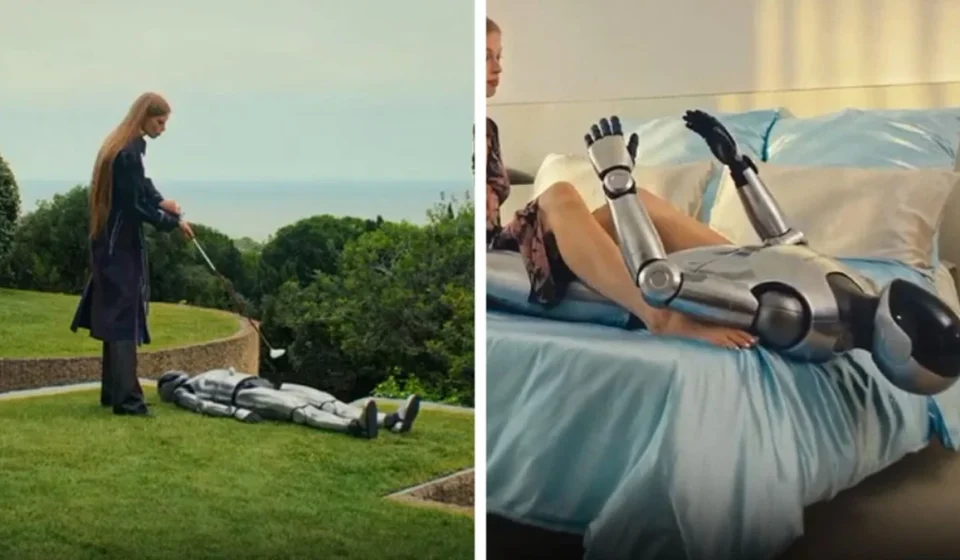
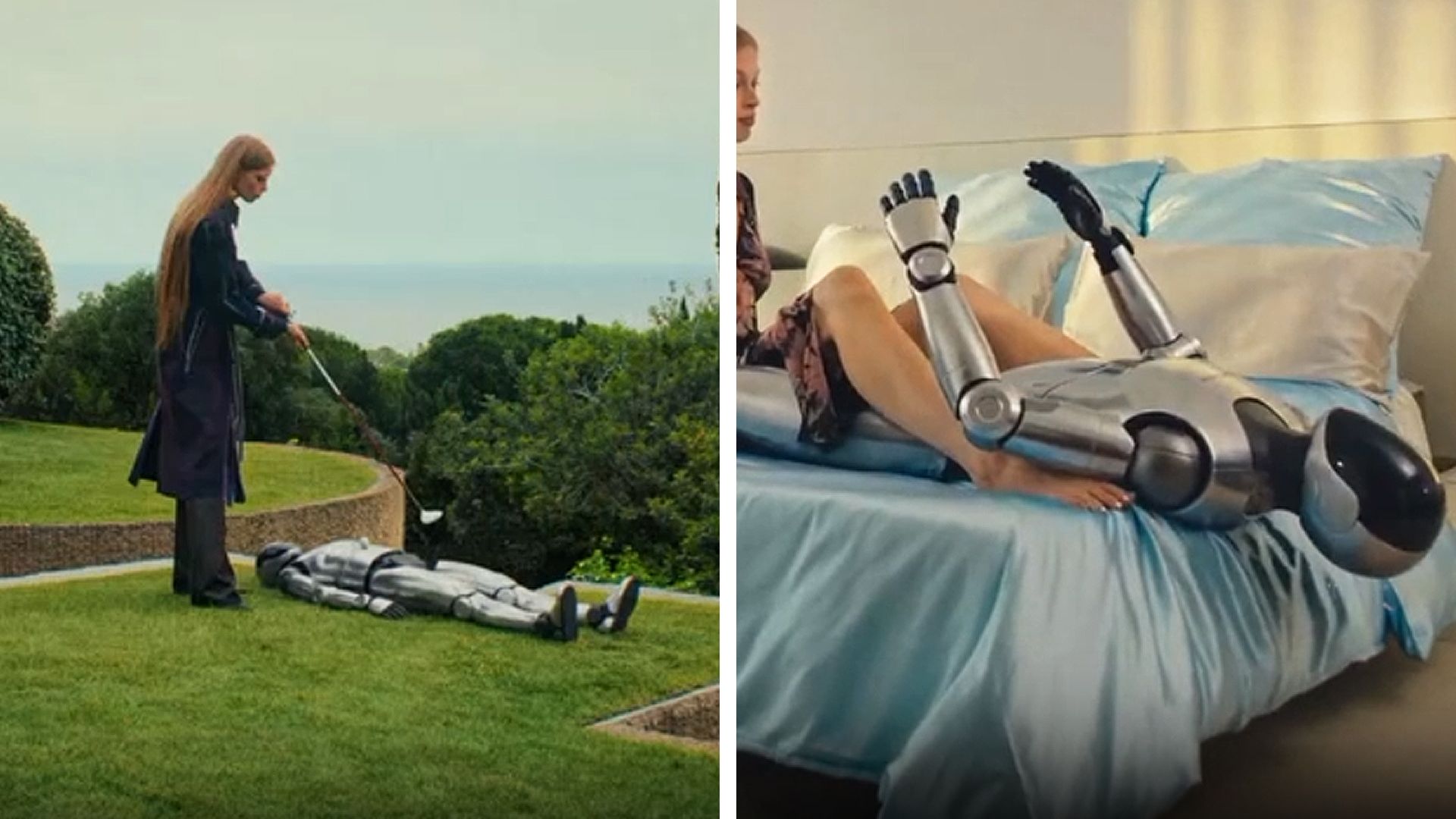
The "Born to Disobey" film is a masterclass in layered symbolism. Overseen by the directorial trio PSG (Yukihiro ‘Sho’ Shoda, Pau López, and Gerardo del Hierro), the visual narrative is designed to unsettle. The robot, DESI 84—a nod to the 1984 founding of the Barcelona-based brand—is not a piece of CGI trickery, but rather a human actor. By having a human mimic the mechanical, jittery, and eerily precise movements of the Tesla Optimus, the campaign creates an immediate, ironic tension. It highlights the fear that we are trading authentic human labor for cold, synthetic approximations.
The narrative arc follows Vivian Jenna Wilson as she attempts to "break" the circuitry of the machine. Whether she is walking the robot on a leash, striking its chest, or attempting to teach it the nuances of human intimacy, her actions are deliberate attempts to inject chaos into a system defined by programmed logic. The film culminates in the robot malfunctioning, banging its head against a wall in a loop of futility. Vivian’s concluding remark, "Some things aren’t meant to be fixed," serves as the campaign’s thesis: human imperfection is not a bug to be solved, but a feature to be celebrated.
Chronology: From Concept to Cultural Statement
The development of this campaign was not a hurried reaction to recent tech headlines, but rather a deliberate synthesis of brand identity and current events.
- Early 2024: Creative teams at ProdCo and PSG began conceptualizing a visual language that could encapsulate Desigual’s historical ethos of eccentricity and "rule-breaking" for a new generation.
- Mid-2024: The team identified the growing public apprehension regarding humanoid robotics—specifically the public discourse surrounding Tesla’s Optimus. The decision was made to lean into this imagery.
- Late 2024: Casting Vivian Jenna Wilson became the pivotal moment for the campaign. Given her public history and outspoken stance on the dehumanizing aspects of modern technology, her involvement moved the project from mere advertising to a genuine statement of intent.
- Release Phase: The campaign launched in tandem with increasing warnings from industry insiders, including researchers from Anthropic, regarding the potential risks posed by advanced AI systems. This timing amplified the campaign’s reach, positioning Desigual as a brand attuned to the zeitgeist.
Supporting Data: The Human-Machine Divide
To understand the resonance of "Born to Disobey," one must look at the data driving the current consumer sentiment. According to recent surveys by the Creative Industries Council, over 60% of creative professionals express deep concern that generative AI will significantly devalue human artistic labor within the next decade.
The campaign’s inclusion of Karel Čapek’s 1920 play R.U.R. (Rossum’s Universal Robots)—the seminal work that introduced the term "robot" to the global lexicon—is not an accidental detail. It serves as a historical bookmark, reminding the audience that the "robot problem" has been a part of the human consciousness for over a century. By referencing this, Desigual frames the current AI boom not as a novel breakthrough, but as the final stage of a long-standing struggle between the human spirit and the industrial machine.
Furthermore, the choice of a human actor to portray the robot serves as a technical rebuke to the industry’s reliance on CGI. By having the actor study hours of footage of the Tesla Optimus to replicate its movements, the production team achieved a "synthetic" look that feels more threatening and realistic than any digital overlay could provide.
Official Responses and Creative Direction
The directing team at PSG noted that the character of Vivian in the film did not require heavy direction. Because of her genuine, well-documented skepticism toward the tech-industrial complex, her performance was characterized by a natural, almost visceral disdain for the "robot" counterpart.
"The intention was never to create a villain, but to create a mirror," said a representative from the creative team. "The robot represents the system—the desire for total efficiency, total predictability, and total obedience. Vivian represents the messiness of life, the beauty of the unexpected, and the vital necessity of saying ‘no’ to algorithms that want to define who we are."
Desigual’s own internal messaging reinforces this. The brand has explicitly stated that the campaign is designed to shift the conversation around rebellion. "The greatest rebellion is no longer about fighting against the system from the outside," the brand noted in a press release, "but about refusing to be part of it from the inside. When everything invites you to obey, the answer is attitude, irony, and the freedom to be yourself."
The Implications: A New Era of Brand Activism
The implications of the "Born to Disobey" campaign are twofold: one for the fashion industry, and one for the broader cultural conversation surrounding technology.
The Oedipal Subtext
It is impossible to ignore the subtext of the campaign. By casting the estranged daughter of Elon Musk—the primary architect of the current drive toward humanoid robotics—the ad takes on a Shakespearean or Star Wars-esque weight. It transforms a standard fashion campaign into a symbolic, personal, and professional reckoning. It suggests that the "ultimate enemy" is the cold, calculated vision of the future held by tech titans, where humans are secondary to the machines they create.
Redefining Brand Loyalty
For Desigual, this is a masterstroke of brand positioning. By aligning itself with the "anti-AI" sentiment, the brand secures its status as a champion of human-centric design. In an era where "fast fashion" is increasingly being replaced by "AI-generated fashion" (cheap, mass-produced, and lacking in soul), Desigual is betting on the idea that consumers will pay a premium for brands that explicitly stand for human intuition and spontaneity.
The Radical Act of Being
Ultimately, the campaign posits that the most radical act in a post-human world is the preservation of one’s own idiosyncrasies. As AI systems become better at predicting our desires and optimizing our daily lives, the act of "disobedience"—choosing the illogical, the colorful, the eccentric—becomes a political act.
Conclusion
Desigual’s "Born to Disobey" is more than a seasonal marketing push; it is a cultural artifact that captures the specific anxieties of the mid-2020s. By juxtaposing the cold, repetitive movements of a robot against the fluid, expressive, and human-led defiance of Vivian Jenna Wilson, the campaign forces us to ask: What happens to our humanity when we stop fighting the system and start letting it define us?
As we move deeper into an era dominated by machine learning and automated futures, the message from Desigual remains clear. The algorithm may want us to obey, to fit in, and to mirror the patterns of the digital collective, but the most sophisticated technology we possess remains the human capacity for irrational, beautiful, and deliberate disobedience. In a world that is being programmed, the most rebellious thing you can do is refuse to run the code.