
For decades, the ritual of brushing one’s teeth has remained largely stagnant. We squeeze a crinkled, single-use plastic tube until it can be squeezed no more, only to discard it—a small, seemingly innocuous act that, when multiplied by billions of users worldwide, contributes to a staggering mountain of landfill waste. The expression, “You can’t put the toothpaste back in the tube,” has long served as a metaphor for irreversible actions. However, the sustainable design brand SURI is challenging this narrative, proving that when it comes to oral care, we can—and should—rewrite the rules of consumption entirely.
With the launch of the Restore Gel Refillable Toothpaste, SURI is pivoting from its reputation as a maker of high-end sonic toothbrushes to a holistic player in the sustainable hygiene market. This move represents a two-year journey of material research, industrial design, and a fundamental rethink of what a daily essential should look like.
Main Facts: A Paradigm Shift in Personal Care
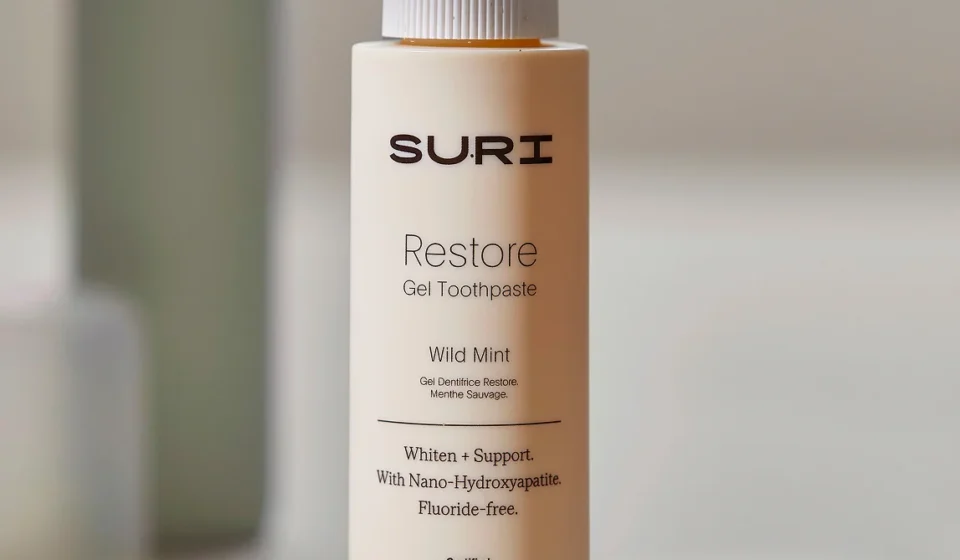
The SURI Restore Gel system is not merely a new flavor or a different formula; it is a complete structural overhaul of the toothpaste experience. The product consists of a durable, reusable dispenser paired with a replaceable, compostable refill cartridge.
At the core of the system is a precision-dosed airless pump. Unlike traditional tubes that suffer from inconsistent squeezing and messy residue, this pump ensures the user receives the exact amount of toothpaste required for a thorough clean, minimizing waste and maximizing product longevity. The dispenser itself is constructed from 50 percent recycled plastic, engineered for longevity and aesthetic appeal.
The refills are where the innovation truly lies. In a groundbreaking partnership with the material science firm Shellworks, SURI has utilized Vivomer™, a plant-based, home-compostable material. Once the gel is depleted, the user simply replaces the inner cartridge, allowing the outer shell to return to the earth rather than lingering in a plastic-choked ocean.
Chronology: The Two-Year Road to "Restore"
The development of the Restore Gel was far from a rapid-response product launch. It was a calculated, iterative process that spanned 24 months.
- Phase 1: Conceptualization (Year 1): SURI’s innovation team, led by Seb Wetherall, began by analyzing the lifecycle of conventional toothpaste. They identified three critical pain points: the environmental impact of laminate tubes, the lack of aesthetic consideration in bathroom design, and the inefficiency of traditional dispensing methods.
- Phase 2: Material Sourcing and Prototyping (Year 1.5): The team spent months vetting sustainable materials. Traditional bioplastics often fail to meet the structural integrity required for a liquid-tight, airless pump. The breakthrough came with the integration of Shellworks’ Vivomer™ technology, which provided the necessary durability while remaining fully compostable.
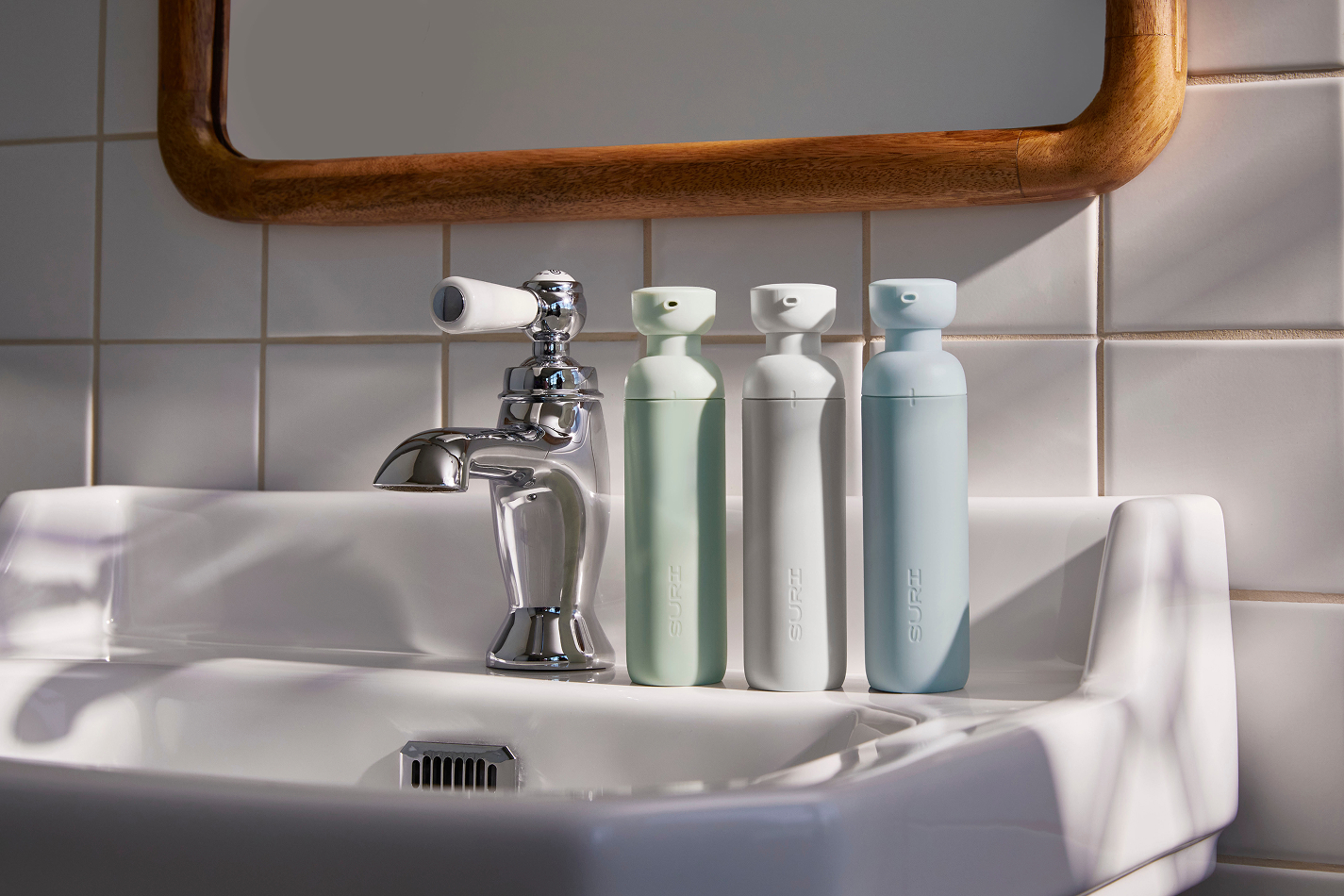
- Phase 3: Human-Centric Design (Year 2): During the final six months, the focus shifted to the user experience. The design team conducted extensive testing to ensure the pump was intuitive and that the aesthetic design—available in Sky, Meadow, and Stone—fit seamlessly into modern, minimalist interior spaces.
- Phase 4: Launch (Present): With the official rollout, SURI has moved from testing and refinement to bringing a circular economy model to the mass-market bathroom.
Supporting Data: Why Innovation Was Necessary
The global toothpaste industry produces an estimated 1.5 billion plastic tubes annually, the vast majority of which are non-recyclable due to the complex mix of materials (plastic, metal, and adhesive) used in their construction.
The Environmental Toll
Most toothpaste tubes are made from a multi-layer laminate that is nearly impossible for municipal recycling facilities to process. Consequently, these tubes are destined for landfills, where they can take up to 500 years to break down. By introducing a refillable system, SURI effectively decouples the toothpaste formula from the disposable vessel, significantly reducing the carbon footprint per brushing session.

The Rise of Nano-Hydroxyapatite (n-HAp)
SURI’s commitment to sustainability is matched by its commitment to oral health efficacy. The Restore Gel formula features nano-hydroxyapatite (n-HAp), a synthetic calcium phosphate compound that mimics the mineral structure of human enamel. Unlike fluoride, which is the industry standard for preventing decay, n-HAp has been shown in recent clinical studies to remineralize enamel, potentially reversing early-stage cavities and reducing tooth sensitivity. The inclusion of this high-grade ingredient signals that SURI is positioning itself not just as an eco-conscious brand, but as a premium, science-backed health company.
Official Responses: Redesigning the Routine
The philosophy behind the Restore Gel is rooted in "considered design"—the idea that products we interact with every morning and night should be beautiful, functional, and ethically sound.
"We crafted the product experience from the ground up with the user at the center of every design decision," says Seb Wetherall, Head of Innovation at SURI. "Our goal was to rethink how people buy, use, and dispose of toothpaste. The result is a reusable dispenser that doesn’t just sit on your counter—it enhances it."
Gyve Safavi, Co-Founder and CEO of SURI, emphasizes the elimination of the "sustainability tax." Often, eco-friendly products are perceived as less effective or less convenient than their traditional counterparts. Safavi notes that the team’s mission was to create a system where "you don’t have to choose between a formula that works, a system that looks beautiful on your shelf, and more considered packaging."

Implications: The Future of Consumer Goods
The introduction of the SURI Restore Gel system carries broader implications for the FMCG (Fast-Moving Consumer Goods) sector.
The "Display-Worthy" Trend
For years, the bathroom vanity has been dominated by mass-market plastic bottles that consumers often hide in drawers or cabinets. SURI’s move to make the dispenser an object of aesthetic pride—offering muted, sophisticated color palettes—aligns with the growing trend of "wellness interiors." When an item is designed to be seen, users are more likely to care for it, maintain it, and keep it, rather than treat it as a disposable commodity.
The Shift Toward Circularity
If SURI can successfully convince consumers to transition to a refillable model for something as habit-entrenched as toothpaste, it paves the way for other household essentials. We have already seen this shift in soaps and laundry detergents, but oral care has historically been the "final frontier" due to the strict hygiene and packaging requirements of the product. By succeeding here, SURI provides a blueprint for how legacy brands could theoretically pivot toward circular business models.
Challenges Ahead
Despite the optimism, SURI faces the significant hurdle of behavioral change. Consumers are creatures of habit. To capture significant market share, SURI must prove that the convenience of a refillable system outweighs the sheer habit-driven ease of grabbing a tube at a local pharmacy. The price point, starting at $34.99 for the starter kit, places this firmly in the premium category, making it an investment piece rather than an impulse buy.

Conclusion: A New Standard?
Whether the SURI Restore Gel becomes the new industry standard remains to be seen. However, by treating toothpaste as a reusable object rather than a disposable convenience, SURI has successfully challenged the complacency of the personal care industry.
The company has demonstrated that sustainability does not require a sacrifice in quality or style. By combining advanced material science—like the home-compostable Vivomer™—with clinical-grade oral health ingredients like nano-hydroxyapatite, SURI is elevating the daily act of brushing from a mundane chore into a deliberate, sustainable ritual. In a world where the environmental impact of our daily habits is increasingly scrutinized, SURI’s latest offering is a refreshing reminder that with enough creativity and engineering, we can indeed change the way we interact with the items we use every single day.