The Littlest Guide: How Traveling the Philippines Through My Toddler’s Eyes Rewrote My Worldview

The assumption—the one held by almost every parent contemplating a long-haul flight with a diaper bag and a stroller—is that travel is a performance of curation. We, the parents, are the curators, guiding our children through the museums, beaches, and historical landmarks of a foreign land. We believe we are the ones bestowing a gift of culture upon them.
However, my recent journey through the Philippines dismantled this ego-driven narrative. As I navigated the humid, vibrant streets of Batangas and the crystalline shores of Palawan, I realized that I was not the guide; I was the student. My 18-month-old son was not merely a passenger; he was a bridge, an emissary who opened doors that would have remained firmly locked to a solitary traveler.
The Anatomy of an Island Journey
My arrival at 10 p.m. felt less like a vacation and more like a sensory immersion. As the sliding doors of the airport parted, the distinct, humid electricity of Southeast Asia rushed in—a scent of sea salt, woodsmoke, and distant rain. With a toddler in a carrier and a heavy pack on my back, I felt the immediate weight of the "village" I was about to enter.
A Chronology of Discovery
The journey began in Balayan, Batangas, a locale far from the polished brochures of luxury tourism. Here, life moves to the rhythm of the mundane: roosters heralding the dawn, the distant crackle of 3 a.m. church sermons over loudspeakers, and the sight of children running barefoot across sun-baked pavement.
From the rustic rhythms of Batangas, our path diverged:
- The Underwater Gardens of Anilao: A masterclass in patience, where I watched the natural world through a child’s perspective, finding wonder in the shallowest tide pools.
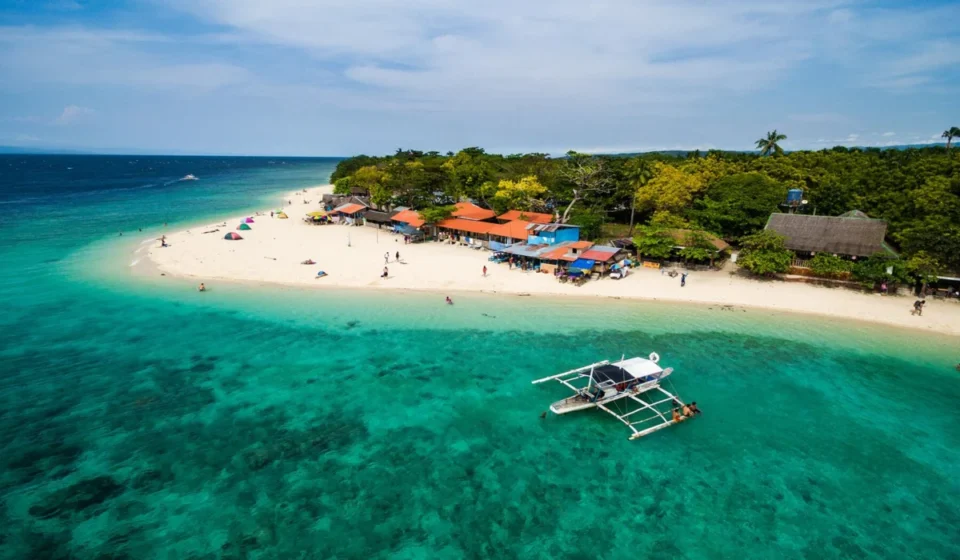
- The Golden Sands of Palawan: A test of logistics that taught me that the best-laid plans must bow to the needs of a toddler.
- The Hidden Corners of Cebu: A series of tricycle rides that became the heart of our trip, turning a simple transit method into a front-row seat to local life.
The Universal Language of Kinship
Travel, when conducted alone, is often a series of observations. Travel with a child, however, is a series of interactions. In the Philippines, a toddler acts as a social catalyst. Mothers, in particular, would approach us with an ease and grace I had never encountered in Western travel.
The Gesture of Mano Po
One of the most profound lessons in the Filipino ethos is the concept of mano po. This gesture—where a child takes the elder’s hand and presses it to their forehead—is more than a ritual of respect. It is a visual representation of a cycle of care. It is a recognition that the young and the old are bound together.
I watched as grandfathers, their hands calloused and marked by time, played games of "find" on their own heads to amuse the youth. It was a revelation: hierarchy, in this culture, does not preclude intimacy. Instead, respect and play coexist in the same space.
The "Village" Concept: A Sociological Perspective
In the West, motherhood is often an isolated pursuit. We build "perfect" lives in cities, but we often do so in silos. In the Philippines, I witnessed the "village" in its most literal, functional form.
During a New Year’s Eve celebration at the home of Ate (older sister) Imelda, the boundaries of family blurred. Neighbors, cousins, and passing strangers all contributed to the feast. The concept of "my child" vs. "your child" felt fluid. When Kuya (older brother) Marvin purchased rice for his cousin’s daughters, it wasn’t an act of charity; it was an act of survival for the collective unit. The children shared supplies and space, moving as a single, cohesive unit of the community.
Supporting Data: The Impact of "Slow Travel"
There is a prevailing myth that travel with a child is a compromise—a reduction of one’s itinerary. I found the opposite to be true. While I visited fewer "sights" by standard metrics, I saw significantly more of the culture.
- Adaptation vs. Limitation: By prioritizing domestic flights and flexible schedules over long, punishing boat trips, we stayed in the moment.
- The Economy of Small Moments: Because I couldn’t sprint from temple to temple, I ended up in the garden of Lola Conchita in Nasugbu. Had I been on a strict "tourist" schedule, I would have missed the profound weight of her saying goodbye to her sister—a parting that carried the gravity of a potentially final farewell.
In the Philippines, where migration is a common narrative, saying goodbye is a refined, heart-wrenching art. Watching Lola Conchita hold her sister for two minutes—refusing to let go—taught me more about the value of presence than any cathedral or monument could have.
Implications for Modern Parenting
The "intrusiveness" of Filipino culture—the constant hugs, the unsolicited advice on child-rearing, the shared food—initially felt jarring to my Western sensibilities. However, I soon realized that this "lack of boundaries" was the very thing that protected these children from the loneliness of modern life.
Lessons in Care and Belonging
- Nurture Kindness: Kindness is not a soft skill; it is a survival strategy.
- The Art of the Farewell: Treat every interaction as if it were the last. This heightens the quality of human connection.
- The Search for a Village: My return home was not marked by a desire to "get back to normal," but by a desperate, active search for my own community. We are not meant to raise children in isolation.
Conclusion: Why We Must Travel
To those who ask if it is worth the stress, the sleepless nights, and the logistical nightmares of navigating foreign transit with a toddler, I answer with a firm, unequivocal yes.
Traveling with your children is not merely about showing them the world. It is about allowing them to show you the world as it should be: a place where barriers are lowered by the presence of a child, where neighbors are kin, and where we all hold each other a little tighter because we know the uncertainty of the future.
Some versions of you—the versions that have been hardened by the grind of daily life—deserve to be left behind. When you return from a journey like this, you bring back a softer, more observant, and more connected version of yourself. The Philippines did not just show me its islands; it taught me how to inhabit my own life with more grace, more intention, and a much larger, more inclusive village.