
The Modern Event Sponsorship Playbook: 16 Strategies to Drive Revenue, Prove ROI, and Build Lasting Partnerships

By the Event Content Desk
Published: August 2026
Main Facts
In the high-stakes world of modern event management, sponsorships are the ultimate financial engine. Far beyond a simple logo slapped onto a banner, a well-executed sponsorship program functions as a powerful accelerant, generating momentum long before the convention doors open and sustaining engagement well after the exhibition floor closes.
However, industry leaders emphasize that sponsorships can no longer operate on outdated, "set-it-and-forget-it" models. According to Shawn Shapiro, show manager of the Canadian Meetings + Events Expo (CMEE), and Sean Soth, founder and board chair of Professionals for Association Revenue (PAR), securing sustainable financial backing requires deep market alignment, sophisticated packaging, and quantifiable data.
To help event organizers navigate this shifting landscape, top industry veterans have compiled 16 road-tested strategies spanning four critical areas: finding the right match, building adaptive packages, deepening relationships, and proving undeniable Return on Investment (ROI).
Chronology: The Evolution of Event Sponsorship
The methodology of event sponsorship has undergone a dramatic transformation over the past decade, shifting from transactional ad-space sales to integrated, data-driven partnerships.
- The Pre-Digital Era (Traditional Model): For decades, event sponsorships relied heavily on static, tier-based packaging—predominantly Gold, Silver, and Bronze levels. Organizers offered physical signage, logo placement in programs, and basic booth spaces. Communication was largely seasonal, picking up a few months before an annual conference and fading away immediately after.
- The Pandemic Pivot (Virtual & Hybrid Surge): When global health restrictions forced events online, the traditional sponsorship playbook fractured. Organizers were forced to pivot to virtual platforms, digital banner ads, and live-polling data metrics. This period exposed the limitations of traditional tiers and highlighted sponsors’ growing demand for measurable digital engagement and lead generation.
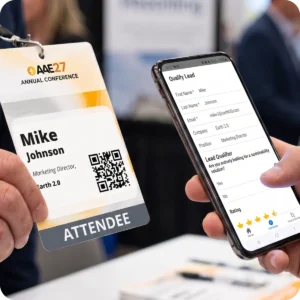
- The Modern Era (Strategic Integration – 2026 and Beyond): Today, successful event portfolios view sponsorships as a 365-day ecosystem. Organizers leverage year-round content, multi-event themes, and advanced digital tools—such as dedicated lead-capture apps—to bridge the gap between initial brand exposure and long-term customer conversion.
Supporting Data and Industry Insights
Modern sponsors are increasingly sophisticated, demanding concrete evidence that their financial investments translate into real-world business value. Intuition and vanity metrics are no longer sufficient to secure renewals.
- The 12-to-18-Month Sales Cycle: According to data from CMEE, 96% of professional planners who attend industry events ultimately establish a business deal or partnership within 12 to 18 months of a show. This proves that immediate, on-site deal-making is rare; instead, events act as critical catalysts for long-term pipelines.
- The Multiplier Effect of Associations: Research cited by PAR indicates that B2B associations function as exponentially deeper multipliers for brand value compared to standalone corporate activations, provided the sponsor aligns with the community’s core mission.
- The Innovation Sweet Spot: Industry design experts, including Beth Surmont of 360 Live Media, recommend dedicating 10% to 20% of any event’s programming entirely to innovation—such as new formats, specialized meetups, and fresh activations—to capture the attention of forward-thinking sponsors.
Official Responses and Expert Perspectives
Industry leaders agree that the future of event sponsorship hinges on authenticity, transparency, and data infrastructure.
Shawn Shapiro on the Power of Acceleration:

"What’s different about sponsorship is it is something that really accelerates your exhibition time and adds a little bit of a runway before the show and after the show," notes CMEE Show Manager Shawn Shapiro. He emphasizes that while trends like AI create fleeting sponsorship windows, organizers must remain agile, treating sponsorships as an evolving give-and-take.
Sean Soth on Strategic Alignment:
Sean Soth, founder and board chair of PAR, cautions against taking shortcuts for quick cash. "Avoid ‘random acts of revenue,’" Soth warns, pointing out that board-member pet projects or uncoordinated sales pitches often lead to unrealistic expectations and delivery failures. "When you’re working with a sponsor, I think it’s important to understand where they wanna go and what kind of value your products have… and then, finally, can you expand on that?"
Bruce Rosenthal on Deconstructing Tiers:
Nonprofit consultant Bruce Rosenthal compares traditional sponsorship menus to restaurants full of items nobody orders. Instead of rigid gold, silver, and bronze packages, Rosenthal advocates for customized, multi-event thematic packaging. "One-plus-one-plus-one-plus-one equals four, but package it as a theme, and four activities add up to six or seven in value, not just four," he explains.
Implications: The 16-Step Roadmap for Event Organizers
Translating expert advice into actionable revenue requires a comprehensive strategy. Below is the complete 16-point framework for optimizing event sponsorships.
Part I: Finding a Great Match
- Avoid “Random Acts of Revenue”: Steer clear of unstrategic pitches that lack a clear path to delivery or valuation.
- Stay Attuned to Hot Trends: Capitalize on emerging industry shifts (such as artificial intelligence or sustainability), even if they are temporary, to drive short-term excitement.
- Prioritize Long-Term Partners: Look for brands willing to invest not just in your current value, but in the long-term growth potential of your community.
Part II: Building the Right Package
- Adopt a Year-Round Approach: Bundle multiple events under a cohesive thematic umbrella to multiply the perceived value for sponsors.
- Incorporate Virtual Touchpoints: Utilize digital events and tools like live polling to capture clean lead data and reach geographically diverse audiences.
- Reevaluate Rigid Tiers: Move away from outdated menu-style prospectuses and make room for tailored, flexible packages.
- Manage Tradition Carefully: If your audience expects traditional tiers like Gold and Silver, educate them thoroughly on the value before making radical changes.
Part III: Looking Beyond the Obvious
- Revive Historical Concepts: Dig into your event archives. Formats that went stale years ago can often be reintroduced with a modern twist.
- Dedicate Space to Innovation: Allocate 10% to 20% of your event to groundbreaking formats or niche activations that appeal to innovative brands.
- Align with Sponsor Messaging: Tie sponsorships to existing organizational initiatives, such as green destination practices or recycling programs, that match a sponsor’s corporate identity.
Part IV: Deepening the Relationship & Proving ROI
- Act as a Matchmaker: Use audience segmentation and customized membership groups (such as those utilized by AACRAO) to ensure the right buyers meet the right brands.
- Build a Conflict Resolution Plan: Operational challenges will occur. Establish open, transparent channels of communication to address friction proactively and build trust.
- Maintain a Single Point of Contact: Assign a dedicated relationship manager to streamline communications, while ensuring institutional familiarity across the broader organizational chart.
- Play the Long Game: Recognize that B2B deals take 12 to 18 months to close. Keep connections warm through off-season touchpoints and holiday greetings.
- Bridge Data Gaps: Build robust data pipelines to track attendee behavior, allowing your team to answer ROI questions with hard numbers rather than guesswork.
- Pivot When Necessary: Use real-time data to evaluate what isn’t working and pivot your strategy immediately, ensuring your sponsors hit their ultimate goals of visibility, leads, or direct transactions.
Conclusion
Event sponsorships are evolving from simple financial transactions into deeply integrated, data-backed partnerships. By eliminating random revenue chases, embracing flexible and innovative packaging, maintaining open communication, and arming exhibitors with reliable lead-capture tools, event organizers can secure their financial futures while delivering undeniable value to their sponsors.