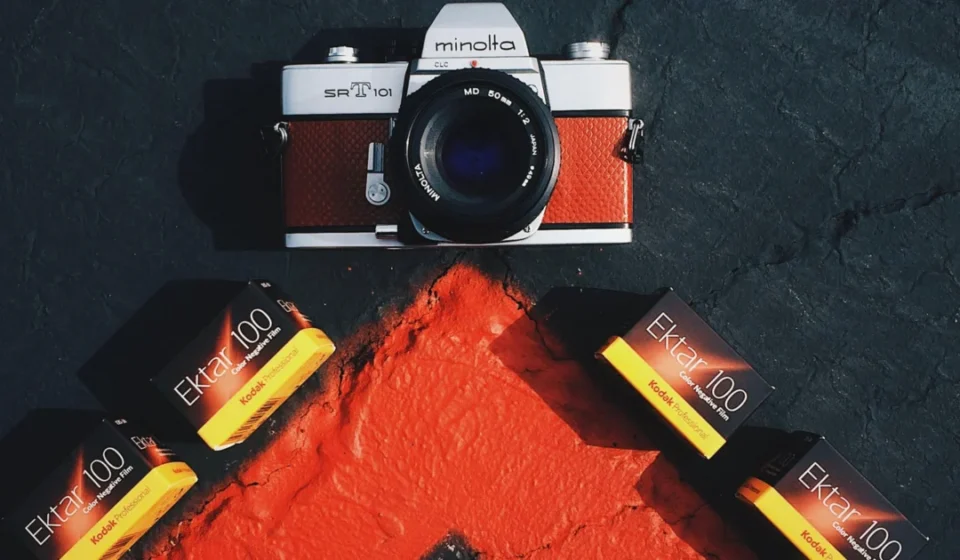

For decades, the alchemy of silver halide and dye couplers has captured the imagination of photographers worldwide. Within the contemporary analog renaissance, few stocks command the reverence and spark as much creative passion as Kodak Ektar 100. Celebrated for its hyper-vivid color saturation, remarkably fine grain structure, and exceptional sharpness, Ektar 100 has cemented its place as a heavyweight champion in the color negative film market.
Whether loaded into a vintage 35mm mechanical SLR, a medium format workhorse, or a large format field camera, Ektar 100 delivers an aesthetic that bridges the gap between classic color negative latitude and the punchy transparency of slide film.
Main Facts: The Anatomy of Kodak Ektar 100
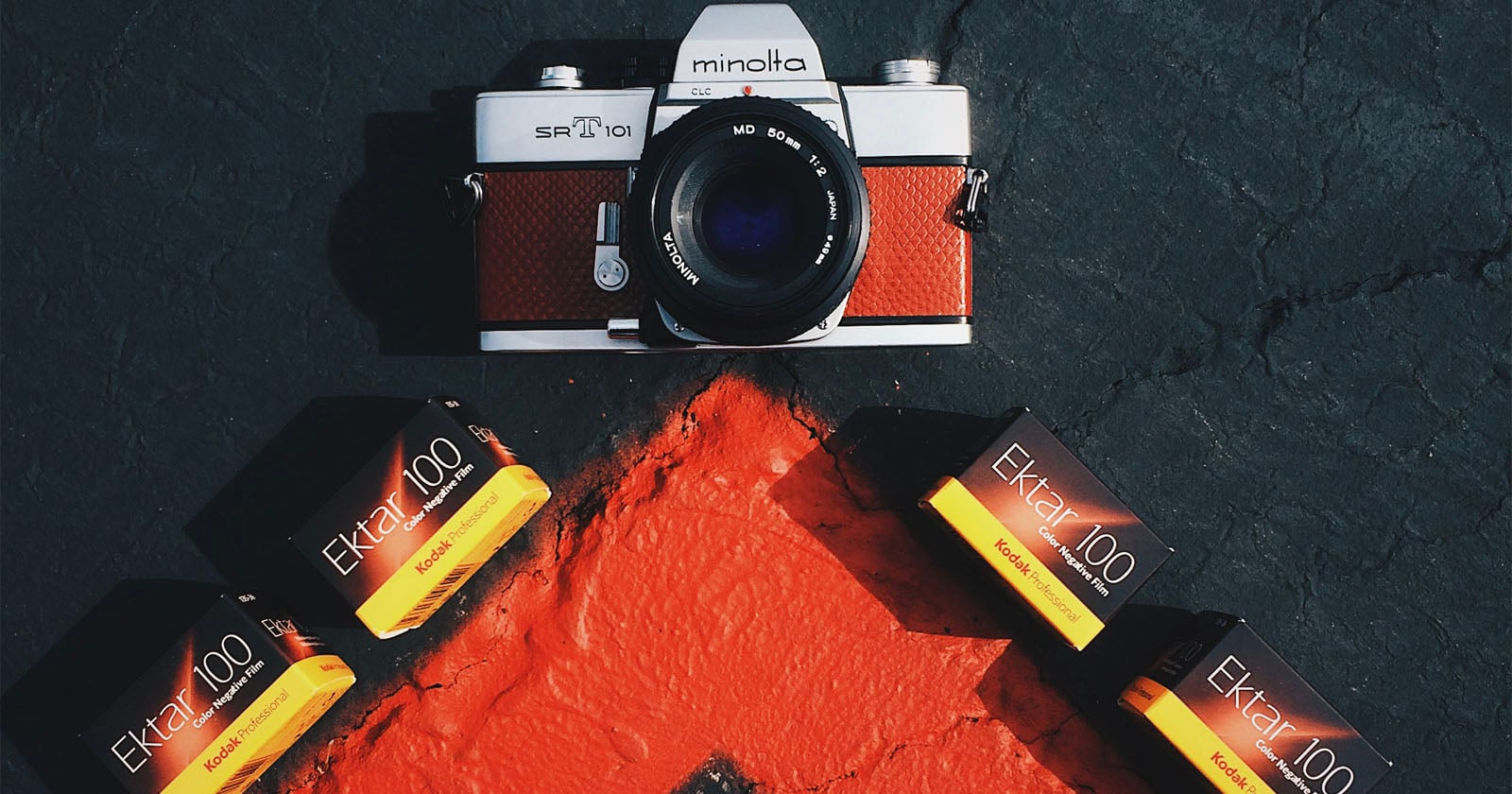
Kodak Ektar 100 is a daylight-balanced (5500K) color negative film boasting a nominal ISO rating of 100. Manufactured by Eastman Kodak, its defining technical characteristics set it apart from its stablemate, the iconic Kodak Portra series.
- Ultra-Fine Grain: Kodak markets Ektar 100 as possessing the finest grain of any available color negative film on the market. In practice, this allows for massive enlargements with minimal visual noise, rivaling or exceeding the grain performance of many slower slide films.
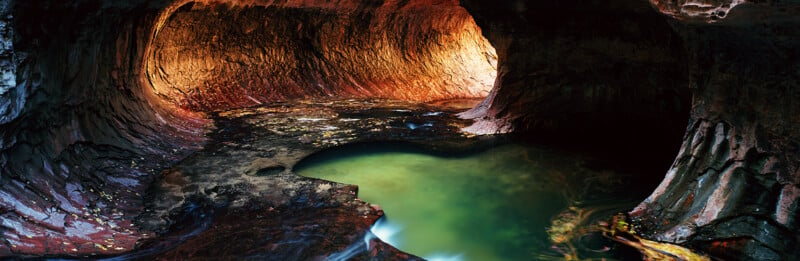
- Vivid Color Saturation: Unlike the natural, muted, and skin-tone-friendly palettes of Portra 160 or 400, Ektar leans into high-contrast, highly saturated hues. Blues are deep, reds are fiery, and greens are lush.
- Exceptional Sharpness and Resolution: Micro-contrast and edge sharpness are remarkably high. When scanned on high-resolution drum scanners or camera-scanning setups, details remain pristine even under heavy digital magnification.
- Versatile Formats: Ektar 100 is widely accessible across multiple formats to suit various photographic disciplines, including 35mm (135), medium format (120), and sheet film formats (4×5 and 8×10 inches).
Chronology: From Optical Pioneers to Modern Film Stock
To fully appreciate Ektar 100, one must look beyond its 2008 re-introduction and trace a lineage that spans nearly a century of imaging history.
1. The Golden Era of Ektar Lenses (1930s–1960s)
Long before "Ektar" was printed on a yellow cardboard film box, it was a badge of optical excellence. Beginning in the 1930s, Eastman Kodak designated its highest-quality, professional-grade lenses with the Ektar moniker—a name derived by combining Eastman Kodak TessAR. These prized lenses graced everything from compact Bantam and Retina cameras to sophisticated large-format studio setups, signaling the pinnacle of American optical engineering well into the 1960s.
2. The First Film Iteration (1989–1997)
In 1989, Kodak repurposed the prestigious Ektar name for a brand-new line of professional color negative films, most notably Ektar 25 and Ektar 1000. These stocks targeted photographers demanding extreme sharpness and fine grain. However, changing market dynamics led Kodak to phase out the original Ektar film line in 1997, leaving a void for ultra-fine-grained analog options.
3. The Triumphant Return (September 2008)
Responding to persistent demand from the analog community, Kodak officially resurrected the Ektar line in September 2008 with the release of Ektar 100 in 135 format. Medium and large format variants (120, 4×5, and 8×10) quickly followed. Positioned as a spiritual successor to the legendary Kodachrome (as its production wound down) and a color negative rival to Fuji Velvia slide film, the modern Ektar 100 quickly became a critical darling.
Supporting Data & Performance Metrics
Understanding how Ektar 100 behaves under various technical conditions is crucial for unlocking its full potential.

Slow Speed and Long Exposures
Rated at ISO 100, Ektar is a slow-speed film, which inherently limits hand-held shooting in low-light environments. However, this limitation is a superpower for specific niches. Landscape photographers utilizing neutral density (ND) filters to achieve long shutter speeds—as well as pinhole photography enthusiasts—rely heavily on slow color films.
Furthermore, Ektar handles reciprocity failure relatively well compared to transparency films like Fuji Velvia 50 (which is notorious for shifting green after only a few seconds of exposure). Kodak’s official data sheets advise:

- Exposures up to 1 second: No reciprocity correction needed.
- Exposures up to 10 seconds: Minimal adjustments required.
- Exposures around 30 seconds: Photographers should compensate by opening up an extra stop (effectively exposing for one minute) to maintain shadow detail and color balance.
Grain and Enlargement Potential
The fine-grain structure of Ektar 100 is not merely a marketing talking point; it is functionally invisible in many applications. When scanning 4×5 sheets of Ektar 100 on professional macro setups, photographers frequently report that maximum digital zoom reveals little to no perceptible film grain, allowing for breathtaking wall-sized prints packed with microscopic detail.
Official Perspectives and Professional Applications
Industry professionals and trusted institutions—such as Portland, Oregon’s renowned Blue Moon Camera and Machine—frequently highlight Ektar 100 as an essential tool in any analog photographer’s kit, provided it is deployed in the right scenarios.
Landscape and Travel Photography
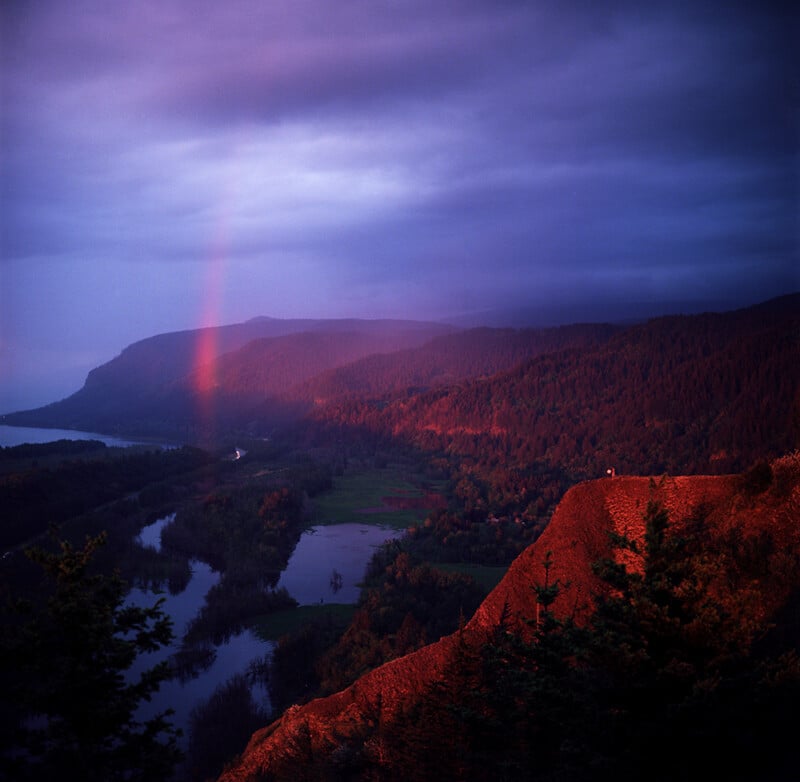
With the widespread scarcity and escalating costs of Fuji Velvia over recent years, Kodak Ektar 100 has risen as the definitive go-to color film for landscape artists. Its capacity to render punchy skies, vibrant autumn foliage, and crystalline waters makes it an unbeatable choice for nature photography.
The Portraiture Paradox
While Ektar excels in landscapes, its relationship with portraiture is complex. The film’s high saturation can occasionally overwhelm human skin tones, rendering them overly ruddy or flushed.

However, experienced portrait photographers do not write Ektar off entirely. Instead, they strategically deploy it for environmental portraits where striking elements—such as intensely blue eyes, vividly dyed hair, or colorful wardrobe choices—can leverage the film’s punchy color profile rather than suffering from it.
Implications for the Contemporary Film Community
The enduring success of Kodak Ektar 100 carries several broader implications for the modern analog photography ecosystem:

- Defending Against Digital Saturation: In an era where digital cameras and smartphones capture hyper-clean, clinically sharp images with algorithmic color science, Ektar 100 provides an organic yet aggressively vibrant aesthetic that digital sensors struggle to replicate authentically.
- Sustaining Large and Medium Format Markets: The availability of Ektar in 120 and sheet film formats incentivizes photographers to continue investing in mechanical medium and large-format systems. The incredible resolution of these formats pairs symbiotically with Ektar’s ultra-fine grain.
- Pinhole and Alternative Process Longevity: As one of the few reliable, slow-speed color negative options remaining on the market, Ektar keeps niche analog subcultures—such as pinhole photography and long-exposure urban landscape work—commercially and artistically viable.
Conclusion: A Staple for the Analog Toolkit
Kodak Ektar 100 is far more than a nostalgic nod to the past; it is a pinnacle of modern chemical film engineering. Whether you are chasing the brilliant hues of autumn, executing complex long-exposure seascapes with ND filters, or printing wall-sized fine-art landscapes, Ektar delivers unmatched sharpness and color fidelity.
For any photographer working with color analog media, trying a roll of Ektar 100 is practically a rite of passage—and usually the first step toward making it a permanent fixture in your camera bag.

Story content and insights adapted in partnership with Blue Moon Camera and Machine in Portland, Oregon—providers of comprehensive film processing, printing services, and an ever-rotating curated selection of vintage cameras and lenses.
Related posts: