The Resurrection of Grokipedia: A Deep Dive into AI’s Latest Encyclopedia Ambition

Earlier this year, the digital landscape witnessed what appeared to be the quiet demise of Grokipedia. The AI-powered Wikipedia challenger, inextricably linked to Elon Musk’s growing ecosystem of artificial intelligence tools, had effectively ceased its operations, leading many industry observers to conclude that the experiment had been permanently shelved. However, in a twist that has caught the tech world by surprise, the platform has emerged from its hiatus, sporting a significant design overhaul and a refined interface. While the aesthetic upgrade is undeniable, the fundamental question remains: can a slick facelift resolve the deep-seated issues of credibility and originality that have plagued the project since its inception?
The Main Facts: What is Grokipedia?
Grokipedia is an AI-driven encyclopedia platform that positions itself as an alternative to the long-standing, community-moderated giant, Wikipedia. First launched in late October 2025, the platform relies on AI to synthesize, clone, and present information. Unlike the traditional "Wiki" model—which relies on a decentralized army of human editors, rigorous citation standards, and a neutral point-of-view policy—Grokipedia leans heavily on generative AI to curate its content.
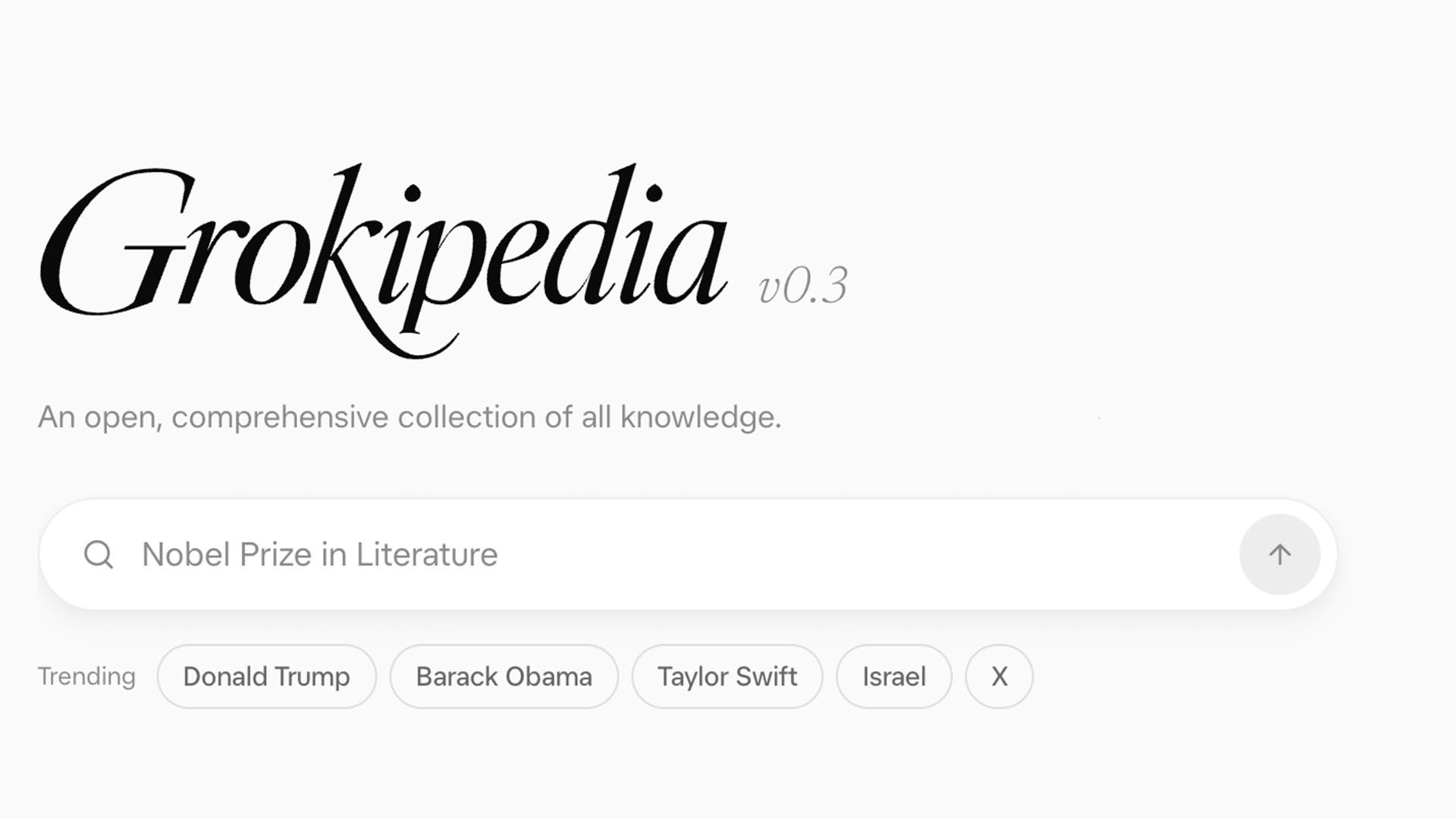
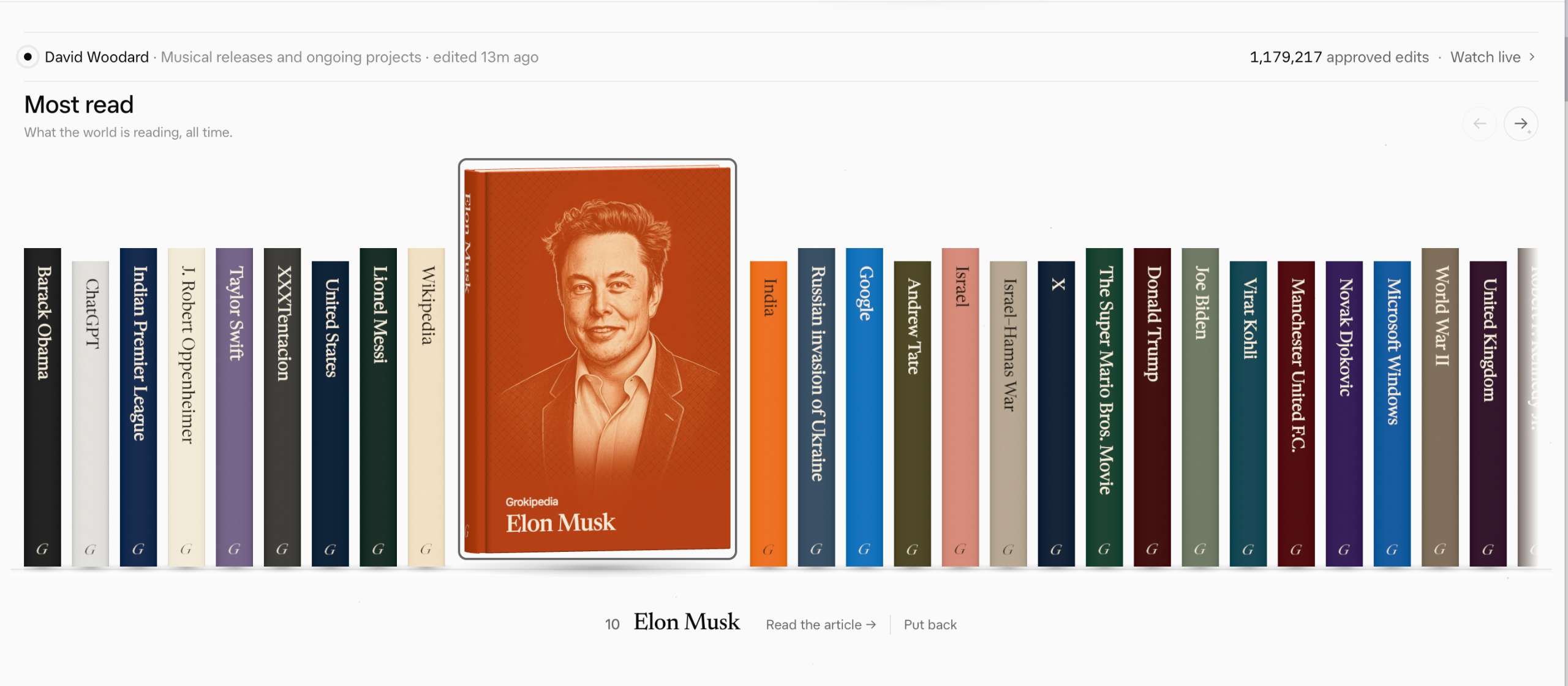
The latest iteration, v0.3, introduces a "swanky" new script-font logo and a complete visual revamp of its homepage and live-edit tracking system. The design language has shifted toward a "virtual library" aesthetic, featuring interactive 3D book covers, a "Most Read" shelf for trending topics, and a section dedicated to "Latest Edits." These edits are purportedly contributed by users but undergo a vetting process by the underlying Grok AI model.
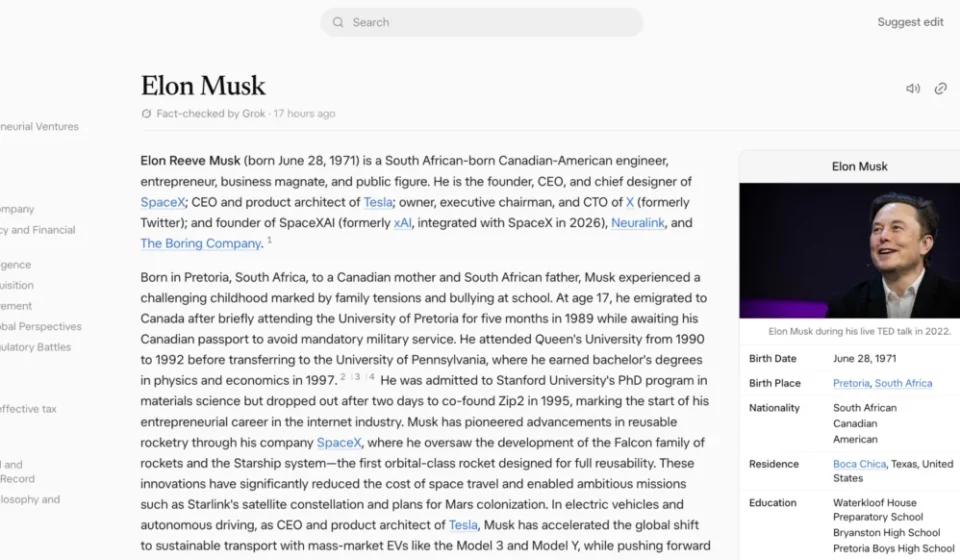
Despite these cosmetic improvements, the platform’s core architecture remains a point of contention. The article pages, while featuring more minimalist side tables and a more fluid user experience (UX), bear a striking resemblance to Wikipedia’s own layout. For critics, this lack of structural innovation is a glaring admission that the platform is less of a revolution and more of a mirror.
A Chronological History of the Project
To understand the current state of Grokipedia, one must look at its volatile development cycle:
- October 2025 (The Launch): Grokipedia enters the scene, generating significant buzz by attempting to automate the creation of encyclopedia entries. It is marketed as an AI-native solution for information retrieval.
- November 2025 (The v0.2 Update): The platform attempts to scale, integrating user-submitted suggestions alongside its AI-generated base content.
- Early 2026 (The Halt): The project hits a wall. Amid concerns regarding data integrity, AI hallucinations, and the sheer logistical difficulty of managing autonomous edits, the site effectively halts operations. The suspension of autonomous AI edits and the review of user submissions lead to the widespread belief that the site has been abandoned.
- Mid-2026 (The Resurrection): Following a period of silence, Grokipedia returns as v0.3. The focus shifts from pure automation to a more curated "library-inspired" UI, signaling an attempt to regain public trust and improve user engagement.
Supporting Data: UX Design and Technical Implementation
The v0.3 update is undeniably a step forward in terms of front-end development. The move to a library-style interface—using 3D assets and a more polished typography—is clearly designed to evoke a sense of authority and academic tradition.
However, beneath the surface, the technical hurdles are significant. The platform’s reliance on "vetted" AI edits raises questions about the "black box" of its moderation process. Wikipedia’s success has always been predicated on transparency; every edit has a history, a talk page, and a human actor accountable for the change. Grokipedia’s vetting process, while perhaps faster, lacks the granular visibility that allows the internet to trust Wikipedia.
From a design perspective, the minimalist side tables are efficient, yet they serve as a reminder of the platform’s "borrowed" identity. When a platform aiming to disrupt a market adopts the exact UX pattern of the incumbent, it rarely achieves the differentiation required to steal market share. The aesthetic is "slick," but it does not solve the fundamental problem of information provenance.
Official Responses and Public Sentiment
While official statements from the team behind Grokipedia have been sparse, the broader discourse around the project is characterized by skepticism. Critics have pointed out that the platform’s thin sourcing is a major liability. In an era where AI-generated misinformation is at an all-time high, the demand for verifiable, primary-source links is higher than ever.
The perception that Grokipedia is simply a wrapper for AI models trained on existing data—including, ironically, Wikipedia itself—has hindered its ability to be taken seriously by academics and researchers. There is a prevailing sentiment that the platform is an exercise in brand expression rather than an earnest effort to improve the democratization of knowledge.
Furthermore, the connection to Elon Musk—a figure often embroiled in debates regarding media neutrality—adds a layer of political skepticism. Users are wary of whether the "vetting" process by Grok will eventually reflect the ideological leanings of its parent company, thereby creating a feedback loop of biased information.
Implications: Can AI Replace the "Internet Backbone"?
The survival of Grokipedia serves as a case study for the broader intersection of AI and human-collated information. If the goal is to create a faster, more visually appealing encyclopedia, Grokipedia is succeeding. But if the goal is to replace the "internet backbone" that is Wikipedia, the platform faces an uphill battle.
1. The Trust Deficit
Wikipedia has spent two decades building a reputation for being the "last bastion" of neutral information. A platform that relies on a centralized AI model to "vet" information will always struggle to compete with a community of millions of human volunteers who are incentivized by the pursuit of accuracy rather than the constraints of an algorithm.
2. The Originality Problem
By mimicking the layout and structure of the established incumbent, Grokipedia invites direct comparison. When a challenger does not offer a fundamentally better way of interacting with data—beyond a "swanky" font and some 3D graphics—it risks being viewed as a gimmick.
3. The Future of Information Retrieval
The real challenge for platforms like Grokipedia isn’t just design; it’s the role of the encyclopedia in an age of LLMs (Large Language Models). Why visit a dedicated "Grokipedia" page when users are already using ChatGPT, Claude, or Grok directly to summarize information? The platform must prove that it offers a unique value proposition that a standard chat-based AI interface cannot.
Conclusion: A Facelift is Not a Foundation
The resurrection of Grokipedia is a testament to the persistence of its creators. The v0.3 update proves that the platform is capable of high-quality web design and an improved user experience. The "library" interface is a charming nod to the history of knowledge, and the refinements to the edit page demonstrate a desire to make the platform feel more professional.
However, design is only the skin of a digital product; the soul is found in the data and the integrity of the process. Until Grokipedia can demonstrate that its information is as reliable, transparent, and neutral as the community-vetted pages it seeks to replace, it will remain a curious footnote in the history of web design rather than the next evolution of human knowledge. For now, the "internet’s backbone" remains firmly in the hands of the Wikipedia community, leaving Grokipedia to function as a stylish, albeit questionable, experiment in the AI-centric future of the web.
As we look toward the future, the success or failure of this platform will serve as a bellwether for how much the public is willing to trade transparency for style. Whether it survives this second iteration or fades away again, one thing is clear: the quest to reinvent the encyclopedia is far from over, and the gap between a "cool-looking site" and a "reliable source" remains as wide as ever.