The Seismic Shift in Imaging: How Chinese Handheld "Smart Cameras" Eclipse Traditional Japanese Optics

By Tech & Industry Desk
Published: September 2026
Main Facts
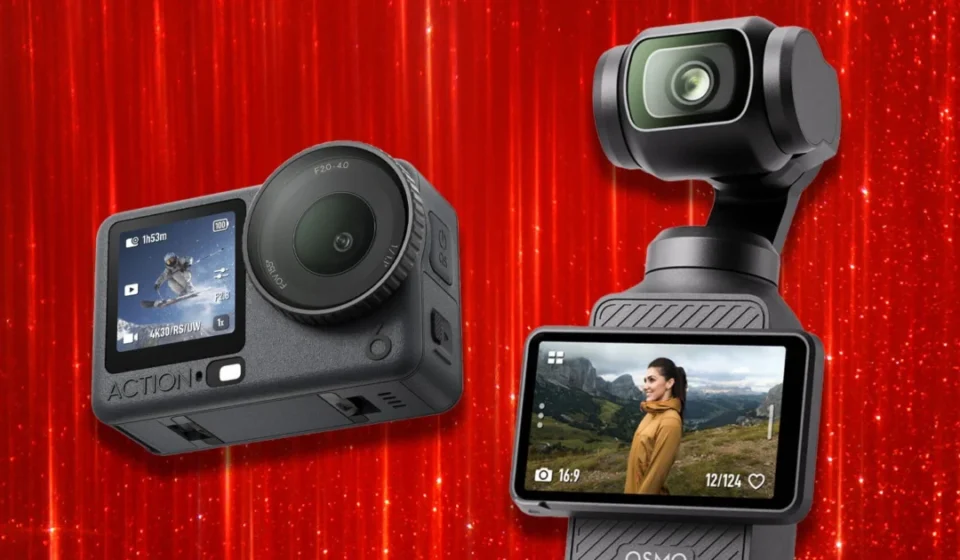
The global imaging landscape is undergoing a tectonic shift, driven by a product category that barely registered a decade ago: the handheld "smart camera." According to landmark data published by Chinese technology intelligence firm IDC, the global market for handheld smart devices—encompassing action cameras, 360-degree cameras, and gimbal-mounted vlogging tools like the DJI Osmo Pocket and Insta360 series—reached a staggering 16.65 million units in 2025. This represents an astronomical 83% year-over-year surge from 2024.
Financial growth mirrors this volumetric explosion. Total sales for the sector eclipsed 46 billion yuan (approximately $6.88 trillion at localized peak exchange rates), marking an 86% leap over the previous year. IDC’s long-term projections forecast that this meteoric trajectory will push annual shipments past 40 million units by the year 2030.
To understand the magnitude of this disruption, one must look at the giants driving it. Market leader DJI alone shipped 10.4 million handheld cameras in 2025, crossing the symbolic 10-million milestone for the first time in corporate history. To put that in perspective, DJI’s individual output outpaces the entirety of traditional Japanese camera makers combined. Meanwhile, competitor Insta360 moved 3.4 million units, translating to more than half the total volume of mirrorless cameras shipped by all Japanese manufacturers globally that same year.
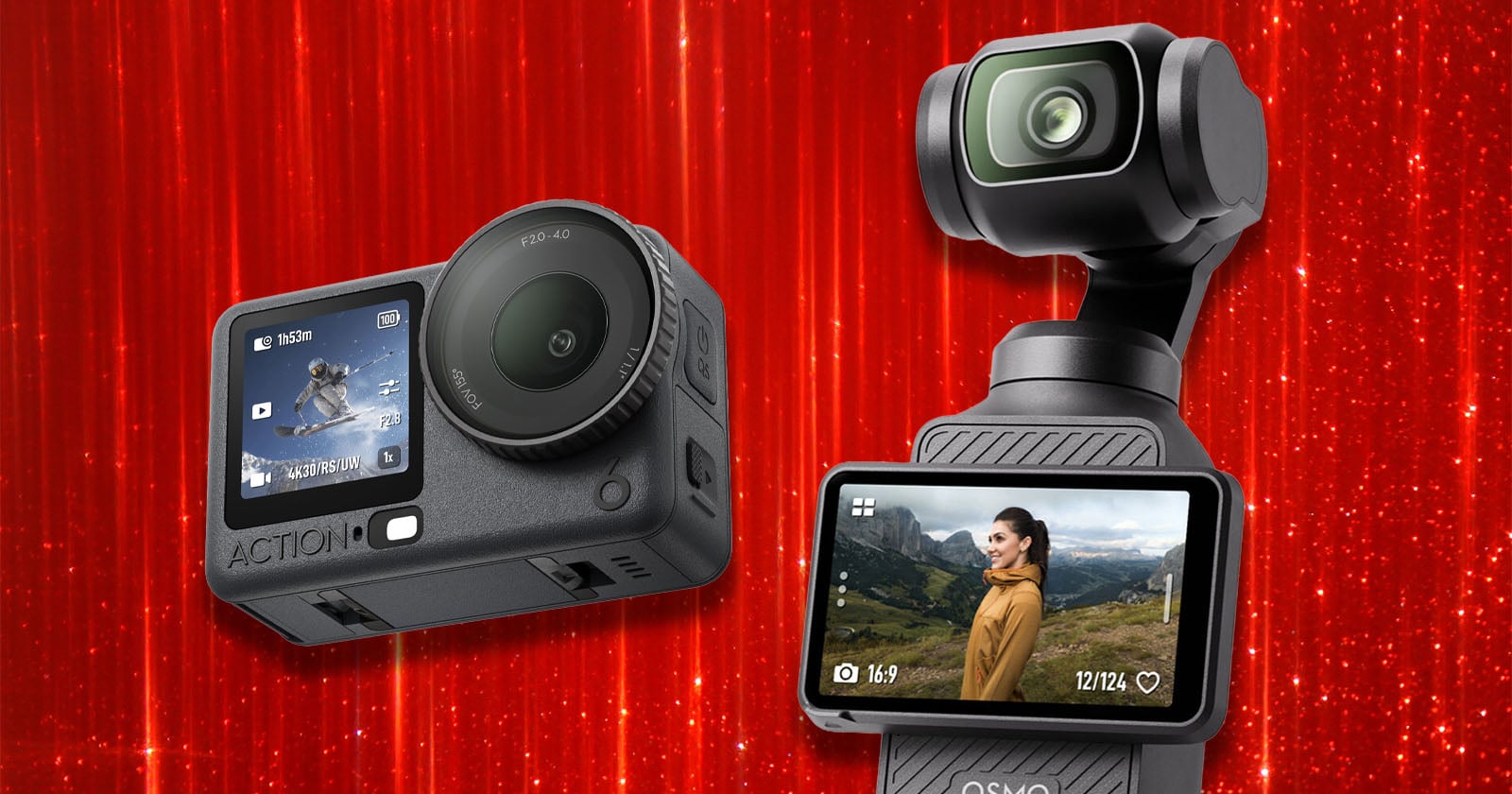
Combined, DJI and Insta360 shipped roughly 13.8 million cameras in 2025—more than double the 6.1 million mirrorless units shipped across the board by members of the Camera & Imaging Products Association (CIPA). While the traditional digital camera market has enjoyed its own surprising resurgence (posting four consecutive years of growth to reach 9.44 million units in 2025, its highest mark since 2019), it is being comprehensively outpaced in sheer volume by the nimble, consumer-centric tech ecosystems of Shenzhen.
Chronology
To comprehend how the imaging industry arrived at this crossroads, it is vital to trace the historical timeline dividing traditional optical engineering from modern computational consumer electronics.
- The Pre-Smartphone Era (Pre-2010s): Traditional camera manufacturers—predominantly Japanese titans like Canon, Nikon, Sony, Fujifilm, and Panasonic—dominated the visual storytelling landscape through interchangeable-lens DSLRs and fixed-lens compact point-and-shoots.
- The Action Camera Disruption (2010–2015): GoPro established and popularized the modern action camera market, capturing the zeitgeist of extreme sports and adventure tourism. For a time, American-based GoPro held a near-monopoly on high-mobility capture.
- The Rise of the Chinese Tech Behemoths (2016–2020): Leveraging sophisticated drone-stabilization technology, DJI pivoted successfully to ground-level capture, launching the Osmo Pocket series in 2018. Simultaneously, Insta360 innovated modular and dual-lens 360-degree capture systems, rapidly eating into market share historically claimed by legacy brands.
- The Pandemic and Creator Economy Boom (2020–2023): As global lockdowns catalyzed the creator economy, vlogging, and short-form social media video (TikTok, Instagram Reels, YouTube Shorts), the demand for stabilization, pocketability, and automated tracking skyrocketed. Traditional cameras, while offering superior optical depth, often proved too bulky and complex for the mobile content creator.
- The Tipping Point (2024–2025): According to IDC and CineD analysis, 2024 set baseline records, but 2025 smashed them. Handheld smart camera shipments grew by 83% to reach 16.65 million units. DJI surged past 10 million units annually, dwarfing CIPA’s cumulative totals, while GoPro faced severe financial distress and cascading market-share losses.
Supporting Data
A granular look at the data reveals profound contrasts in unit economics, pricing strategies, and volume dynamics between the two distinct sectors of the imaging industry.
The Numbers at a Glance (2025 Metrics)
- Total Handheld Smart Camera Market (IDC): 16.65 million units (+83% YoY).
- Total Handheld Market Value: ~46 billion yuan ($6.88 trillion equivalents in localized consumer spend metrics; +86% YoY).
- DJI Handheld Shipments: 10.4 million units (First time crossing the 10M threshold).
- Insta360 Handheld Shipments: 3.4 million units.
- Combined DJI & Insta360 Output: 13.8 million units.
- Total CIPA (Japanese Traditional) Camera Shipments: 9.44 million units (combining interchangeable lens and compact cameras—the fourth straight year of industry recovery since the 2023 trough).
- Total CIPA Mirrorless Shipments: 6.1 million units.
- Projected Handheld Market Size (2030): 40 million units.
Economic and Pricing Disparities
The structural difference between the two markets extends far beyond manufacturing volume; it is fundamentally rooted in business models and consumer psychology:
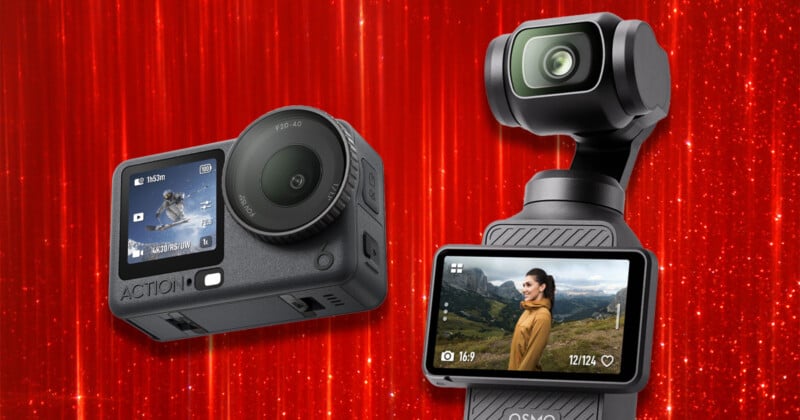
- Margin Structure and Price Sensitivity: The traditional digital camera market operates on high-margin, low-volume principles. Interchangeable-lens bodies routinely cost thousands of dollars, with professional glass running upwards of hundreds or thousands more. In this sphere, a $50 price fluctuation rarely influences consumer behavior. Conversely, the handheld smart camera market operates under intense downward pricing pressure with razor-thin margins. Devices like the Insta360 Luna Ultra ($770) or lower-tier action units mean that a minor $50 price variance can decisively swing consumer purchasing decisions.
- Target Demographics and Utility: Traditional cameras target enthusiasts, professionals, and hobbyists willing to invest time in manual settings, post-processing, and lens swapping. Handheld smart cameras target content creators, families, travelers, and athletes who prioritize instant sharing, computational stabilization, artificial intelligence subject tracking, and pocket-sized convenience.
Official Responses and Industry Reactions
The shifting tides have prompted diverse reactions across the global tech and photography sectors.
Industry analysts tracking the data point out that the narrative should not be framed as an existential "war" where one category must destroy the other. Representatives from various tech outlets emphasize that many modern content creators and professional videographers own both ecosystems. An investment in a DJI Osmo Pocket or an Insta360 X-series camera does not render a high-end Sony or Canon mirrorless system obsolete; rather, they serve fundamentally divergent creative use cases.
However, corporate responses to financial reality have varied starkly:
- GoPro’s Struggle: Once the undisputed king of the action sports vertical, GoPro has experienced a prolonged slide in market share. Consecutive quarterly losses (including a notable $51 million deficit reported late in 2025) and shifting consumer preferences have forced the American pioneer to desperately search for a strategic lifeline.
- Geopolitical and Regulatory Pressures: While DJI enjoys unassailable market dominance, it faces mounting regulatory hurdles. Ongoing complications, restrictions, and scrutiny from the Federal Communications Commission (FCC) and other governmental bodies in the United States—one of the world’s most lucrative consumer technology markets—introduce a layer of volatility regarding how smoothly Chinese manufacturers can distribute hardware moving forward.
Implications
The explosive growth of handheld smart cameras carries wide-ranging implications for the future of optics, consumer electronics, and global trade.

1. The Redefinition of "High Quality"
For generations, image quality was intrinsically tied to sensor size, optical glass purity, and mechanical engineering—domains where Japanese firms held a generational advantage. Today, computational photography, advanced software stitching, artificial intelligence stabilization, and micro-gimbals allow tiny sensors in pocket-sized shells to produce cinematic results that satisfy billions of digital consumers.
2. Geographic Shift in Hardware Innovation
The center of gravity for consumer imaging hardware has undeniably shifted from Tokyo to Shenzhen. While Japanese legacy brands continue to innovate at the high-end professional tier (cinema lines and full-frame mirrorless hybrids), agile Chinese tech firms have captured the imagination—and wallets—of the mass-market creator economy.
3. Future Outlook: Convergence or Divergence?
As we look toward IDC’s projection of 40 million annual handheld units by 2030, critical questions remain. Will computational smart cameras eventually absorb the lower tiers of traditional interchangeable-lens cameras entirely? Can traditional camera makers successfully integrate AI-driven stabilization and simplified workflows fast enough to attract younger demographics?
For now, the two markets continue to expand in tandem, proving that while the definition of a "camera" has radically broadened, humanity’s appetite for capturing and sharing visual stories has never been greater.