Beyond the Label: How Breaking Creative Stagnation Redefined a Photographer’s Journey

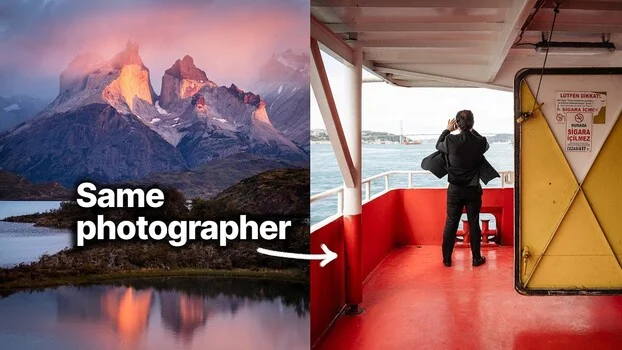
For many photographers, the pursuit of a "signature style" is the holy grail. We are told to pick a lane—be it landscape, portraiture, or street—and master it until our work is instantly recognizable. However, for professional photographer Rick Bebbington, this industry-standard advice became a gilded cage. After years of pigeonholing himself as a "landscape photographer," Bebbington found his creative growth not just plateaued, but completely stalled.
In a candid and revealing new video, Bebbington documents a two-year metamorphosis, moving away from the rigid expectations of genre-based photography toward a more fluid, instinctual practice he describes as "environmental documentary." This transition serves as a blueprint for any creative struggling with the malaise of burnout or the limitations of self-imposed labels.
The Genesis of the Shift: The Antarctica Revelation
The turning point for Bebbington was as dramatic as the landscape he was visiting. While on an expedition to Antarctica—a location typically associated with grand vistas, wildlife, and epic scale—he found himself uninspired by the very scenes he had traveled thousands of miles to capture.
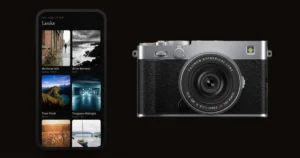
He had brought along a Fujifilm X100V, intending it to serve as a secondary camera to his primary kit. However, the camera served a different purpose: documenting the journey itself. As he reviewed his files, he realized that the images he valued most weren’t of jagged icebergs or penguins. They were the shots taken in transit—the airport lounges, the tedious layovers, and the fleeting, quiet moments in between.
Bebbington labels these "the moments in between." This realization shattered his reliance on "destination photography," where the quality of the image is contingent on the grandeur of the location. By shifting his focus to the mundane and the transitional, he began to see the potential for a narrative-driven style that didn’t rely on the "wow factor" of a landscape.
Chronology of a Creative Metamorphosis
The evolution of Bebbington’s practice was not an overnight epiphany but a calculated, two-year process of deconstruction and rebuilding.
Phase 1: Breaking the Landscape Habit
Early in his journey, Bebbington recognized that the "landscape photographer" label was a psychological barrier. He began to intentionally force himself into uncomfortable situations, carrying his camera into urban environments that felt foreign to his usual workflow.
Phase 2: Confronting the "Street" Anxiety
Street photography had always held an allure for Bebbington, yet he struggled with the inherent social anxiety of photographing strangers in public. This period of his journey involved active mentorship and observation. By spending time with street photographer Justine, he gained a more nuanced understanding of the vulnerability and fear associated with candid photography. He notes that the anxiety never truly disappears; it simply becomes a part of the process.
Phase 3: The Catalyst of Community
A second trip to Antarctica proved pivotal, this time in the company of photographer Roman Fox. Surrounded by peers who approached the same environment with vastly different eyes, Bebbington was pushed to re-evaluate his technical and aesthetic choices. This phase was characterized by the realization that confidence is an internal metric, not something to be harvested from social media likes or external praise.
Supporting Data: The Practicality of the Toolset
Bebbington’s shift in philosophy is inextricably linked to his evolving relationship with gear. His video provides a refreshingly honest assessment of the tools that enable—or occasionally hinder—his creative process.
- Sony a7R V: While acknowledging its immense technical capabilities and high-resolution output, Bebbington admits it is often too bulky and slow to facilitate the kind of "in-the-moment" spontaneity his new style requires.
- Fujifilm X100VI: A favorite for its portability, the camera is not without its flaws. He highlights instances of missed focus and slow wake-up times, serving as a reminder that the "perfect" camera is often a trade-off between convenience and absolute reliability.
- Ricoh GR IIIx: A recent addition to his bag, the GR IIIx represents the minimalist ideal. Its size and stealth allow him to capture images that would be impossible with a larger, more conspicuous body.
Bebbington’s gear commentary underscores a vital lesson: Equipment should serve the intent. If a camera is too heavy or too distracting, it becomes a barrier to the "moments in between."
Professional Insights and Methodology
Beyond the anecdotal, Bebbington provides a framework for what constitutes a "strong image." He distills his methodology into four core components, though he emphasizes that these are not rules to follow, but rather a compass for evaluation.
The Four Pillars of a Strong Image:
- Narrative: Does the image tell a story, or is it merely a record of a subject?
- Geometry: How do the lines and shapes within the frame guide the viewer’s eye?
- Light/Color: Are these elements used to support the emotional tone of the scene?
- Intent: Did the photographer make a conscious choice, or was the shot a lucky accident?
Bebbington also credits conversations with other luminaries, including Adam Gibbs and James Popsys, for refining his approach to editing. He emphasizes that the edit is not just about color grading, but about ruthless selection—learning to discard images that are technically perfect but emotionally hollow.
Implications for the Industry
The implications of Bebbington’s transition are significant for the broader photography community. We are currently living through an era of "genre fatigue," where the pressure to curate a consistent, feed-friendly aesthetic often comes at the cost of genuine creative exploration.
The Death of the "Niche"
Bebbington’s experience suggests that the industry’s obsession with niches is perhaps the single greatest contributor to creative stagnation. By focusing on "environmental documentary," he has effectively opened his scope to include anything that happens within his sphere of influence. This broader definition allows for longevity; a photographer can change their subject matter without changing their identity.
The Resilience of the "Always-On" Approach
Perhaps the most practical takeaway from his video is the power of the "everyday carry." By keeping a camera on his person for two and a half years, Bebbington has rewired his brain to scan for potential images regardless of his surroundings. This habit has increased his reaction speed, allowing him to capture fleeting moments that would have previously gone unnoticed.
The shift from a "planned shoot" mentality to an "always-on" mentality is a fundamental change in how a photographer perceives their environment. It turns the entire world into a studio, rather than waiting for the perfect conditions at a designated location.
Conclusion: The Path Forward
The narrative arc of Rick Bebbington’s journey is a powerful reminder that our creative tools and labels are merely reflections of our current understanding—they are not permanent fixtures.
For those feeling stuck, the advice to "stick to your genre" may be the very thing holding you back. Whether it is stepping out of a comfort zone, investing in a more discreet camera, or simply changing the way you view the "moments in between," the path to growth often requires shedding the identities we’ve worked so hard to build.
As Bebbington demonstrates, the most interesting images aren’t always found at the top of the mountain or the end of the journey. Often, they are found in the airport terminal, the rainy street corner, or the quiet, forgotten spaces where life actually happens. By choosing to document his own evolution rather than his destination, Bebbington has not only revitalized his own work but provided a valuable roadmap for photographers everywhere to do the same.
To view the full, detailed breakdown of his transition and his tips for finding your own creative voice, his full video remains an essential watch for any serious student of photography.