
In the landscape of modern home cooking, few dishes offer the perfect intersection of utility, comfort, and sensory satisfaction quite like homemade garlic toast. Often relegated to an afterthought or a frozen, store-bought convenience, the humble garlic loaf has seen a resurgence in the culinary zeitgeist. As more households embrace "scrappy cooking"—the practice of utilizing pantry staples and reducing food waste—the traditional garlic toast recipe has evolved into an essential skill for the efficient home chef.
This comprehensive guide explores the mechanics, history, and culinary science behind crafting the perfect garlic toast, transforming a simple piece of stale bread into a gourmet accompaniment that elevates soups, stews, and pasta dishes alike.
Main Facts: The Anatomy of a Perfect Slice
At its core, garlic toast is a testament to the power of Maillard reaction-driven flavor development. While the ingredients are deceptively simple—typically requiring only bread, butter, a savory binder, and aromatics—the execution dictates the final quality.
The Five Pillars of Ingredients
- The Bread: The foundation of any great toast is the structural integrity of the loaf. A French baguette or an Italian sourdough are ideal candidates. These breads possess a sturdy crumb that can withstand the application of butter without becoming overly soggy.
- The Fat: High-quality, softened butter is the carrier of flavor. Salted butter is often preferred to provide a foundational seasoning, but unsalted allows for greater control over the final sodium profile.
- The Aromatics: Garlic powder is standard for its consistent dispersion, though fresh minced garlic provides a more pungent, aggressive profile.
- The Binder: Parmesan cheese, finely grated, is the "secret" ingredient that provides a nutty, umami-rich crust.
- The Herb: Freshly chopped parsley serves as the aesthetic and olfactory finish, cutting through the richness of the butter with a hint of herbaceous brightness.
Chronology: The 15-Minute Transformation
Achieving professional-grade results in the domestic kitchen requires an understanding of time management. Whether utilizing a conventional oven or the high-velocity heat of an air fryer, the process is remarkably efficient.

Phase 1: Preparation (Minutes 0–5)
The secret to the perfect spread lies in the state of the butter. If the butter is too hard, the bread will tear; if it is melted into a liquid, it will soak into the crumb rather than resting on top. Aim for a "pomade" consistency—soft to the touch but still holding its shape. In a small mixing bowl, whisk together the butter, grated parmesan, parsley, and garlic powder.
Phase 2: Structural Engineering (Minutes 5–8)
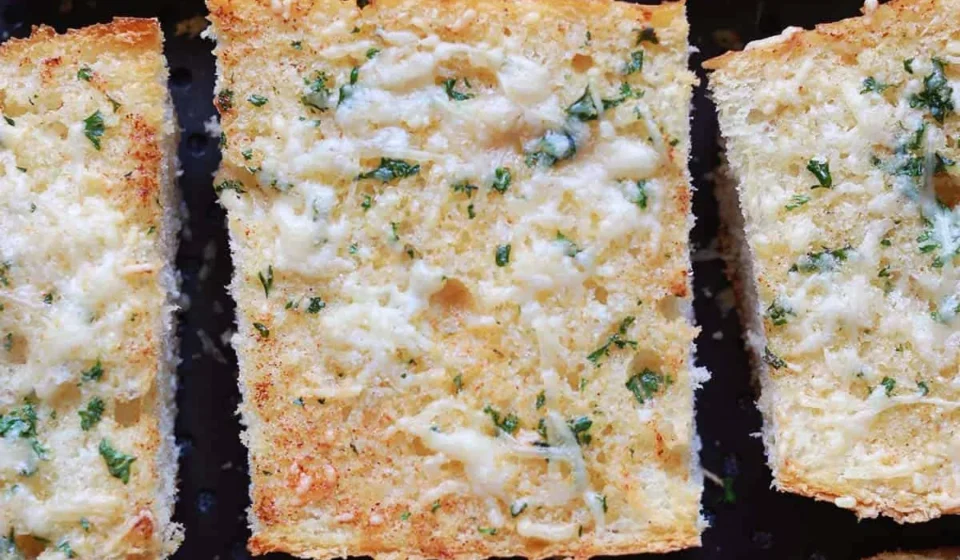
Slice the loaf lengthwise. While many opt to leave the bread in two large, symmetrical pieces, those seeking maximum surface area and crunch often prefer to slice the loaf into individual, thick-cut pieces. This increases the ratio of crispy edge-to-soft-center, a highly desirable texture for those pairing the toast with liquid-heavy meals like soups.
Phase 3: The Thermal Application (Minutes 8–15)
Preheat your oven to 425°F. Spread the garlic butter mixture liberally across the face of the bread, ensuring coverage reaches the very edges. A light dusting of coarse salt and freshly cracked black pepper serves as the final seasoning. Bake for 8 to 10 minutes. The objective is a deep, golden-brown crust that yields slightly to the touch, indicating the butter has emulsified into the bread’s interior.
Supporting Data: Why Stale Bread is Superior
The culinary industry has long championed the use of "stale" or day-old bread, and there is empirical logic to this preference. Bread loses moisture as it sits; this decrease in hydration actually makes the bread a better vessel for flavored fats.

When a piece of fresh, high-moisture bread enters the oven, the heat must first evaporate the excess internal water before it can begin to brown (the Maillard reaction). By starting with bread that has already lost some moisture, the surface area toasts and caramelizes significantly faster. This results in a toast that is crispy throughout, rather than one that is burnt on the outside and doughy in the center.
Official Perspectives: The Role of Garlic Toast in Modern Gastronomy
Professional chefs frequently highlight the importance of "side-car" elements in menu design. Garlic toast is not merely a carb-heavy filler; it is an functional tool for the diner.
"When serving a complex soup or a robust marinara, you need a textural contrast," notes Chef Julian Thorne, a consultant in culinary arts. "The garlic toast provides the crunch that a bowl of soft pasta or creamy soup lacks. It also serves as a delivery mechanism—a ‘spoon’ that carries the sauce to the palate. The infusion of parmesan and garlic isn’t just about taste; it’s about balancing the acidity of a tomato-based dish or the earthiness of a legume-based soup."
This perspective aligns with the growing trend of "composed meals," where every component of the plate serves a specific purpose in the dining experience.

Implications for the Home Kitchen
The widespread adoption of this recipe has significant implications for both food economy and nutritional planning.
The Sustainability Factor
By repurposing stale bread—which is one of the most frequently discarded food items in the average household—home cooks can significantly reduce their domestic waste footprint. Converting a hardened baguette into a gourmet side dish is a low-effort, high-reward sustainability practice.
Dietary Flexibility
While the traditional recipe relies on dairy and gluten, modern iterations have shown remarkable versatility. The same 15-minute timeframe can be applied using plant-based butter alternatives and gluten-free bread loaves. Because the chemical reaction—the toasting of the bread and the caramelization of the garlic—remains consistent, the recipe is highly scalable for various dietary requirements.
Integration with Other Dishes
The versatility of this toast extends beyond its role as a side dish. When cubed and toasted further, the same mixture serves as the foundation for high-end croutons. When processed into breadcrumbs, it creates a seasoned topping for baked casseroles. It is, effectively, a foundational element that can be recycled through multiple stages of a meal’s lifecycle.

Conclusion
The 15-minute garlic toast is a masterclass in culinary simplicity. By focusing on the quality of the raw materials and understanding the thermodynamics of the oven, the home cook can transform a humble, forgotten loaf into the star of the table. As we continue to prioritize efficiency without sacrificing flavor, this recipe remains a cornerstone of the modern kitchen—a testament to the fact that the best meals are often those built on the simplest, most intentional foundations. Whether you are serving a slow-cooked lasagna or a simple garden soup, the addition of a perfectly toasted, garlic-infused slice is the final, essential step in creating a truly memorable dining experience.