Comments Off on Photographer Spencer Lowell Embraces the Occasionally Bizarre Intersection of Humans and Tech
Main Facts: A Retrospective of the Technocene
Renowned commercial and documentary photographer Spencer Lowell has released his definitive debut monograph, Futures Past. Published by KGP Monolith and designed by the Luminosity Lab, the nearly 100-page volume features 57 carefully curated color images spanning two decades of Lowell’s career. The collection serves as a sweeping visual inquiry into the complex, often surreal intersection of human civilization and hyper-advanced technology.
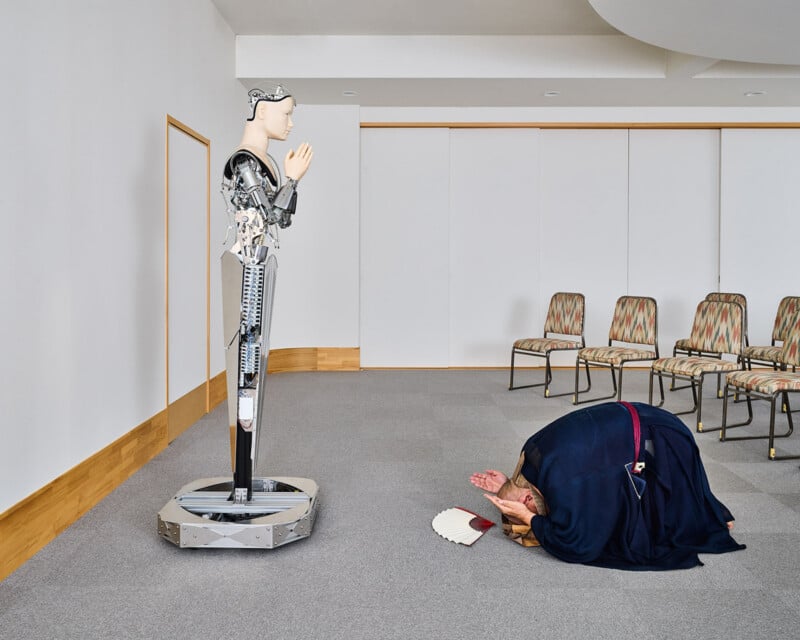
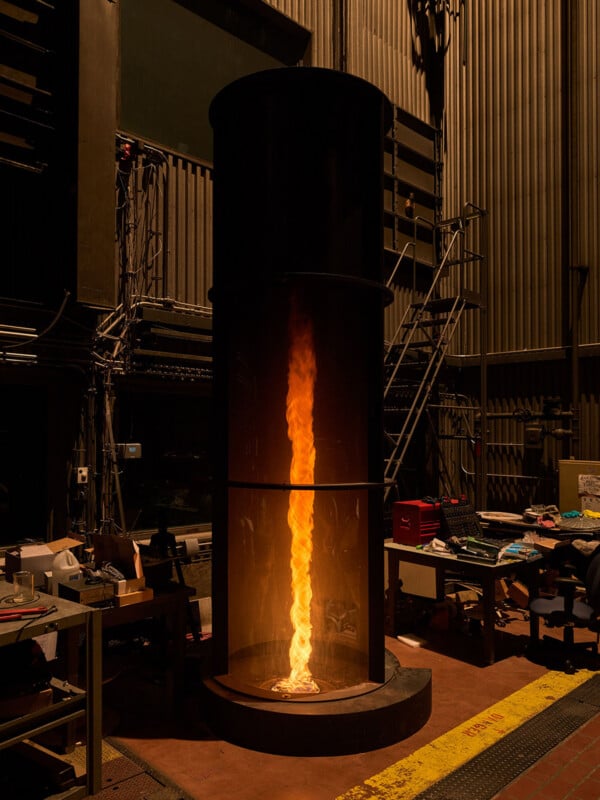
Lowell, a Los Angeles native based in New York City, has built a formidable career collaborating with elite institutions and tech giants, including Apple, Bloomberg, National Geographic, Google, Meta, NASA, OpenAI, and TIME. His lens has traversed the bleeding edge of science, capturing subjects that most people only encounter in science fiction or academic journals. From the controlled chaos of a fire tornado inside a Montana laboratory to the serene, futuristic devotion of a person bowing before a robotic priest in Kyoto, Japan, Futures Past documents an era where the boundaries between biology and machinery have irrevocably dissolved.
The monograph is currently shipping through KGP Monolith. The standard edition is priced at $75, while special tiered bundles—including limited-edition prints signed by Lowell—are available for $250 and $1,000.
Chronology: Two Decades Behind the Lens
The images collected in Futures Past are not the result of a single focused expedition; rather, they represent a 20-year trajectory of access, patience, and technical precision. Lowell’s journey into photographing the vanguard of human achievement began in the mid-2000s, tracking the quiet, sterile, yet monumental spaces where the future is engineered.
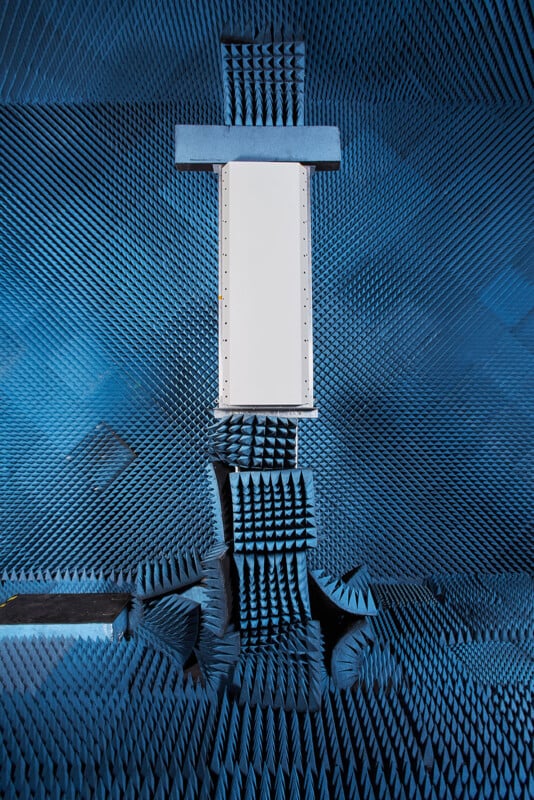
2008 (Pasadena, California): Lowell captures the surreal, alien landscape of NASA’s Jet Propulsion Laboratory, focusing on space communication testing inside an anechoic chamber lined with dense, blue pyramid-shaped foam absorbers. The image highlights humanity’s quiet preparation to reach the void.
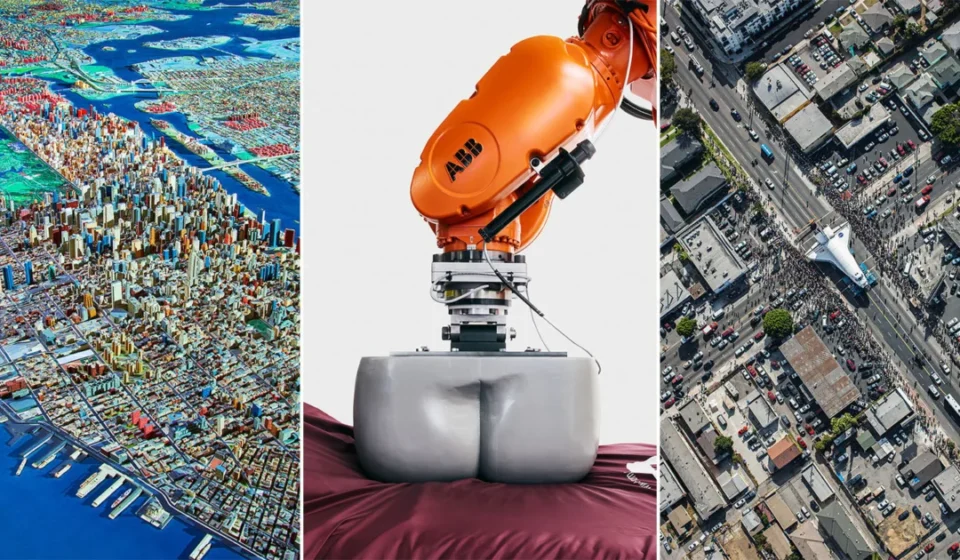
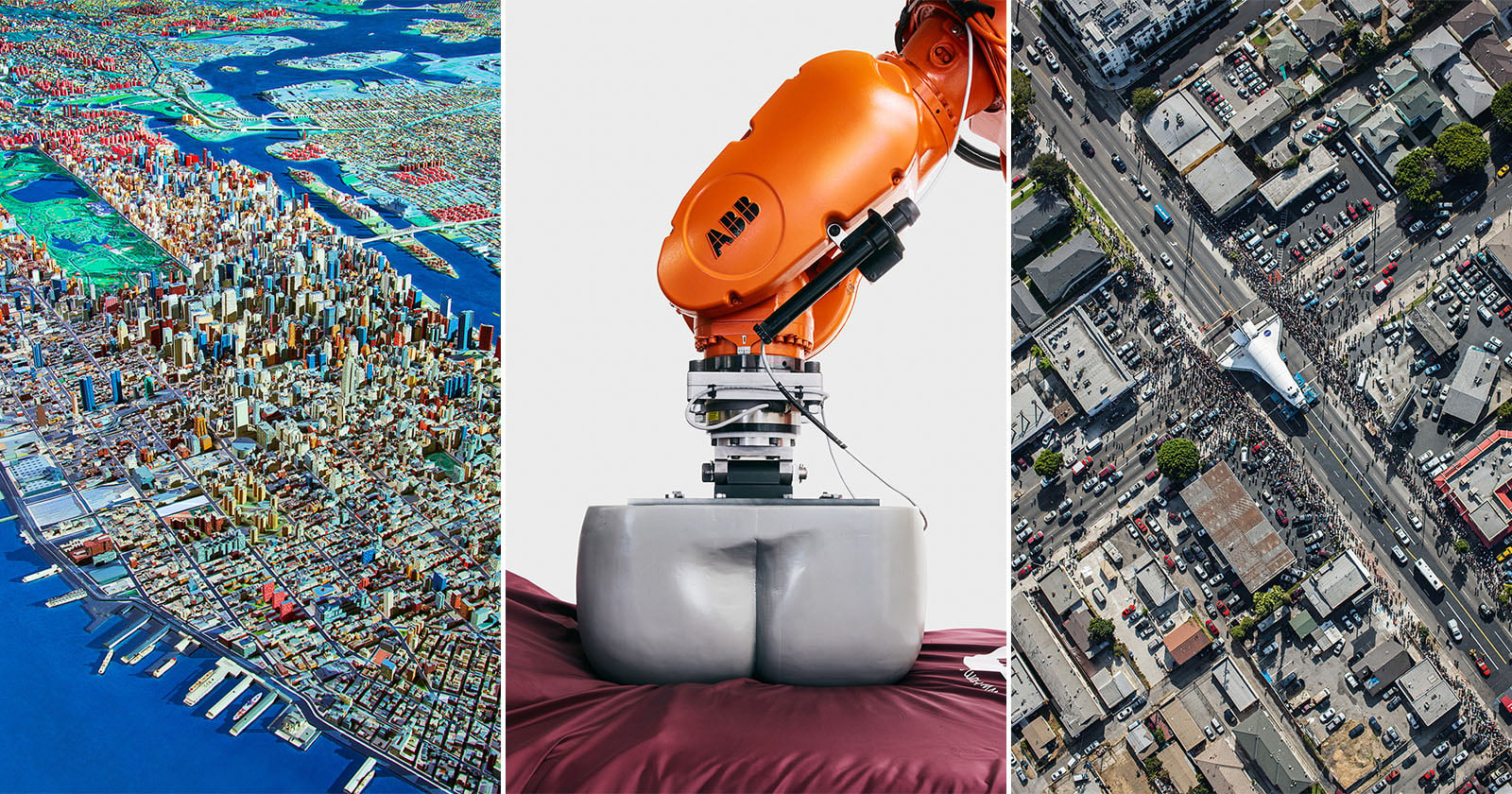
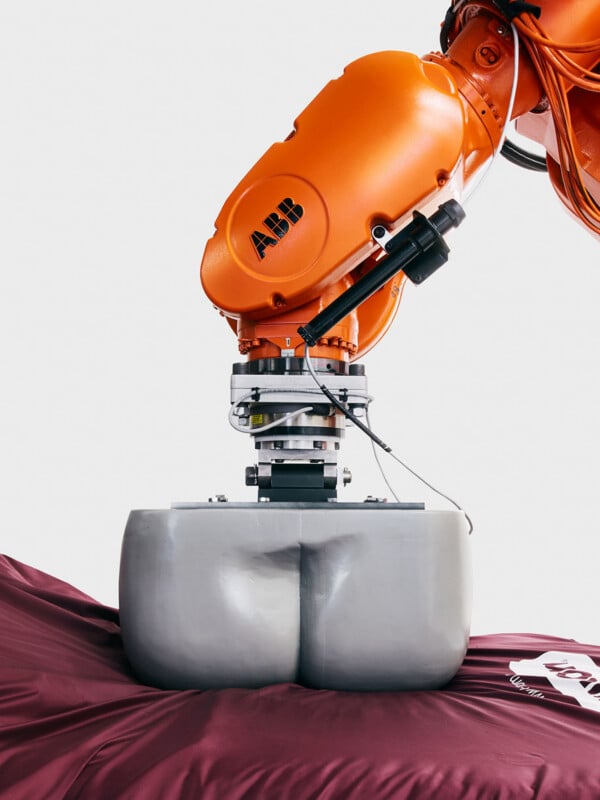
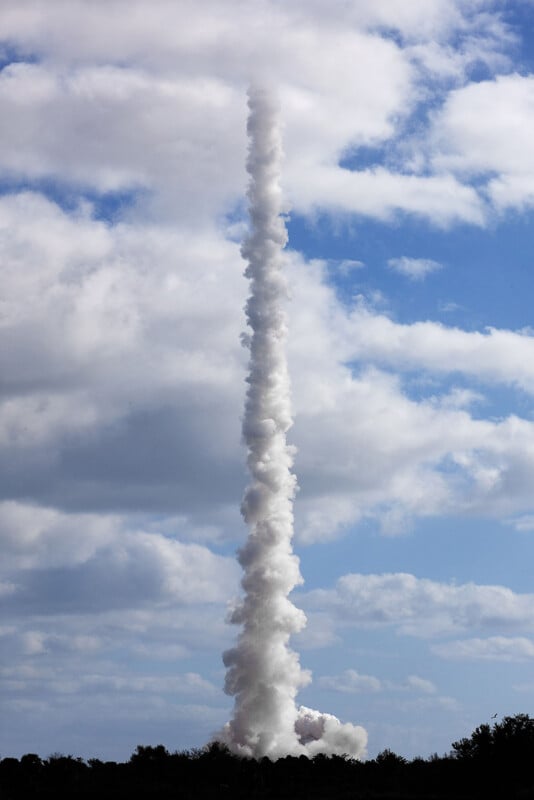
2011 (Cape Canaveral, Florida & Batesville, Indiana): The photographer documents the raw, elemental power of the Mars Rover Curiosity launch, juxtaposed against the bizarre, highly specific industrial automation of a "Butt Robot"—an orange ABB robotic arm pressing against a form in an Indiana testing facility.
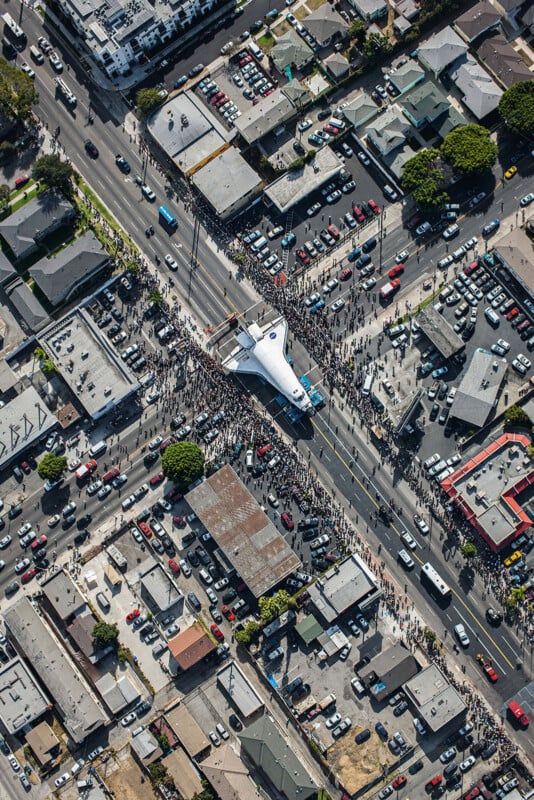
2012 (Los Angeles, California): Lowell captures the surreal urban spectacle of the Space Shuttle Endeavour being transported on a massive trailer through crowded city streets, surrounded by onlookers whose everyday lives momentarily collide with aerospace history.
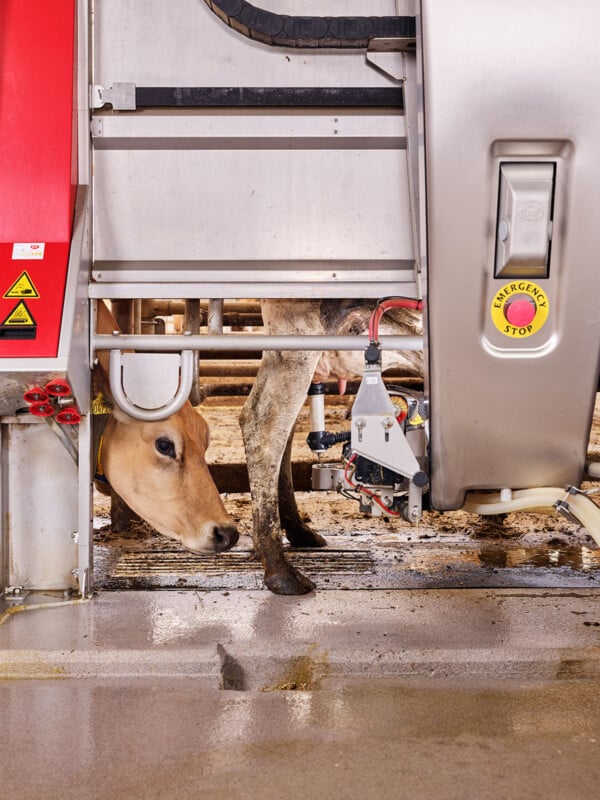
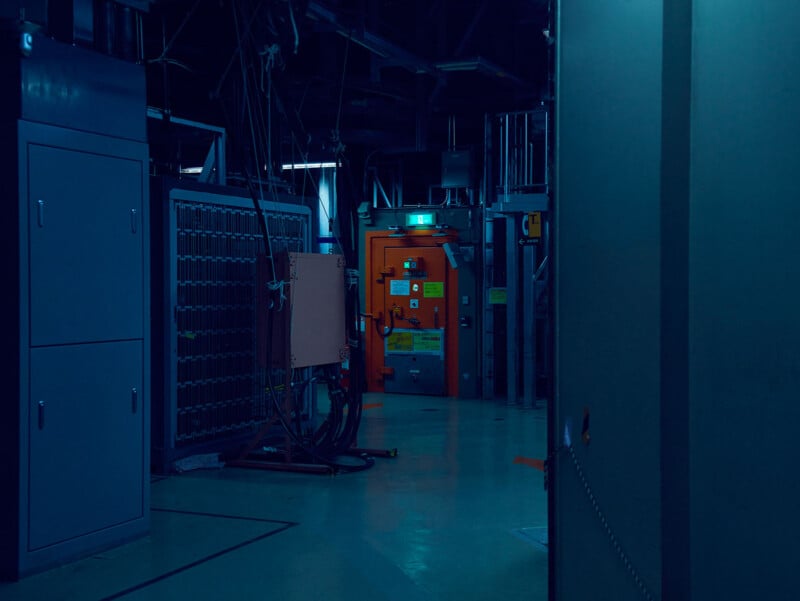
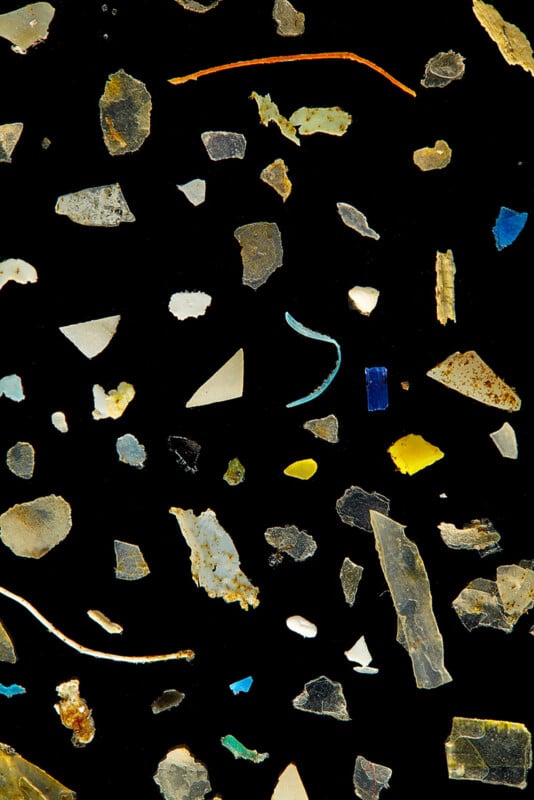
2014–2019 (Global Expeditions): The timeline deepens into ecological and industrial symbiosis. Lowell documents microplastics pulled from the Mediterranean Sea (2014), the scarred and sealed Unit 4 reactor door at the Fukushima Daiichi Nuclear Power Plant (2017), an automated milking system in the Netherlands (2019), and Mindar, the robotic priest installed in a Kyoto temple (2019).
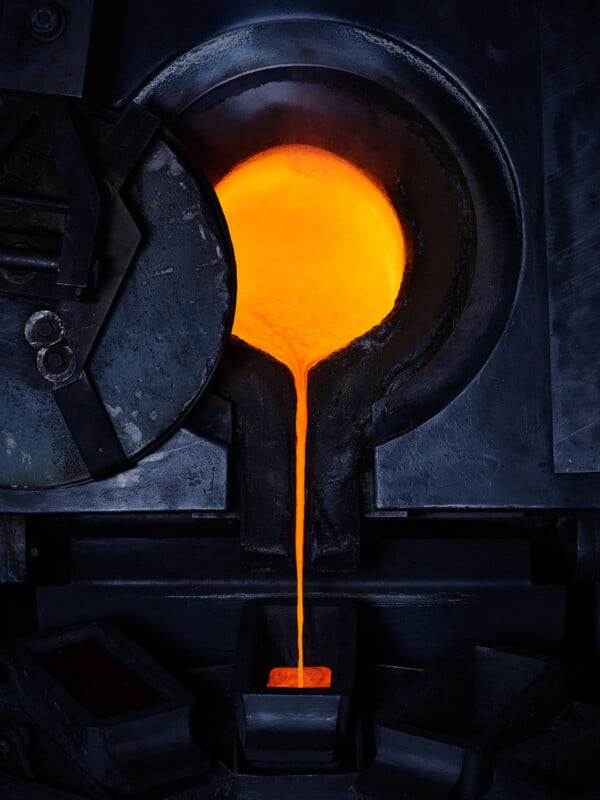
2024 (Elko, Nevada): Bringing the timeline to the present decade, Lowell photographs the blazing, hypnotic pour of molten gold at the Cortez Gold Mine Refinery, emphasizing the timeless human compulsion to extract and refine the earth.
Supporting Data: Inside Futures Past
To understand the physical and artistic scope of Futures Past, consider the following structural and collaborative details:
Page Count: Nearly 100 pages.
Image Portfolio: 57 full-color photographs.
Publisher: KGP Monolith.
Design Studio: Luminosity Lab.
Introductory Essayist: Daniel Sherrell, a prominent climate activist and Fulbright Award-winning writer.
Pricing Tiers:
Standard Edition: $75
Special Edition (with one limited-edition print): $250
Collector’s Edition (with four signed prints): $1,000
Select Featured Locations and Subjects:
NASA Jet Propulsion Laboratory (Pasadena, CA)
Fukushima Daiichi Nuclear Power Plant (Japan)
Cortez Gold Mine Refinery (Elko, NV)
Mindar Robotic Priest (Kyoto, Japan)
Experimental Fire Sciences Laboratory (Missoula, MT)
Official Responses and Critical Commentary
The launch of Futures Past has garnered significant critical attention, largely due to the conceptual depth brought to the project by Lowell and essayist Daniel Sherrell. Rather than presenting technology as a dystopian invader or a utopian savior, the creators frame it as an organic extension of human evolution.
In his artist statement, Lowell rejects simple moralizing or speculative futurism, explaining:
"This work does not propose conclusions. It documents a condition in which biological life and technological systems are no longer separable, yet remain unevenly aligned."
Sherrell elaborates on this tension in his opening essay for the monograph, noting how Lowell shifts the narrative away from traditional human-centric photojournalism.
"There are people in these photos, but rarely are there individuals. The technologies are the real individuals, protagonists of their own cryptic story," Sherrell writes. "The photographs capture them on their own terms, in the worlds that they’ve built — worlds that both serve and exclude us."
Sherrell further observes that Lowell’s approach is unique because it is fundamentally "in thrall to their alien beauty." Rather than viewing industrial complexes, particle accelerators, and server farms with dread, Lowell’s framing exposes the sublime, almost natural aesthetic inherent in human engineering.
Implications: The Inevitability of the Technocene
The release of Futures Past arrives at a cultural inflection point. As artificial intelligence, automation, biotechnology, and climate crisis dominate public discourse, society is forced to reevaluate its relationship with the tools it creates.
Lowell’s work challenges the traditional dichotomy that separates "nature" from "technology." While everyday consumers might view innovations like humanoid robots, automated farming, or deep-space rovers as artificial or detached from the natural world, Lowell argues the opposite. To him, these machines are a continuation of nature—the biological imperative of a species driven to build, adapt, and expand.
The inclusion of subjects like microplastics in the Mediterranean Sea alongside nuclear reactors and Mars rovers underscores a sobering ecological reality: the technological apparatus we build leaves geological and biological footprints that span from the microscopic to the planetary. We are living in a constructed reality where machines have become our co-habitants.
Ultimately, Futures Past acts as a mirror. By documenting the strange, breathtaking architecture of our own ingenuity, Spencer Lowell forces viewers to confront the world they are building—a world that is rapidly outgrowing its creators, defined as much by its chilling precision as its undeniable, alien grace.