The Sour Patch Kids UK Invasion: A Masterclass in Disruptive Out-of-Home Advertising

In the often-predictable landscape of outdoor advertising, where brands typically compete for attention through polished, harmonious imagery, a new player has arrived in the United Kingdom with a disruptive agenda. Sour Patch Kids, the confectionery brand synonymous with a "first they’re sour, then they’re sweet" mantra, has officially launched its inaugural UK campaign. Rather than settling for traditional brand awareness tactics, the brand—in partnership with the global creative agency VCCP—has opted for a series of chaotic, tongue-in-cheek, and arguably "disturbing" billboards that are effectively tearing up the rulebook of traditional marketing.
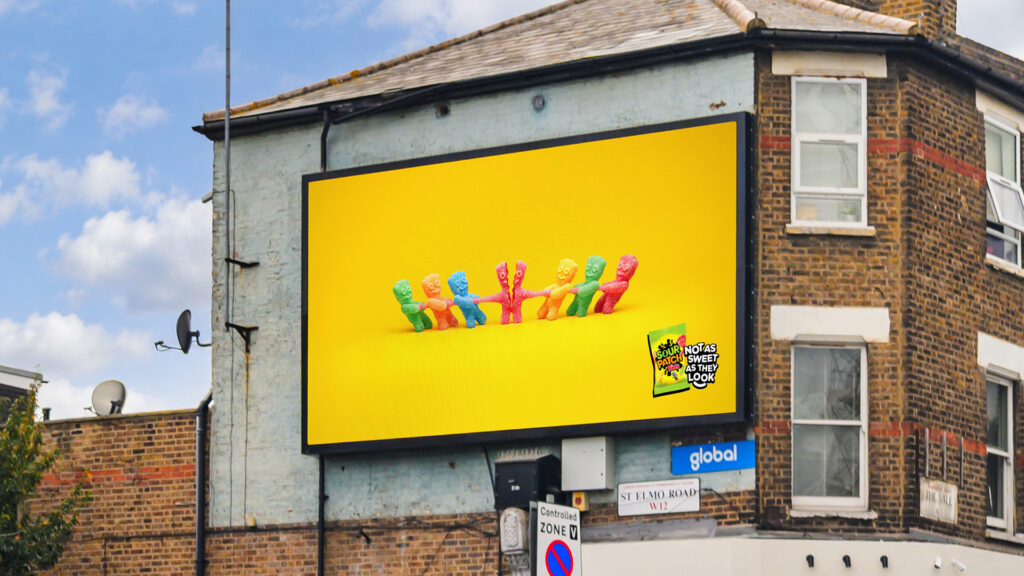
The campaign, titled "Not As Sweet As They Look," has transformed public spaces into a playground for the candy’s mischievous mascots. By utilizing physical, multi-layered billboard designs that appear to interact with their environment—and even with other advertisements—Sour Patch Kids has successfully captured the public imagination, proving that in a saturated digital age, physical, provocative, and high-impact design remains one of the most effective tools for brand engagement.
The Anatomy of the Disruption: Main Facts
The campaign’s core strategy relies on the subversion of expectation. The ads feature the iconic Sour Patch Kids in states of perpetual, slapstick-style chaos. In one iteration, the characters are depicted playing a gruesome game of tennis using one of their own severed heads. In another, they are locked in a violent tug-of-war with a fellow candy comrade.
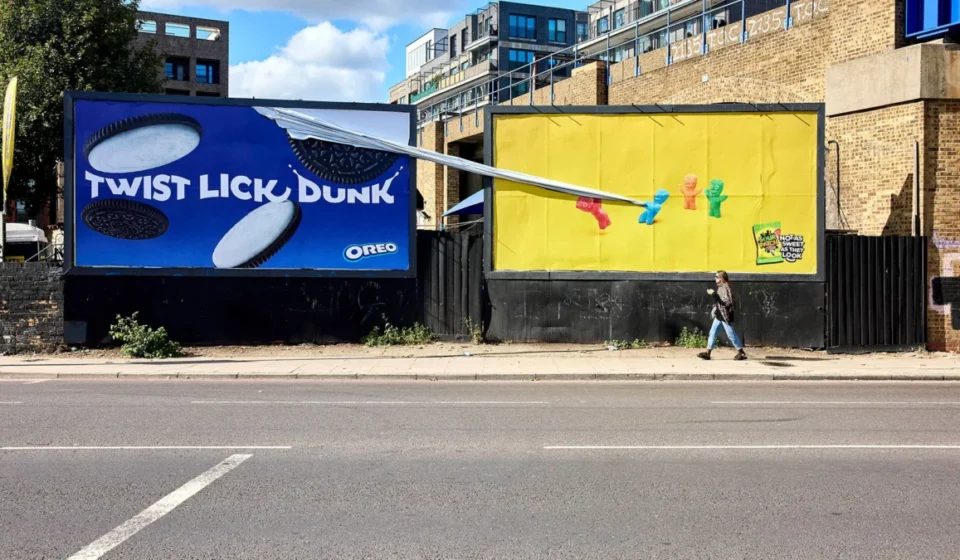
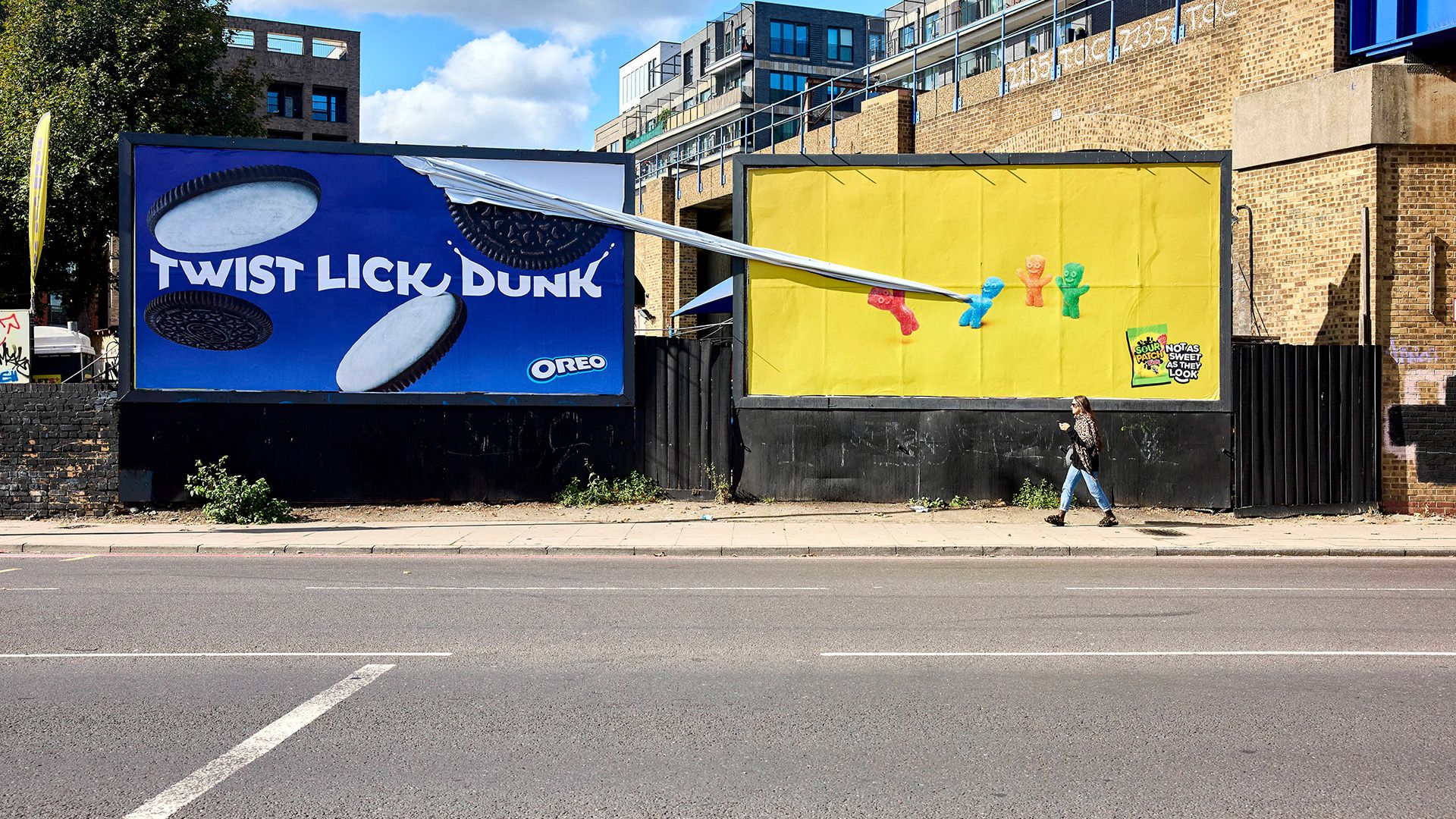
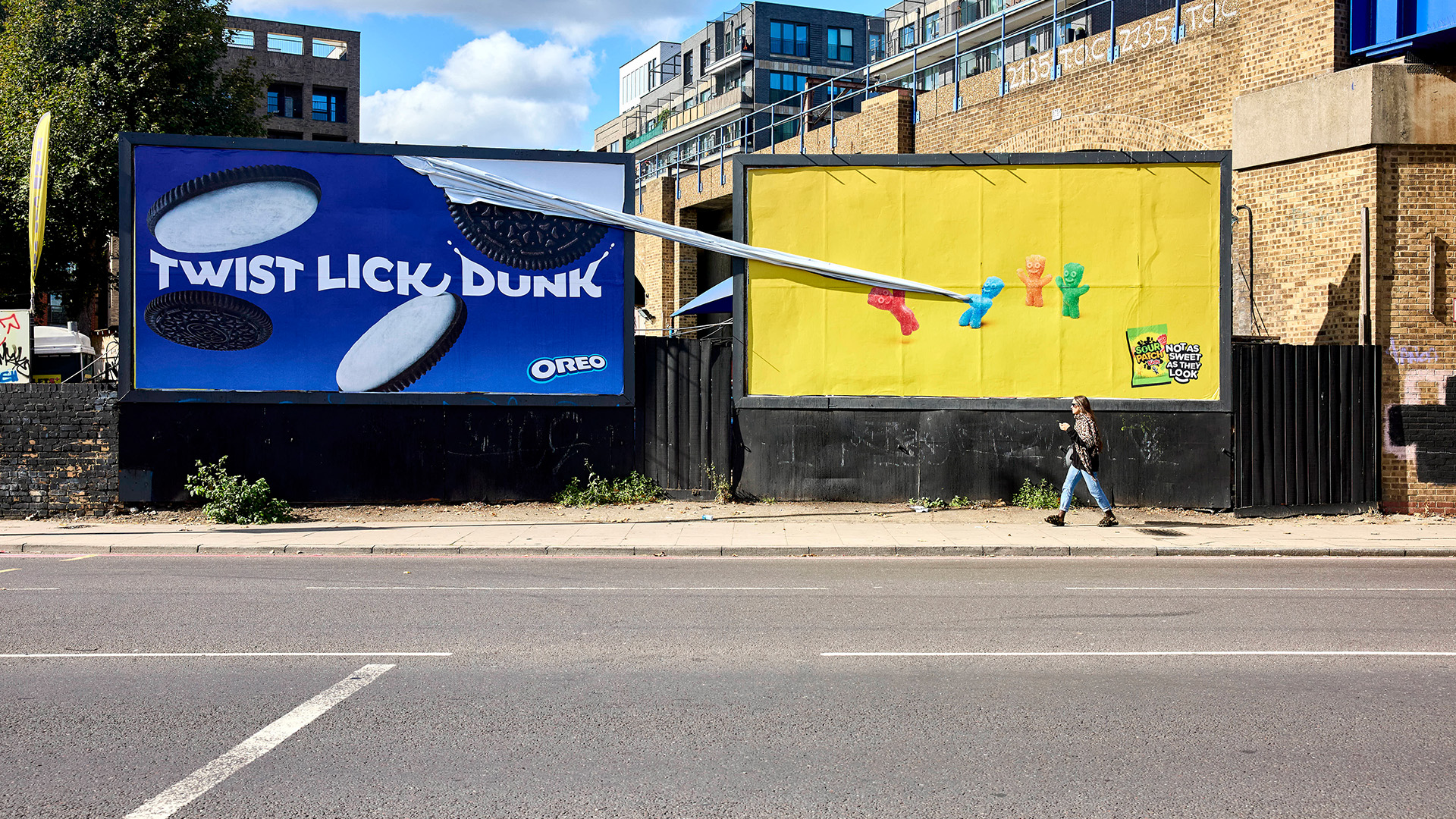
However, the most notable element of this rollout is the "billboard takeover" technique. In a stroke of creative audacity, the campaign features an installation where the characters are shown physically tearing down a neighboring advertisement for Oreo—a brand also under the Mondelez International umbrella. By breaking the "fourth wall" of the billboard, the campaign blurs the lines between the advertisement and the physical world, forcing commuters and pedestrians to stop and engage with the visual narrative rather than simply glancing past it.
A Chronological Shift in Brand Strategy
To understand the significance of this campaign, one must look at the trajectory of the Sour Patch Kids brand. Historically, the brand has relied on its dual-natured personality to drive interest. However, entering the UK market required a bold statement to distinguish itself from entrenched local confectionery giants.
- Phase 1: Conceptualization. VCCP was tasked with translating the "sweet but sour" persona into a visual language that would resonate with the British sense of humor—a balance of self-deprecation and irreverence.
- Phase 2: The "Not As Sweet As They Look" Reveal. The agency moved away from traditional product photography, opting for illustrative, character-driven storytelling that leaned into the brand’s darker, more chaotic tendencies.
- Phase 3: Tactical Placement. The billboards were strategically located in high-traffic urban zones where the "tearing down" effect of the neighboring ads could be maximized for its surprise factor.
- Phase 4: Public Reception. Within days of the launch, the campaign gained traction across social media platforms like TikTok and Instagram, as passersby shared photos of the "vandalized" billboards, effectively extending the campaign’s reach far beyond the physical locations.
The Creative Philosophy: Insights from VCCP
The success of this campaign is largely attributed to the creative vision of Chris Birch and Jonny Parker, Chief Creative Officers at VCCP. Their approach was rooted in a desire to return to the fundamentals of what makes a billboard memorable: shock value and narrative tension.
"Everyone in the creative department keeps collaring us saying, ‘why don’t people rip each other limb from limb, or pull each other’s heads off, or tear down each other’s billboards in advertising any more?’" Birch and Parker remarked during the launch. "Fair point, we thought. So when Sour Patch Kids came along asking for their first ever campaign with their sweet but sour persona, [we] could finally scratch that itch. And isn’t it glorious? Simple, clever, beautiful and disturbing."
This statement highlights a growing trend in the advertising industry: a fatigue with "safe" corporate messaging. As audiences become increasingly adept at tuning out traditional advertisements, agencies are finding that "disturbing" or "disruptive" content often acts as a pattern interrupt, forcing the brain to stop and process the information.
The Mechanics of Attention: Supporting Data
While specific sales figures related to the campaign have yet to be disclosed by Mondelez, the engagement metrics in the outdoor advertising (OOH) sector are telling. According to recent industry benchmarks, OOH advertising—when integrated with experiential or interactive elements—tends to generate significantly higher recall rates than static digital ads.
The "Not As Sweet As They Look" campaign utilizes what marketing experts call "contextual advertising." By interacting with the environment (the neighboring Oreo ad), the campaign creates a sense of "physicality." In an era where 90% of our information consumption is digital, the physical presence of a brand "tearing down" another adds a tactile, human element that is inherently shareable. The viral nature of these images on social media represents "earned media," which is arguably more valuable than paid placements because it comes with the social proof of organic consumer interest.
Industry Implications: Why This Matters
The Sour Patch Kids campaign is a case study in the power of "brave" creative work. For years, major brands have been increasingly risk-averse, fearing that any controversy—even playful, fictionalized violence—might alienate potential customers. However, the positive reception of the Sour Patch Kids campaign suggests that modern audiences, particularly Gen Z and Millennials, are craving authenticity and humor, even if it comes with a slightly jagged edge.
Furthermore, this campaign signals a shift in the role of the billboard. It is no longer a static piece of inventory; it is now a canvas for performance art. By treating the advertising space as a multi-dimensional environment, brands are reclaiming the physical streetscape as a theater for their products.
The "Sweet vs. Sour" Dichotomy
The brilliance of the campaign lies in how perfectly it matches the product. Sour Patch Kids are, by definition, a contradiction—the sour coating that gives way to a sweet interior. The advertising mirrors this product experience:
- The Sour: The initial shock of seeing a billboard being "destroyed" or characters being dismembered.
- The Sweet: The realization that it is a playful, creative, and ultimately harmless advertisement for a candy brand.
This synergy between product identity and brand messaging is the "holy grail" of advertising. It ensures that the consumer doesn’t just remember the ad; they remember the brand’s specific value proposition.
Looking Forward: The Future of OOH Advertising
As we look to the future of the industry, the Sour Patch Kids campaign serves as a blueprint for other brands. It proves that you do not need to be a multi-billion dollar luxury brand to make a mark; you simply need a clear identity and the courage to break the fourth wall.
Other recent examples, such as the "Other Mommy" crying billboard or the KFC tower burger ad, demonstrate a clear trend toward immersive OOH experiences. Whether through the use of 3D anamorphic displays, physical extensions, or narrative-driven "vandalism," the future of advertising is about creating moments that people feel compelled to document and share.
Conclusion
The invasion of the UK by Sour Patch Kids is more than just a marketing stunt; it is a declaration of intent. It serves as a reminder that advertising, at its best, should be a form of entertainment. By embracing a slightly chaotic, disruptive, and unapologetic tone, VCCP and Sour Patch Kids have successfully cut through the noise of the modern market.
As the campaign continues to circulate, it leaves behind a critical lesson for brands everywhere: if you want to stand out, you have to be willing to break something. Whether it’s the status quo, the expectations of your audience, or even the billboard next to you, the most memorable brands are those that aren’t afraid to get a little bit sour in the pursuit of something truly sweet.