Sony’s Giant Leap: Unveiling the Rialto 65 and the New Era of Medium Format Imaging

The landscape of high-end digital cinematography and professional photography has been irrevocably altered. In a move that signals a seismic shift in sensor technology, Sony has officially unveiled the Rialto 65, a groundbreaking medium format imaging module. This development represents more than just an increase in pixel count or sensor dimensions; it is a fundamental challenge to the established hierarchy of the medium format market, currently dominated by players like Fujifilm and Hasselblad.
By leveraging its proprietary sensor manufacturing prowess, Sony has introduced a sensor that is not only 123% larger than the standard Full Frame format but also significantly larger than the sensors powering today’s leading medium format cameras. This report explores the technical implications, the historical trajectory of this development, and the far-reaching impact on the future of professional imaging.

The Main Facts: What is the Rialto 65?
The Rialto 65 is not a consumer camera in the traditional sense, but a high-performance imaging module designed for the upper echelons of cinematography and industrial-grade high-resolution capture. The core of this system is its massive sensor, which boasts a surface area 33.5% larger than the current industry-standard medium format sensors found in the Fujifilm GFX and Hasselblad X2D series.
Key highlights of the announcement include:

- Unprecedented Sensor Scale: The Rialto 65 utilizes a medium format sensor that dwarfs current industry benchmarks. This increase in surface area allows for superior light-gathering capabilities, improved signal-to-noise ratios, and an unparalleled dynamic range that pushes the boundaries of what is possible in digital capture.
- Cinematic Versatility: The Rialto module is designed to be the heart of a flexible imaging system. By utilizing Sony’s latest sensor architecture, the Rialto 65 aims to provide filmmakers with a "large format" aesthetic that captures depth and texture previously reserved for expensive, custom-built industrial sensors.
- Technical Dominance: The 123% increase in area over Full Frame sensors ensures that the Rialto 65 is not merely a "bigger sensor," but a device capable of rendering images with a unique medium-format "look"—a characteristic combination of shallow depth-of-field, smooth roll-off, and high-fidelity tonal transitions.
Chronology of Development
The path to the Rialto 65 was paved by years of speculation and incremental advancements within Sony’s semiconductor division.
Phase I: The Foundation (2023–2024)
While the industry focused on the race for higher megapixel counts in Full Frame cameras, Sony’s research and development arm was quietly refining wafer-scale manufacturing techniques. The goal was to overcome the yield issues that historically made large-format sensors prohibitively expensive and prone to defects.
Phase II: The Rumor Mill (2025)
Throughout 2025, whispers within the industry suggested that Sony was working on a new sensor architecture intended to surpass the limitations of the "44x33mm" sensor size that defines modern compact medium format. These rumors gained traction as patents for flexible, modular sensor mounting systems—the precursors to the Rialto architecture—began to surface.
Phase III: The Disclosure (June 2026)
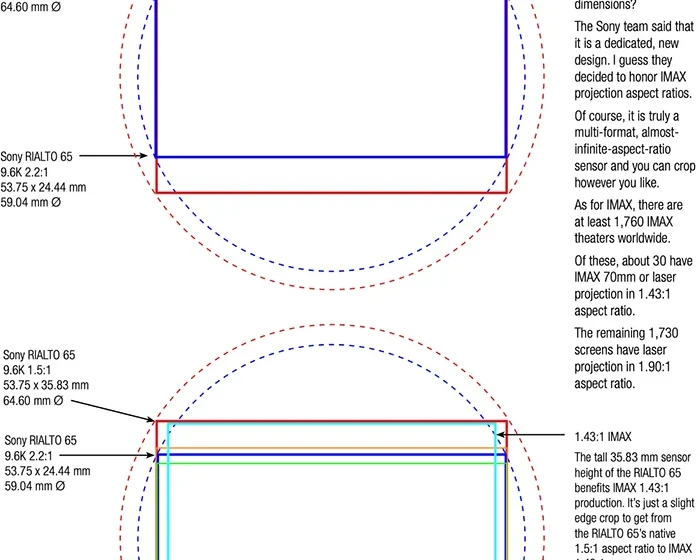
In early June 2026, details leaked via FDtimes provided the first concrete look at the Rialto 65. The release of technical documentation and sensor size comparisons finally confirmed that Sony was not just entering the medium format space; they were attempting to redefine its geometry.

Supporting Data: The Math of the Medium Format
To understand the magnitude of this release, one must look at the physical dimensions. For decades, the "Full Frame" sensor (roughly 36mm x 24mm) has been the gold standard for versatility. However, the Rialto 65 pushes into the territory of the "645" format—a goal long sought after by purists.
Comparative Sensor Analysis
- Full Frame (36 x 24mm): The baseline for high-end professional photography.
- Current Medium Format (e.g., GFX/X2D): Typically utilizes a 44 x 33mm sensor.
- The Rialto 65: By expanding the dimensions significantly beyond the 44 x 33mm footprint, Sony has achieved an area increase of 33.5% over their competitors.
This is not a marginal gain. In sensor design, every square millimeter of silicon added significantly impacts the ability to capture light. The larger surface area allows for larger individual photosites, which directly translates to improved low-light performance and a more "organic" rendering of light that mimics film-based medium format systems.

Official Responses and Industry Reception
The industry response has been one of both excitement and apprehension. While professional cinematographers are eager to integrate the Rialto 65 into their workflows, the announcement has caused a stir among existing medium format manufacturers.
Sony’s internal messaging has focused on "empowering creators." A company spokesperson noted that the Rialto 65 is a response to the "unmet demand for cinematic quality that exceeds the capabilities of standard large-format sensors."

Conversely, market analysts suggest that Sony’s move is a strategic "encirclement" of the medium format market. By providing a sensor that outperforms the competition in size and likely performance, Sony is effectively positioning itself as the primary sensor supplier (or the primary hardware competitor) for the next decade of high-end image capture.
Implications: The Future of the "645" Dream
The release of the Rialto 65 brings the industry one step closer to the "Holy Grail" of digital imaging: a true 645 format (56 x 41.5 mm) sensor.

Implications for Cinematography
The most immediate impact will be seen in high-end feature film production. The Rialto 65 allows for a field-of-view and depth-of-field characteristic that was previously impossible to achieve without complex, multi-sensor rigs or rare, vintage large-format glass.
Implications for Photography
While the Rialto 65 is currently targeted at the Rialto module (cinematography), the technology is inherently scalable. If Sony can successfully mass-produce these large-format sensors, it is highly probable that we will see a "Rialto-derived" sensor in a future flagship stills camera. This would effectively render the current 44x33mm medium format market obsolete, forcing a major pivot from competitors like Fujifilm and Hasselblad.

The Ecosystem Shift
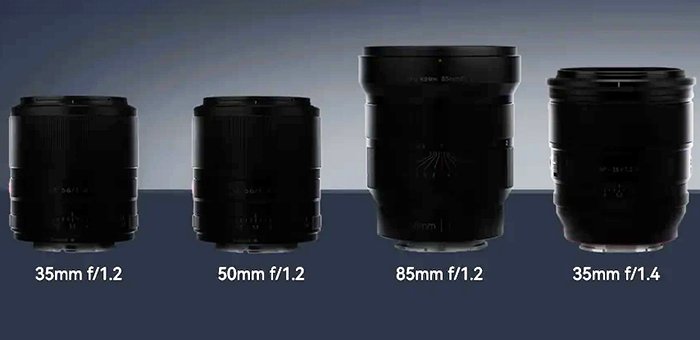
The introduction of the Rialto 65 necessitates a new generation of optics. Standard lenses designed for Full Frame will likely fail to cover the massive image circle of the Rialto 65, or they will suffer from severe vignetting. This creates an immediate opportunity for lens manufacturers to develop "Medium Format Pro" glass, further stimulating the economy of the camera industry.
Conclusion: A New Horizon
Sony has once again proven that it is the primary engine of innovation in the digital imaging world. By breaking the constraints of the 44x33mm sensor size, the Rialto 65 acts as a bridge between the clinical precision of modern digital sensors and the artistic, depth-rich quality of traditional medium format film.

As we look toward the remainder of 2026 and into 2027, the question is no longer whether medium format will become more accessible, but how quickly the rest of the industry can respond to the new standard set by Sony. The Rialto 65 is not just a product; it is a statement of intent—a reminder that in the world of high-end imaging, size still matters, and Sony is the only player currently willing to expand the boundaries of the frame.
Whether you are a professional filmmaker or a dedicated photography enthusiast, the shift signaled by the Rialto 65 marks the beginning of a transformative era in visual storytelling. We are witnessing the slow but inevitable transition toward a larger, more detailed, and more cinematic future.