The Profound Perspective: How Science Unlocks Awe in an Age of Apparent Hardship

The Perennial Illusion of Unprecedented Hardship
In the relentless hum of modern existence, a sentiment often surfaces like a persistent undercurrent: the pervasive feeling that our present moment is uniquely arduous, that reality today bears a weight heavier than any epoch before. This collective whisper, rustling through the digital canopy of our shared consciousness, suggests an unprecedented difficulty in simply being alive. Yet, this perception, as profound thinkers suggest, might be less a reflection of objective truth and more an "error of proximity." We dwell too intimately with the immediate bone of our personal predicaments, drawing the horizon of time so near that the grand vista of chance and the cyclical nature of human experience recede from view.
This phenomenon is deeply rooted in human psychology. Our brains are wired for immediate threats and rewards, often struggling to contextualize present challenges within the vast sweep of history. The relentless 24/7 news cycle, the omnipresent connectivity of social media, and the rapid pace of technological advancement amplify this sense of urgency and overwhelm. Each global crisis, each societal tremor, feels amplified, unique, and insurmountable, precisely because we are immersed within its unfolding narrative. We forget that previous generations grappled with wars of unimaginable scale, plagues that decimated populations, and societal upheavals that reshaped civilizations, often with far fewer tools for communication, understanding, or mitigation. This "chronocentricity" – the belief that one’s own time is the most important or advanced – blinds us to the enduring resilience of humanity and the cyclical patterns of struggle and progress.
Ursula K. Le Guin and the Power of Distancing
To break free from this temporal myopia, to gain a clearer, more expansive vision of our reality, we often require a particular kind of intellectual and emotional tool: "distancing." The celebrated science fiction author Ursula K. Le Guin masterfully articulated this concept, asserting that the great instrument of our works of the imagination, and science fiction in particular, is precisely this act of "pulling back from ‘reality’ in order to see it better." For Le Guin, this imaginative retreat was not an escape but a profound engagement, a method to expose the "coherent complexity" of which we are an integral part. By translating reality to "a higher plane, a more passionate intensity," art, religion, or profound emotion allows us to perceive truths that often remain obscured by the mundanity of our immediate experience.
Le Guin’s insight highlights how speculative fiction, by constructing alternative worlds, futures, or pasts, compels us to examine our own present circumstances from an outsider’s perspective. It forces us to question deeply ingrained assumptions about society, technology, and human nature. A story set on a distant planet, for instance, can illuminate the absurdities of our own political systems or the beauty of our ecological interdependence without the defensive resistance often triggered by direct critique. This intellectual and emotional distance allows for a kind of meta-cognition, where we reflect not just on the content of our lives but on the very framework of our reality. It’s an invitation to see the forest, not just the trees, and to understand that our current struggles, while real, are but one thread in an infinitely complex tapestry.
Science as a Lens for Profound Perspective
While Le Guin championed the imagination as the primary vehicle for this essential distancing, a compelling argument emerges that science itself, without an ounce of fiction, can offer an equally profound, if not more startling, lens-clearing perspective. Given that the imagination of nature will always surpass our own – for we are, after all, but a figment of its boundless creativity – and given that science is the very instrument we have painstakingly invented to decipher and translate the intricate language in which nature imagines reality into being, then science inherently possesses this capacity.
Nowhere is this more evident than in its power to pull us back from the often-overwhelming mundanity of our daily lives, urging us to behold with genuine bewilderment the miraculousness, the fantastical improbability, of life itself. Science, through disciplines like cosmology, astrophysics, and biology, peels back the layers of the ordinary to reveal an extraordinary universe. It allows us to gaze upon "the scene of our mortality," as Le Guin termed it, not with dread, but with a profound sense of wonder at the sheer, improbable fact of our existence. From the swirling nebulae birthing stars to the intricate dance of molecules within a single cell, scientific inquiry illuminates a reality far grander and more intricate than our immediate perceptions can grasp. It offers a factual, evidence-based distancing, inviting us to see our small lives against a canvas of cosmic time and space, revealing the "coherent complexity" through empirical observation rather than imaginative conjecture.
Alan Lightman and the Cosmic Lottery of Existence
This scientific pathway to perspective is eloquently explored by physicist and novelist Alan Lightman. In a captivating Atlantic essay, Lightman contemplates the "bright improbability of life," meticulously tracing its origins from the colossal cosmic dice rolls of star formation to the infinitesimal cellular roulette of biological conception. Lightman, known for his moving meditations on "the poetic science of what happens when we die," now turns his sensitive intellect toward the equally poetic science of what had to happen so that we may live.
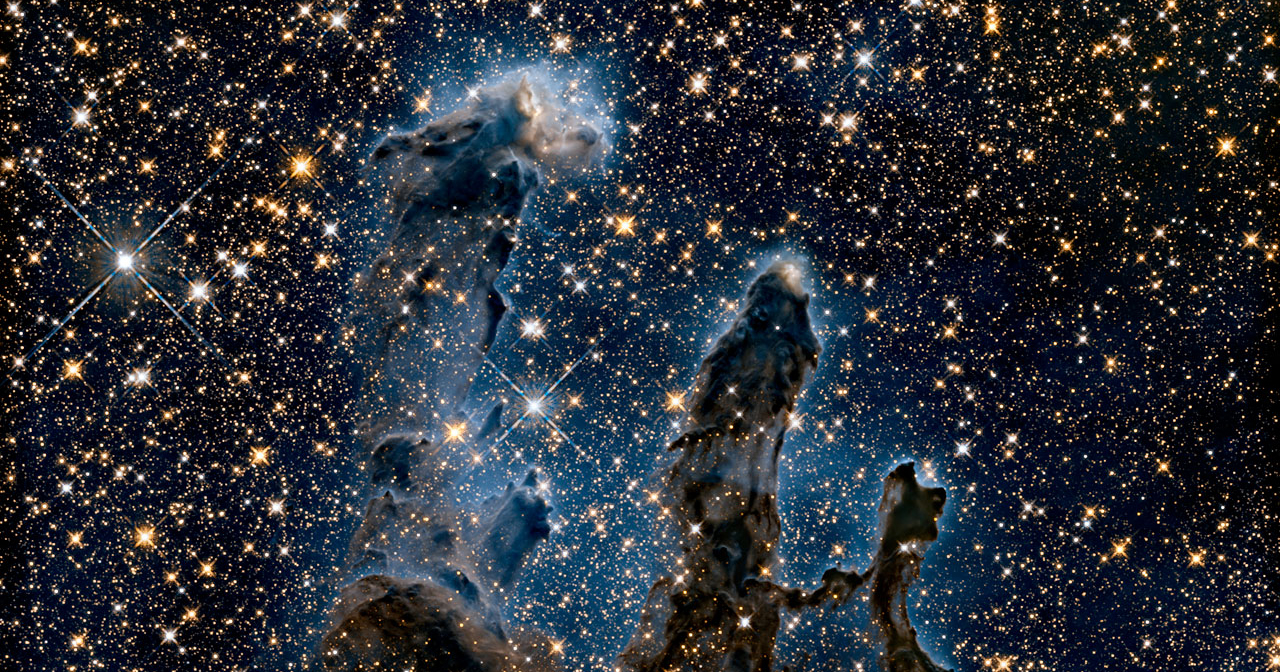
He begins by noting the inherent difficulty humans face in regarding themselves as merely part of another civilization destined to follow the path of the Aztecs, the Greeks, or countless others swallowed by the currents of time. Our innate sense of self-importance and the immediacy of our cultural narratives often obscure this broader historical pattern. Yet, Lightman argues, an even greater challenge lies in truly fathoming the singular uniqueness of each individual, the staggering improbability, the sheer, unimaginable luck of being alive at all.
The Unfathomable Uniqueness of Self
Lightman delves into the realm of genetics to illustrate this point with breathtaking clarity. He posits that "far more possible arrangements of human DNA exist than there are atoms in the observable universe." Each of these countless arrangements corresponds to a different potential human being. Within this mind-boggling spectrum of possibilities, one specific, utterly unique arrangement is each of us. This isn’t just a philosophical abstraction; it’s a scientific reality. The combinatorial power of genetic material means that the precise sequence of DNA that defines any single person is an event of such rarity that it borders on the miraculous.
Consider the implications: every person who has ever lived, is currently living, or ever will live represents a unique permutation, a singular biological expression that will never be precisely replicated. This fact alone should infuse our understanding of self and others with an extraordinary reverence. It elevates individual existence from a commonplace occurrence to a cosmic masterpiece, a fleeting but utterly distinct pattern in the grand tapestry of life.
Staggering Odds and Startling Visualizations
The sheer unlikelihood of any one human being’s existence is a triumph against odds so astronomically vast that they stretch the very limits of our comprehension. Lightman quantifies this with a figure that bleeds into abstraction: approximately "a hundred thousand billion to one" for every successful fertilization attempt. Such numbers are not merely large; they are practically infinite from a human perspective, defying intuitive grasp.
To make this unfathomable probability more tangible, Lightman offers a startling visualization: "If you took a very long ruler that stretched from here to the planet Pluto, one inch of that distance would be you. The rest of the distance would be other possible human beings that could have been, but never were." Each of us, therefore, has "won a lottery with a hundred thousand billion different players." This vivid analogy underscores the fragility and preciousness of our individual existence. It highlights that our presence here, now, is not a given, but an extraordinary confluence of biological, environmental, and cosmic events, each perfectly aligned against almost insurmountable odds.
If hope, at its core, is the audacious work of believing that the improbable is indeed possible – believing that the wildest bet can ultimately be the winning bet – then each of us stands as a living axiom of hope. Our very being is a testament to the triumph of unlikely chance, a beacon in the vast darkness of what might never have been. This perspective reframes hope not as a mere psychological coping mechanism, but as an intrinsic quality embedded within the fabric of existence itself.
The Overlooked Miracle: A Call to Consciousness
Yet, despite this staggering improbability, this victorious lottery win against cosmic odds, our existence remains "the easiest to overlook, to take for granted." Lightman observes how readily we succumb to the rhythms of routine, allowing the miraculous to fade into the mundane. "We wake up in the morning, have our coffee, make breakfast, send the kids off to school, go to our jobs, move through our routines, worry about deadlines, check off items on our to-do list." In this relentless march of the everyday, "we forget that beneath all of it lies something profoundly rare: existence itself."

The simple, undeniable fact that we are here, conscious and aware, capable of thought, feeling, and connection, is so profoundly unlikely that it "borders on the miraculous." It is a constant, quiet miracle unfolding within and around us, yet often obscured by the noise and demands of modern life. This isn’t merely about appreciating a sunny day or a good meal; it’s about acknowledging the fundamental, improbable gift of sentience itself, the capacity to experience anything at all.
Lightman’s words serve as a powerful reminder to pause, to look beyond the immediate, and to re-engage with this fundamental truth. He concludes with a poignant, irrefutable declaration: "From the distant past, billions of years ago, to the distant future, billions of years ahead, the universe will never see another one of you." This statement is not meant to inspire melancholy, but rather a profound sense of individual significance and irreplaceable value. It underscores the unique narrative each life represents, a story never before told and never to be repeated across the entirety of cosmic history.
The Responsibility to Awe and the Posture of Gratitude
Given this unbidden, improbable gift of chance, our relationship with life transcends mere possession. We do not have an inherent "right to life" in the sense of an entitlement, but rather a profound "responsibility to it." This responsibility, as the poet and astronomer Rebecca Elson so perfectly termed it, is "a responsibility to awe." It is a call to cultivate wonder, to remain open to the astonishing beauty and complexity of the universe, and to recognize our place within it with humility and reverence.
Against the backdrop of our own astronomical improbability, any posture of entitlement, any demand for more, any complaint about trivial discomforts, becomes utterly absurd, anti-natural. Such attitudes betray a fundamental ignorance of the cosmic lottery we have already won. The only adequate posture, the only fitting response to this "cosmic overwhelm," as Diane Ackerman beautifully describes it, is to kneel metaphorically, if not literally, in profound gratitude.
This gratitude is not a passive emotion but an active orientation towards existence. It is expressed in the shortest, yet most profound, prayer imaginable: "Thanks." This simple utterance encapsulates a recognition of the gift, an acknowledgment of the unearned grace of being. Embracing this "responsibility to awe" has far-reaching implications. It encourages a deeper appreciation for every moment, a greater empathy for fellow improbable beings, and a more conscientious stewardship of the planet that cradles our fragile existence. It reshapes our priorities, moving us away from endless acquisition and towards meaningful connection, profound wonder, and a humble acceptance of our unique, fleeting, and miraculous journey through the cosmos. In a world often overshadowed by perceived hardship, the scientific lens offers not despair, but an incandescent reminder of the extraordinary privilege of simply being.